The Festival of Recovered Music is an event dedicated to music that, for various reasons, has disappeared from our concert halls, our collective memory, and our everyday cultural experience. We bring forgotten works, old performance traditions, unknown composers, and musical worlds—which for years remained hidden in archives, manuscripts, or local memory—back to life. Alongside these rediscovered masterpieces, we also present artists who creatively develop old traditions and give them new meaning. Why Szczecin? The history of our city is a history of constant encounters, migrations, and the intermingling of cultures. Here, every kind of music can feel at home.
The Festival’s closing concert draws on its eight previous editions, during which we performed a vast number of sacred music works. The incredible spirit of this music has accompanied us since our first concert in 2018. And although the world around us has changed almost beyond recognition since then, we want to return, for one evening a year, to the atmosphere that has become our hallmark.
The concert program features works by cantors and composers active in Poland at the turn of the 19th and 20th centuries—artists whose music once filled the synagogues of Warsaw, Kraków, Łódź, Białystok, Częstochowa, and the multinational city of Lviv. It was a world of intense spiritual and artistic life, where prayer intertwined with romantic expression, and the voices of cantors and soloists created an extraordinary, multicolored soundscape.
That world has fallen almost completely silent. The annihilation of Jewish communities severed the continuity of tradition, and the music that for decades shaped the spiritual landscape of Polish cities has survived only in scattered songbooks, isolated manuscripts, and archival references. Today, its return has not only an artistic dimension but a deeply symbolic one—it is an attempt to restore a voice to those who were deprived of the opportunity to continue creating.
At the heart of the program are composers representing various strands of Polish-Jewish musical culture: Abraham Bernstein, Jakub Weiss, Eliezer Goldberg, Abraham Ber Birnbaum, Leo Low, and Baruch Kinstler. Their compositions—ranging from intimate prayers to elaborate liturgical and concert forms—reveal the richness and power of a tradition that remained in the shadows for decades.
 Routes and trips
 Map
Map MPR - cyclist-friendly places
 POI
POI Plan your trip
 Bike counters
 Publications
 News
News Route concept
 Contact

 All the Voices of the Synagogue: Songs of Old Poland. A concert as part of the 9th Festival of Restored Music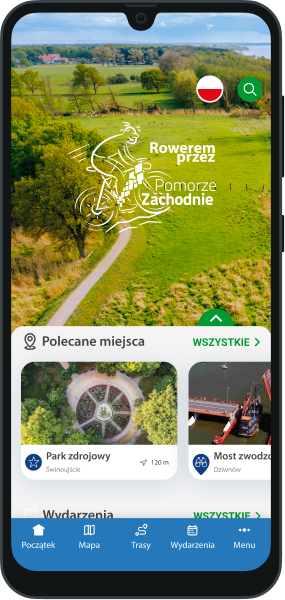
 Pomorze Zachodnie (The West Pomerania) mobile app