The 11th edition of the EUROMUSICDRAMA Festival is taking place, as it does every year, in October and is proving extremely popular with audiences, while the caliber of the distinguished artists invited from Poland, France, and Belgium guarantees the festival’s high quality. The central theme of our event’s theatrical and musical performances is the role of music in theater—a role that is so often underappreciated—taking center stage.
Theatrical music sets the mood and lends precision to the performance’s expression, achieving the emotional impact intended by the playwright and director. It brings the world of sound into the world of theater.
The 11th edition of the EUROMUSICDRAMA Festival—Szczecin 2026, “Theater in Music, Music in Theater” is an original, innovative festival—so far the only one of its kind in the world—promoting theater music as well as various forms that combine music with theater; through its unique content, it has become an event of European significance. The artistic director is the distinguished musician, artist, and composer Jean Marc Fessard. Among the directors of subsequent editions is Michał Janicki, an actor, director, and founder of the Kameralny Theater, and a multiple winner of the Amber Ring Award. The 11th edition of the EUROMUSICDRAMA Festival will open at the Szczecin Philharmonic with the theatrical-musical premiere “Theatrical Music Takes Center Stage: A Carte Blanche for Andrzej Zarycki.” Michał Janicki and Artur Andrus will set the tone for the evening.
The Euromusicdrama Festival has decided to recreate Andrzej Zarycki’s music, performed by internationally renowned classical music stars, and to adapt the composer’s “timeless” melodies into classical transcriptions. The result is simply breathtaking! We cordially invite you to another premiere during the festival at the Chamber Theater: Patrycja Fessard’s “My God” `Benny Goodman and Artie Shaw, two clarinetists of Polish descent, two legendary jazz stars as renowned as Stan Getz and Sidney Bechet, were rivals both on stage and in their private lives. They often competed for the same record deals, promotions at the same concert halls, and the heart of the same woman... Patrycja Fessard’s play tells the story of this extraordinary quest to destroy a rival’s talent, revealing the behind-the-scenes reality of an era when Chicago and New York pulsed with jazz, and jazz was synonymous with life. Meanwhile, in Poland, artists ponder: what role does freedom play in the creative act? And in addition to discussions about sincere, truth-filled ideas, intellectuals listen to “forbidden sounds”—jazz.
 Routes and trips
 Map
Map MPR - cyclist-friendly places
 POI
POI Plan your trip
 Bike counters
 Publications
 News
News Route concept
 Contact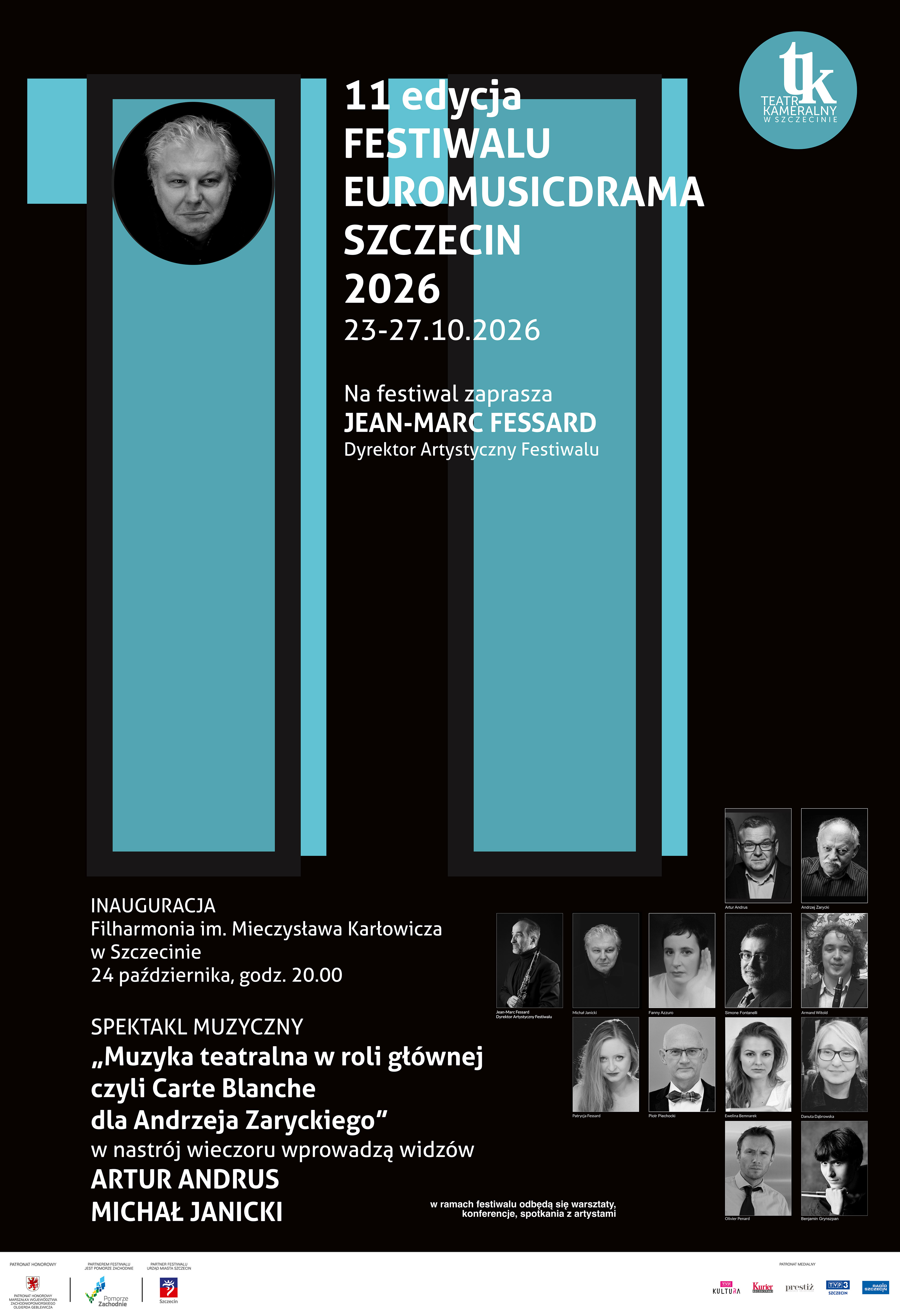

 The 11th Edition of the EUROMUSICDRAMA Festival 2026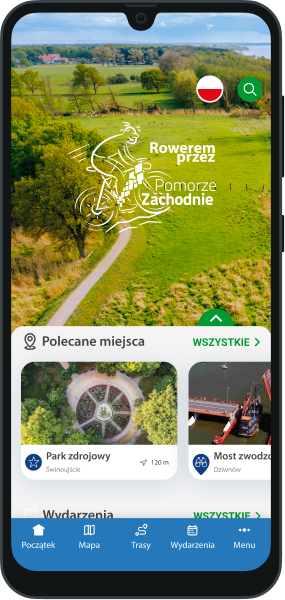
 Pomorze Zachodnie (The West Pomerania) mobile app