Routes and trips
 Map
Map MPR - cyclist-friendly places
 POI
POI Plan your trip
 Bike counters
 Publications
 News
News Route concept
 Contact
 The Walter Gropius House in Żołędowo
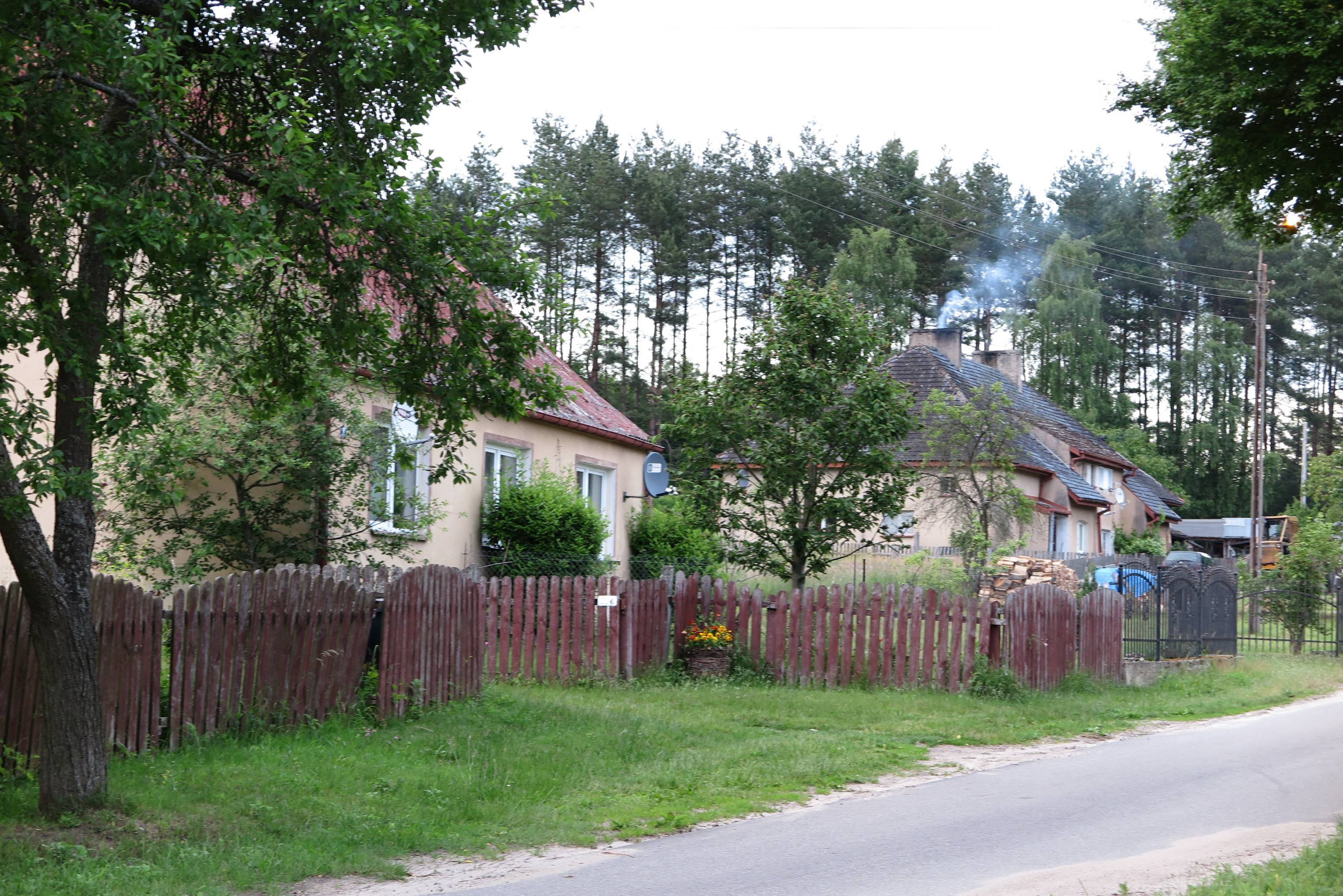
 The house is located in the northeastern part of the village of Żołędowo, on the left side of the country road. It was built in 1913 according to a design by Walter Gropius, who was the architect of the entire manor and farm complex in Żołędowo, commissioned by Heinrich von Brockhausen. The house itself is today the only surviving element of the entire complex. It was situated near a now-defunct sawmill, at a considerable distance from the manor house and the farmyard, and was intended to house four families of farm workers. After 1945, the settlement fell within the Drawsko military training area. At that time, the entire manor and farm complex was demolished, and a semi-open prison was established in the workers’ quarters. The house was subsequently used for military purposes and eventually transferred to the Drawsko Forest District for use as staff housing. In the 1980s, renovation and modernization work was carried out to adapt the interiors for residential use. It is currently privately owned. The house is an interesting example of a modernist building for farm workers, designed by the founder of the Bauhaus, Walter Gropius. Despite the modernization, the building has retained its original structure, including the form of a massive hipped roof with two dormers and its roofing, as well as segmented facades based on symmetrical compositions. This building has great historical and architectural value; it is an important element in the landscape of the village and the region, as well as an example of Walter Gropius’s early architectural work. Near the house, just at the entrance to Żołędowo, on the right side behind the ruins of the manor stables, there is another remnant of the von Brockhausen manor and farm complex, namely the historic manor park. The park itself, covering an area of approximately 7 hectares, was established in the early 19th century, immediately after the von Brockhausens took over the estate in Żołędowo. The park is home to a wide variety of tree species, predominantly deciduous, and features numerous monumental specimens, primarily oaks. In 2010, the Drawsko Forest District established a nature and educational trail here by installing informational signs about tree species and the history of the park’s establishment.

You will not get lost on the route with us! In our application you will find a detailed map of routes and excursions, interesting places and events, 360 panoramas and much, much more!