Routes and trips
 Map
Map MPR - cyclist-friendly places
 POI
POI Plan your trip
 Bike counters
 Publications
 News
News Route concept
 Contact
 Catholic Cemetery
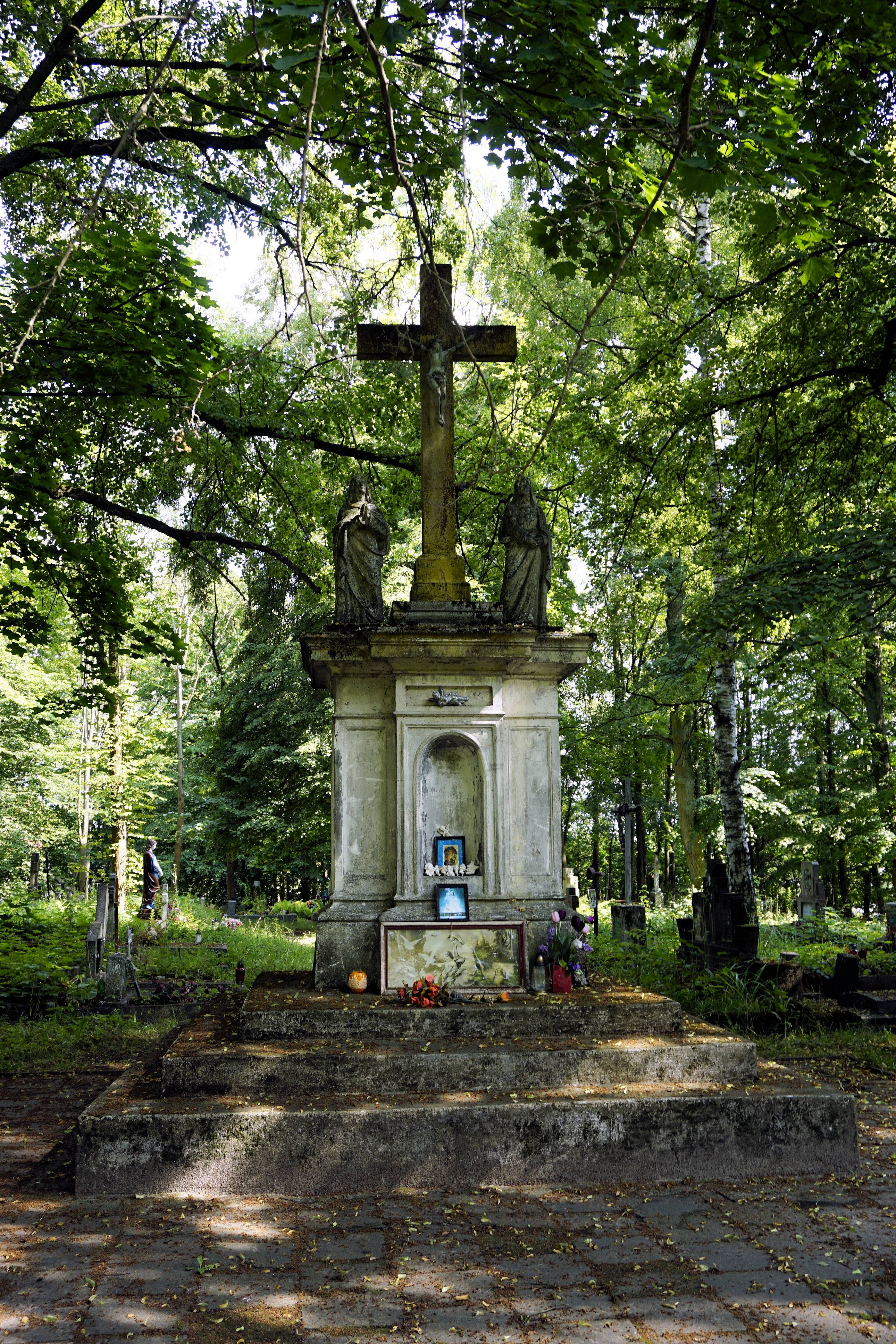
 The cemetery was established in the second half of the 19th century by the St. Nicholas Parish in Wałcz. It originally covered about 60 ares and was located outside the city limits at that time. It was rectangular in shape and divided into regular sections. Linden tree-lined avenues divided the cemetery into four equal parts. The oldest surviving structure dates from this period—a small chapel crowned with a figural composition depicting the Crucifixion, erected in 1887.
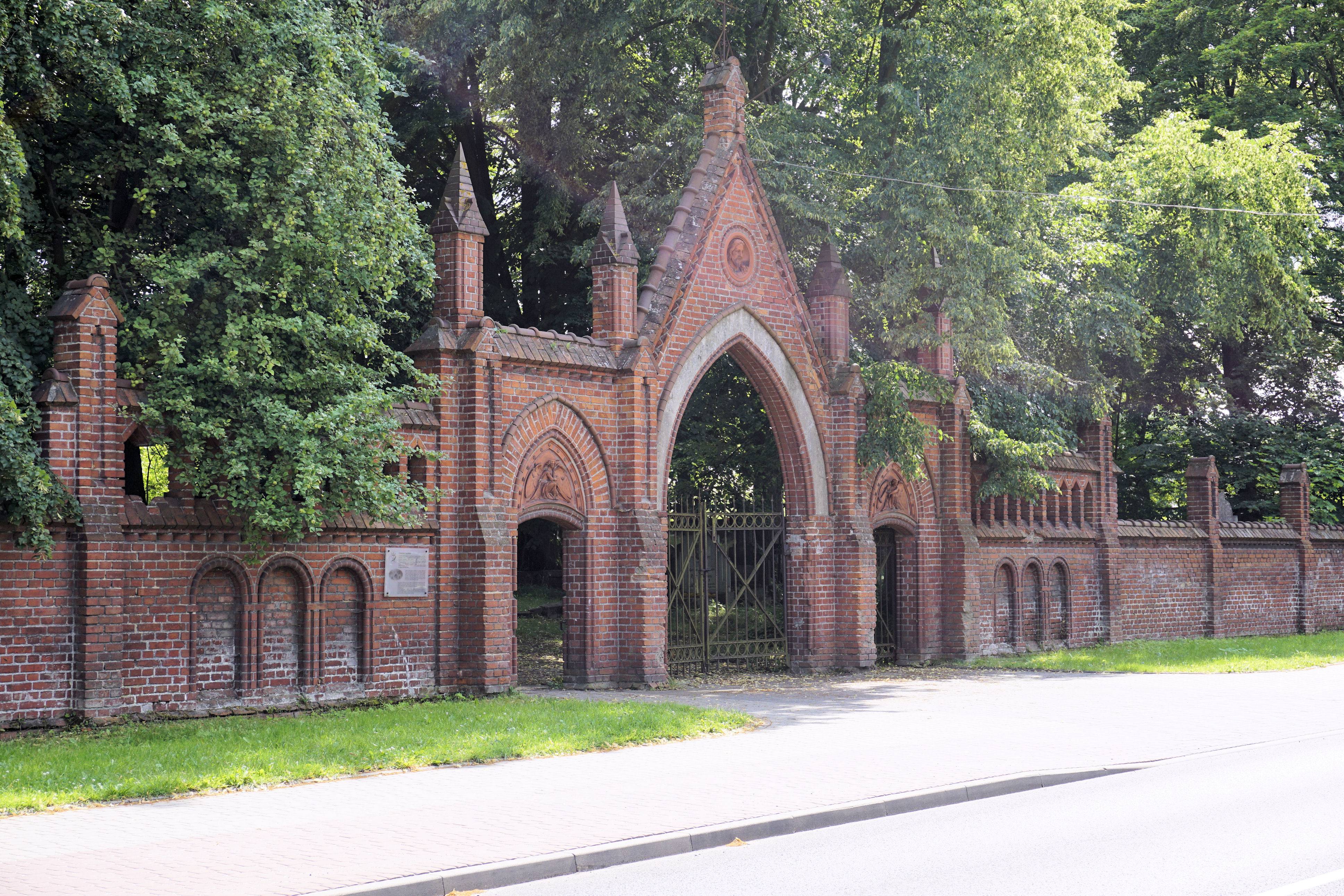
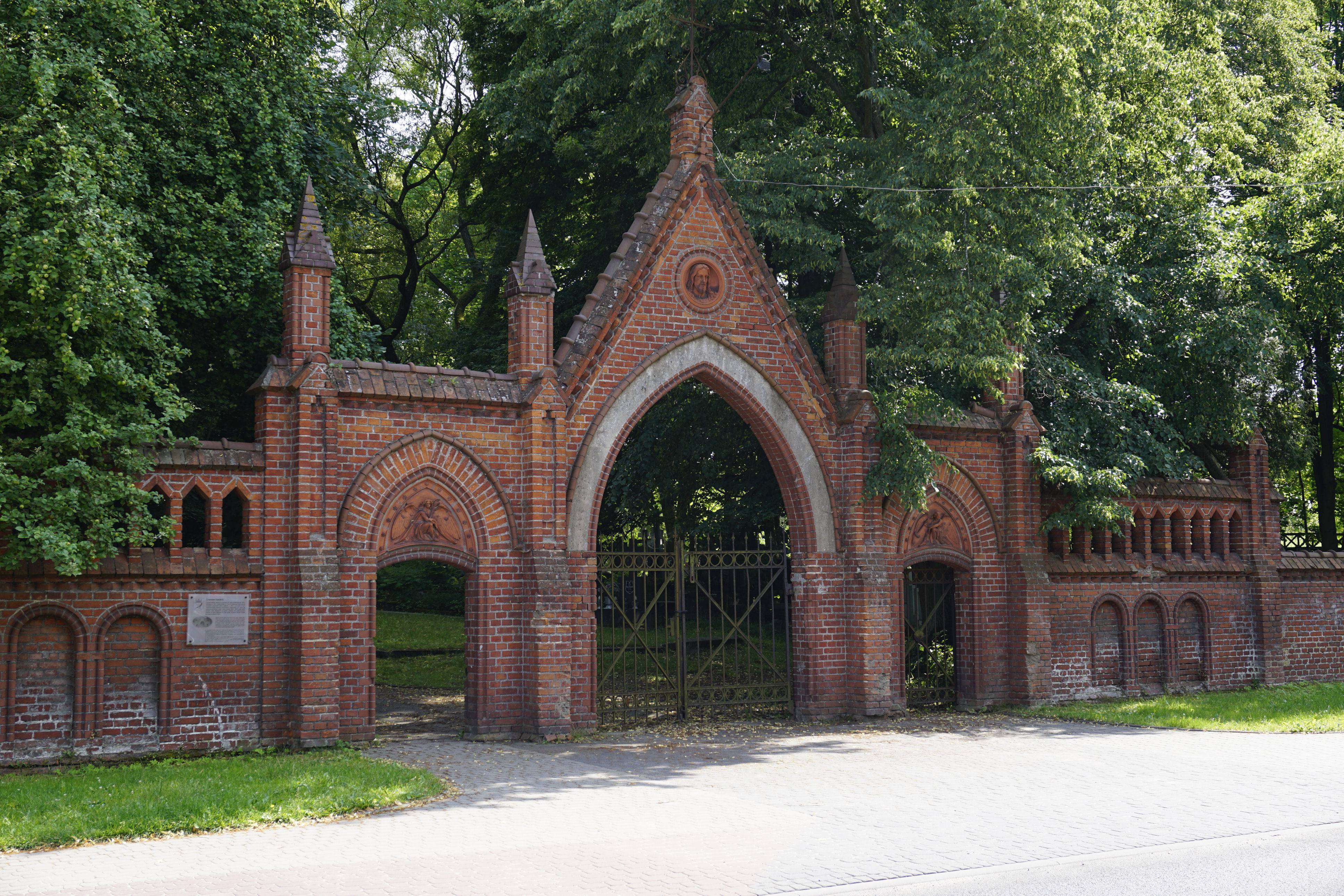
Toward the end of the 19th century, the cemetery was expanded to the northwest and south and enclosed by a fence. It then took on the shape of a trapezoid with a rectangular projection on the southern side. Following this change, a brick fence with an architecturally interesting Neo-Gothic gate was built along the street side. The gate, rich in architectural details, consists of five segments: the tallest, central segment forms the portal of the main entrance, while on either side are pointed-arch entrance portals with tympanums filled with sculptures. The lowest side segments are constructed as a wall symmetrically decorated with recessed niches, topped with semicircular arches, creating the appearance of a triforium. Both segments are crowned with an arcaded colonnade covered by a gable roof. The buttresses separating the segments are topped with simple pinnacles. A medallion depicting the head of Christ is placed within the pointed-arch portal of the entrance gate.
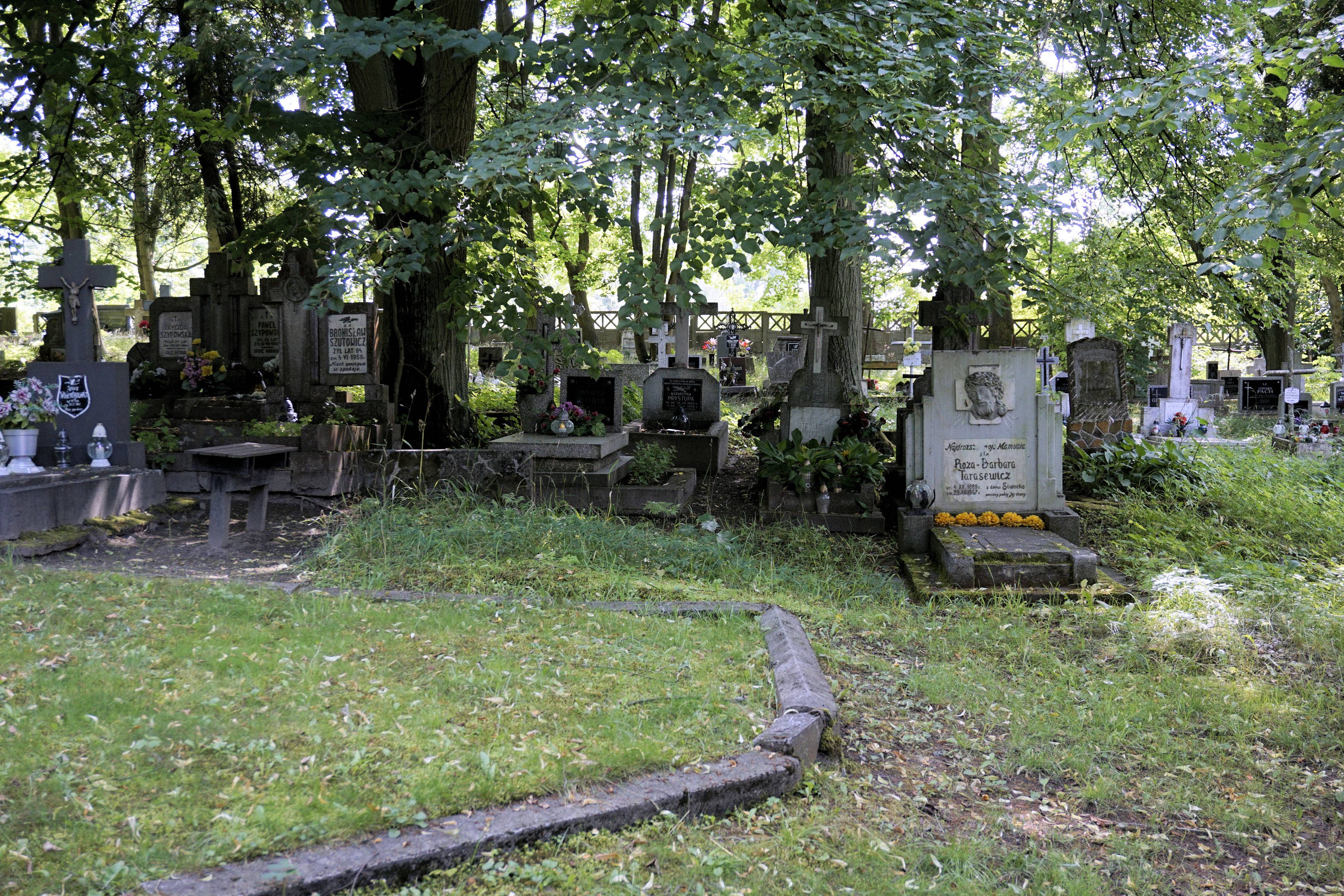
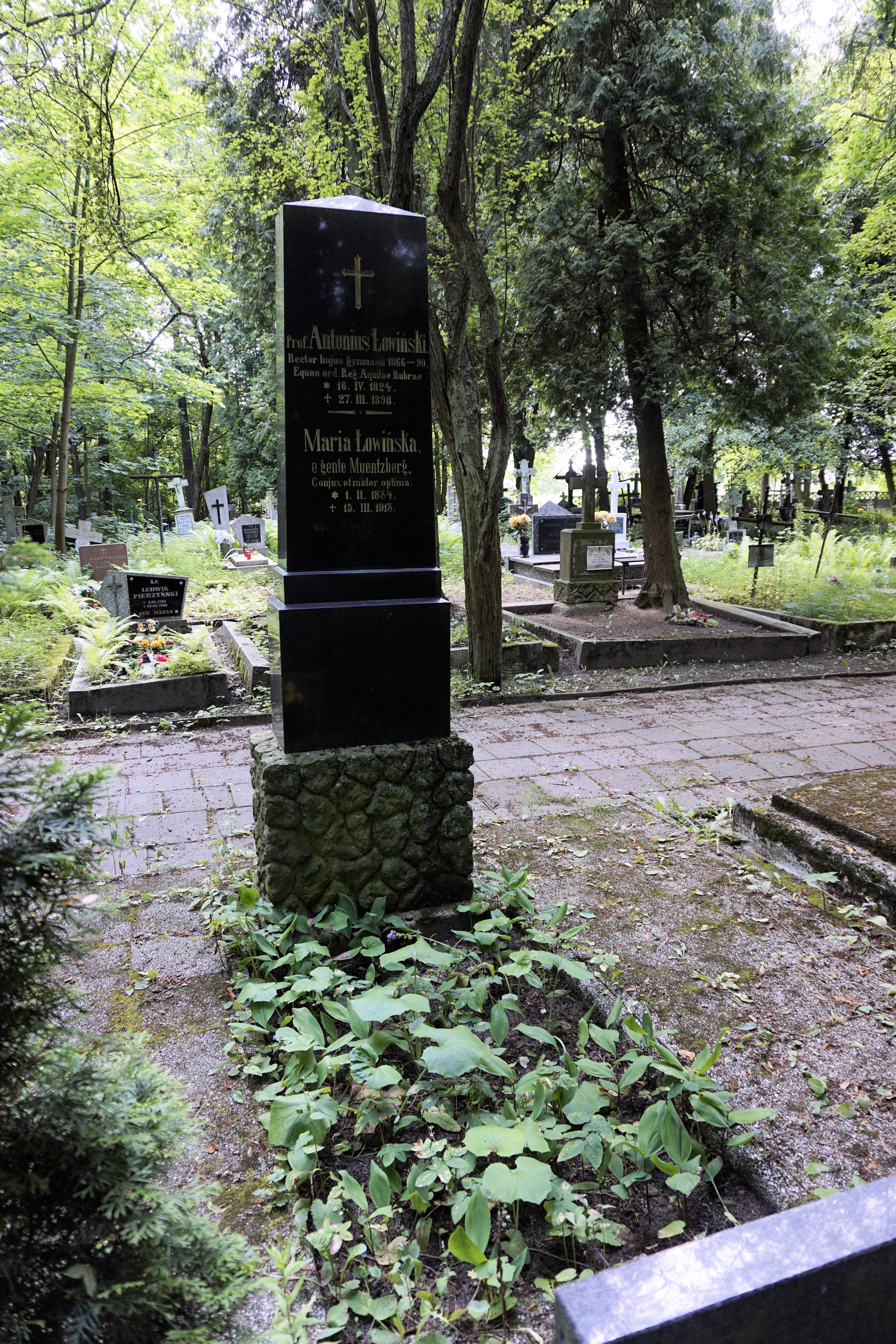
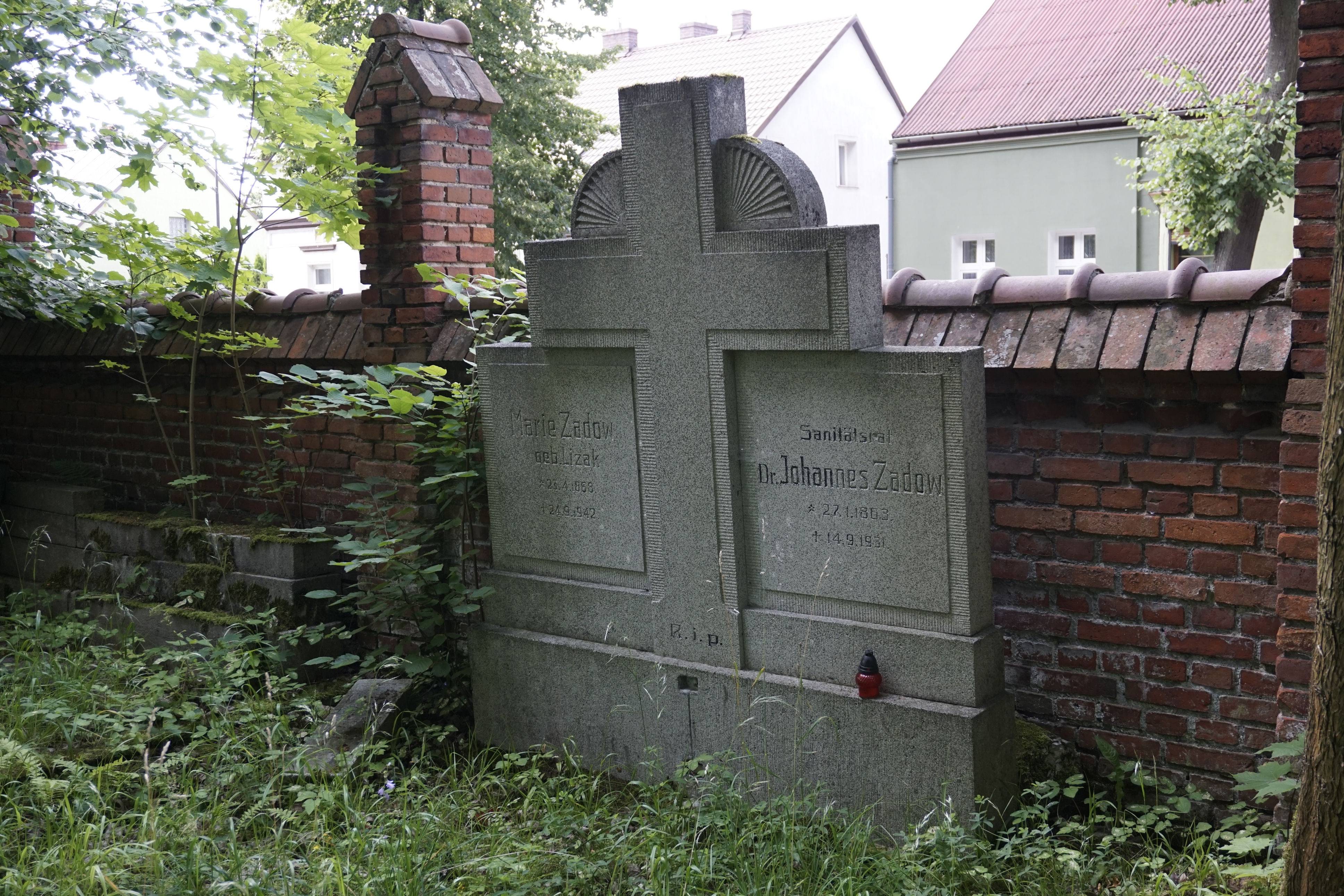
The cemetery has retained its regular layout and the row-based arrangement of the gravestones. There is a visible continuity of burials in the plots from 1913 to 1963, when the cemetery was closed. Gravestones from the earlier period have survived only sporadically. Noteworthy is the 1898 gravestone of Antoni and Maria Łowiński, made of black, polished stone on a pedestal of draped sandstone. Professor Antoni Łowiński was the last Polish principal of the Wałcz gymnasium (he held this position from 1866 to 1890). He taught Latin, Greek, and Polish in the three highest grades to Polish students and to those German students who wished to learn the language. Thanks to his discreet assistance, the secret student organization “Ul,” affiliated with the Philomaths, was able to flourish in Wałcz. Despite difficult political conditions, he managed to remain in his position as principal of the gymnasium for 24 years, despite being Polish. He died in Wałcz on March 27, 1898. Filomats would gather at his grave to witness the oaths of loyalty to Poland taken by new members joining the “Ul” organization. At the Łowiński family home, only Polish was spoken. Anticipating opposition from the Prussian authorities, Antoni Łowiński stipulated in his will that inscriptions on his tombstone be in Polish or, as a last resort, in Latin; should that prove impossible, he asked that the tombstone bear only the inscription R.I.P. (requiescat in pace—may he rest in peace) until such time as it would be possible to have an inscription in Polish. After lengthy legal proceedings, the family obtained a court ruling allowing for an inscription in Latin. After Hitler came to power, there were attempts to destroy this gravestone; the family managed to protect it, but the Germans turned it so that its back faced the main avenue.
In addition to this unique grave, there are other tombstones that are interesting for their appearance: for example, one in the form of a broken Ionic column, or the personification of a mourner resting on a broken Doric column.
The cemetery’s old-growth trees consist of deciduous species, mainly linden, ash, hornbeam, and maple, mixed with conifers: spruce and thuja.