Routes and trips
 Map
Map MPR - cyclist-friendly places
 POI
POI Plan your trip
 Bike counters
 Publications
 News
News Route concept
 Contact
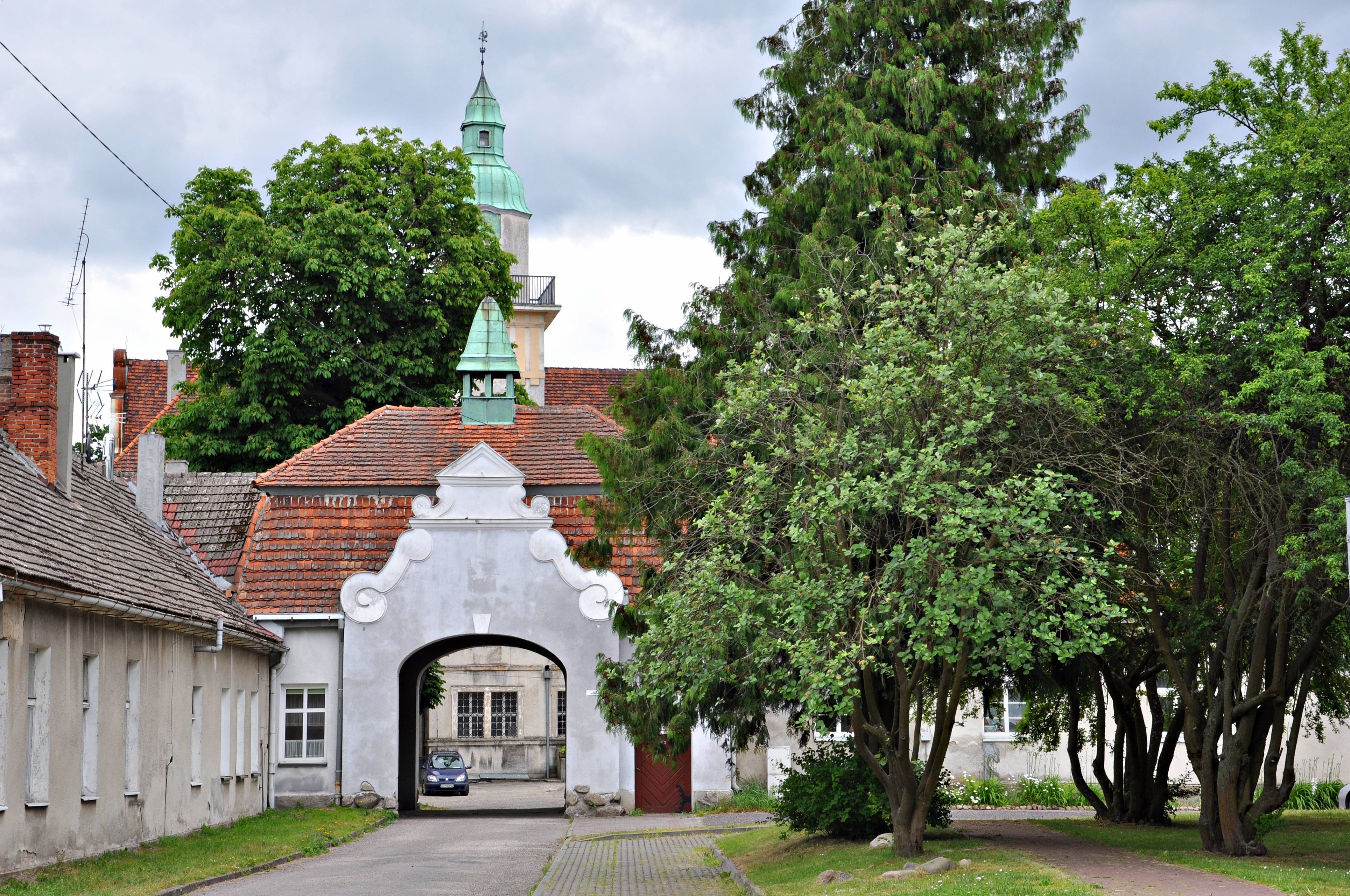
 The Old Town Area
 Płoty is one of the three towns in Gryfice County, and—just as in Gryfice and Trzebiatów—the town’s founding and the establishment of its urban functions were determined by the topography of the area, namely its location on a moraine plateau surrounded on three sides by the Rega River valley. Today, taller buildings and land-use changes obscure the topography of these towns, which was once clearly visible. In Płoty, the main roads lead to an intersection and a bridge over the Rega River. This bridge is situated between two castles—it is the best place to learn about the town’s history and present-day life. Medieval Płoty, which was founded under Lübeck law in 1277, was situated south of the stronghold, on higher ground in a bend of the river. This was the point where the main roads leading to Trzebiatów and Kołobrzeg,
as well as to Szczecin. Probably due to its location on an important trade route, the town was never fortified with defensive walls. In the second half of the 13th century, south of the chartered town, construction began on a stone-and-brick residential tower (now known as the Old Castle)—the seat of the owner of Płoty, Dobiesław Wotuch. The tower, which served a function similar to that of a stronghold, was conveniently situated for defense on a high riverbank near a ford. It was a residential tower built on a stone platform measuring 28 × 36 m. The stronghold thus occupied a defensive position and was additionally separated from the settlement by a moat.
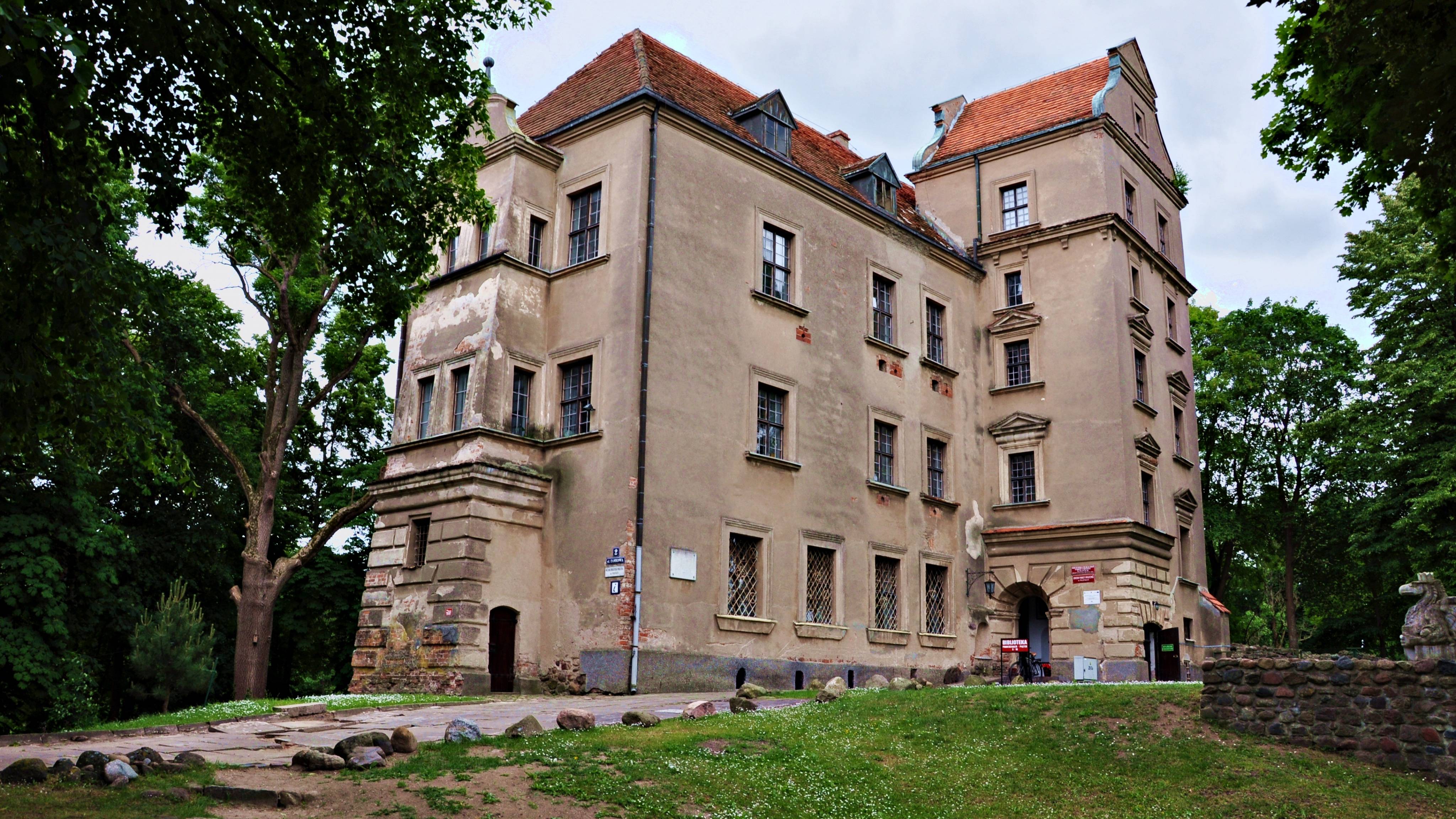
In the following centuries, the tower was expanded using stone and brick. Over time, the Gothic structure was rebuilt in the Renaissance style. The building was restored between 1959 and 1967. Part of the medieval stone walls has survived in good condition. The von Osten family were the town’s later owners. It was they who, after selling the old castle, began construction of a new one—located 200 m south of the church—which was also surrounded by the Rega River, a moat, and ramparts.
The newer castle, architecturally similar to the old one and also undergoing many phases of expansion later on, was built between 1606 and 1618. In the 18th century, it underwent significant modernization, which gave Płoty a truly stately building surrounded by a park with an interesting array of trees. Among the trees growing there are a chestnut tree with branches arranged in an interesting pattern around the main trunk (a natural monument), as well as a hazel tree, a Japanese pear tree, and Douglas firs. Like most castles, this one also has its own legend, featuring Kinga, the daughter of the castle’s then-owner, Dinnies Osten, who was—as we would say today—“professionally” connected to Eric, the ruler of Denmark, Sweden, and Norway. Kinga fell in love and became engaged—against her father’s will, of course—to one of the townspeople. Her stern father forbade the lovers from seeing each other. With no other option, the heartbroken Kinga threw herself from her castle chamber. The impact with the stone ground at the foot of the castle ended her short life. Ever since then, the creaking of the stairs that led to her chamber has often been heard. As those who have heard it say, the stairs lament the tragic fate of the unhappily enamored Kinga.