Routes and trips
 Map
Map MPR - cyclist-friendly places
 POI
POI Plan your trip
 Bike counters
 Publications
 News
News Route concept
 Contact
 Old Town
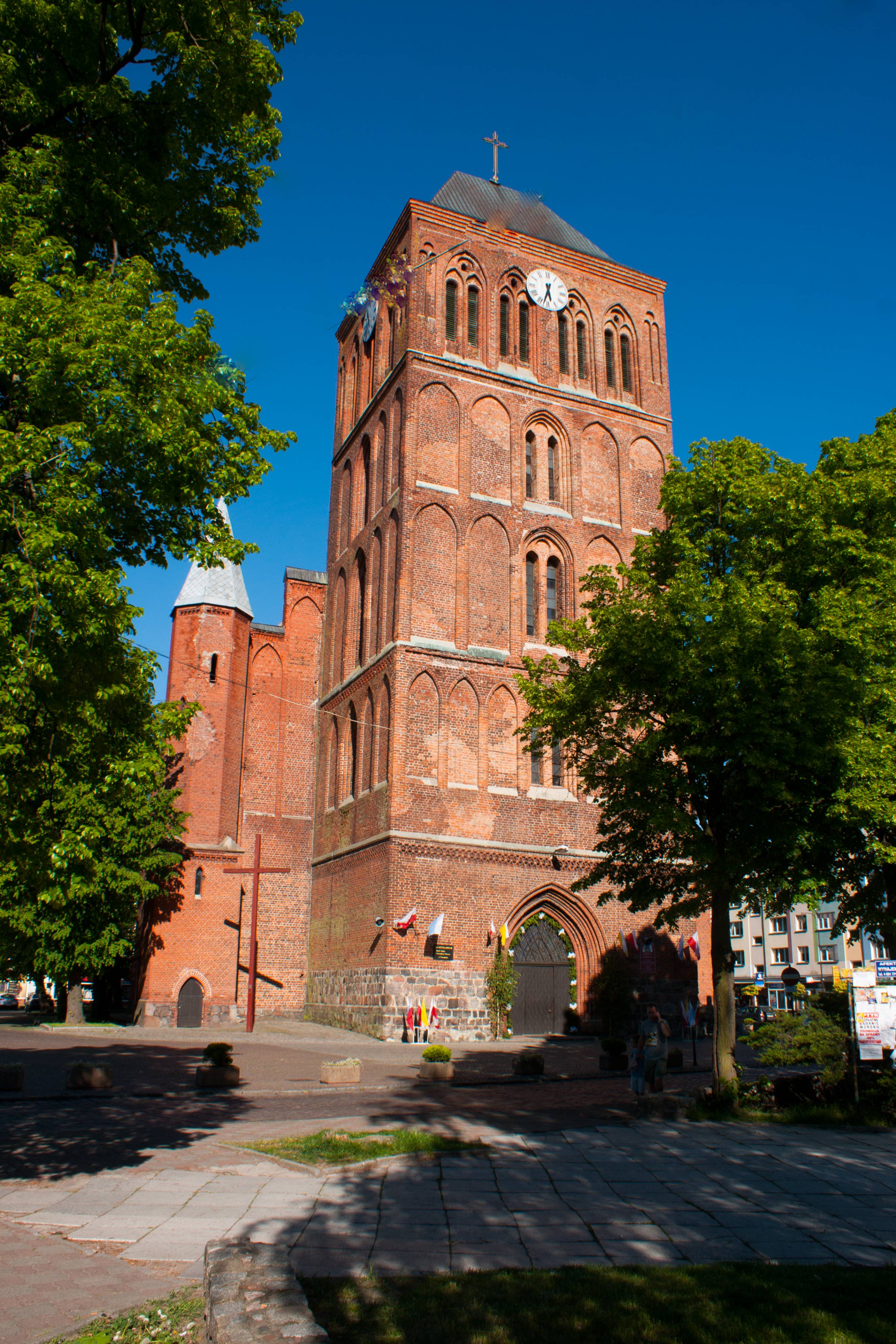
 The history of Choszczno dates back to the 13th century. In 1284, the town received its town charter. By the end of the 13th century, the town covered an area of 24 hectares. It was laid out in a latitudinal grid pattern and had a semi-oval shape. It was divided into four quarters, with the market square at its center. In the 14th and 15th centuries, the town experienced an economic and political boom. At that time, the town’s layout consisted of a four-sided market square, a grid of four main and cross streets, and a system of fortifications. The market square featured a parish church with a cemetery, the town hall, a merchant’s house, market stalls, and butcher shops. The city’s defensive system consisted of stone-and-brick walls, 36 watchtowers, 5 defensive towers, and 3 gates: Wysoka, Młyńska, and Kamienna.
During the Thirty Years’ War (1618–1648), the city suffered significant destruction. Of the original buildings, only the city fortifications remained. When rebuilding the city after the war, the density of the buildings was reduced, and the main streets were paved. Street pumps were installed toward the end of the 18th century. Until the 19th century, the city’s buildings were located within the walls and in the suburbs outside the city gates. In the 1920s and 1930s, buildings were constructed along streets laid out south of the Old Town.
When Choszczno was captured by Soviet troops in February 1945, 1,345 buildings—over 80% of the city’s structures—were destroyed. The Old Town suffered the most damage. The painstaking reconstruction of the city continued into the 1960s. Only a few pre-war structures have survived, including the parish church, the barbican, half of the water tower, the train station, and remnants of the city wall. In 1984, Choszczno celebrated the 700th anniversary of its founding. The Old Town area is listed in the register of historic monuments.