Routes and trips
 Map
Map MPR - cyclist-friendly places
 POI
POI Plan your trip
 Bike counters
 Publications
 News
News Route concept
 Contact
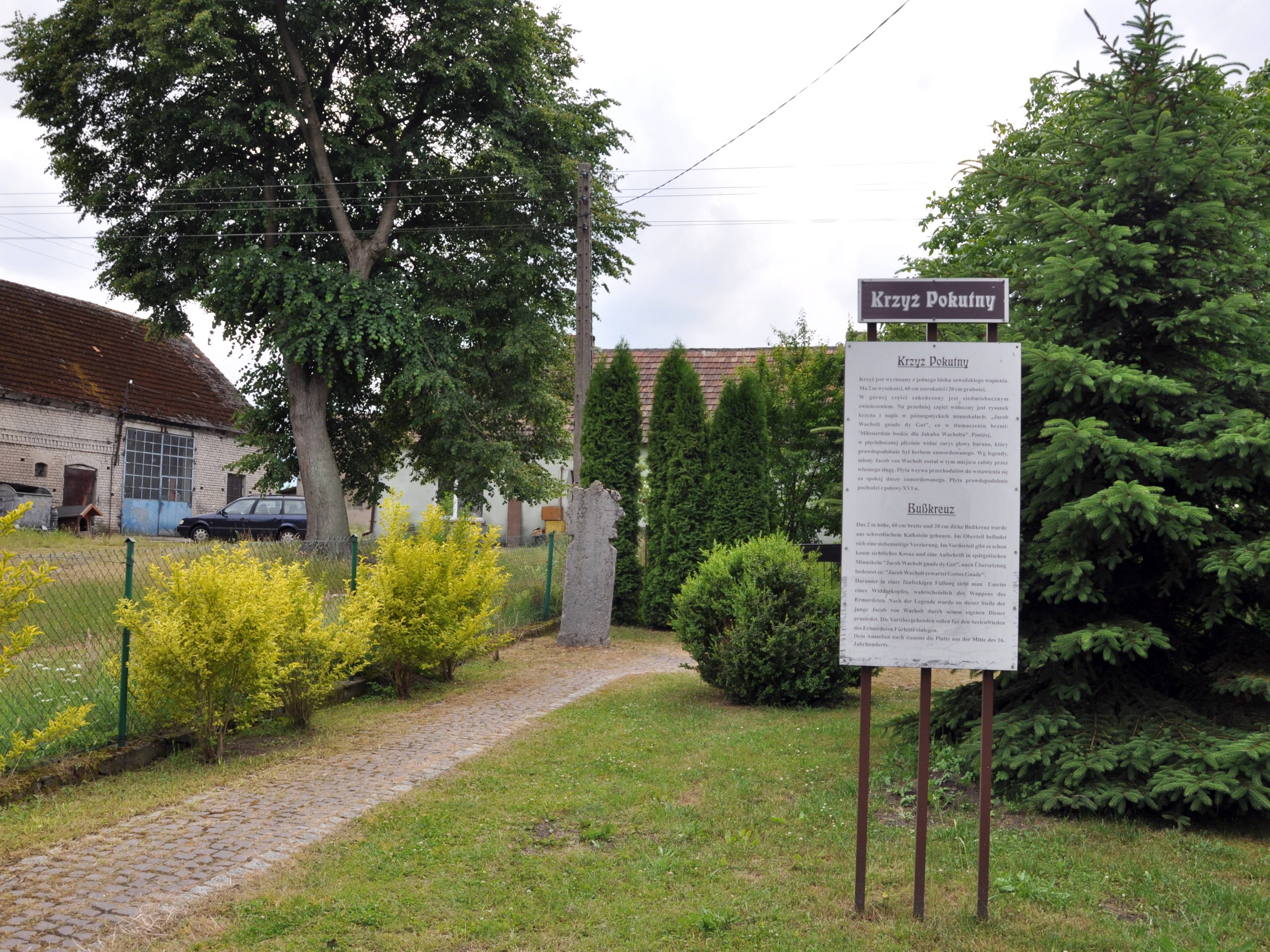
 Penitential Cross
 Penitential crosses are somber reminders of the law. They were erected by murderers at the sites of their crimes as part of their penance for the act they had committed. The crosses served both as memorials to the deceased and as a warning to future generations. In addition to erecting the cross, the murderer covered the costs of the funeral, the trial, compensation, and a Mass for the soul of the deceased. Furthermore, he undertook a pilgrimage to a holy site while wearing penitential garb. The erection of the cross, at least in a formal sense, symbolized the murderer’s reconciliation with the victim’s family.
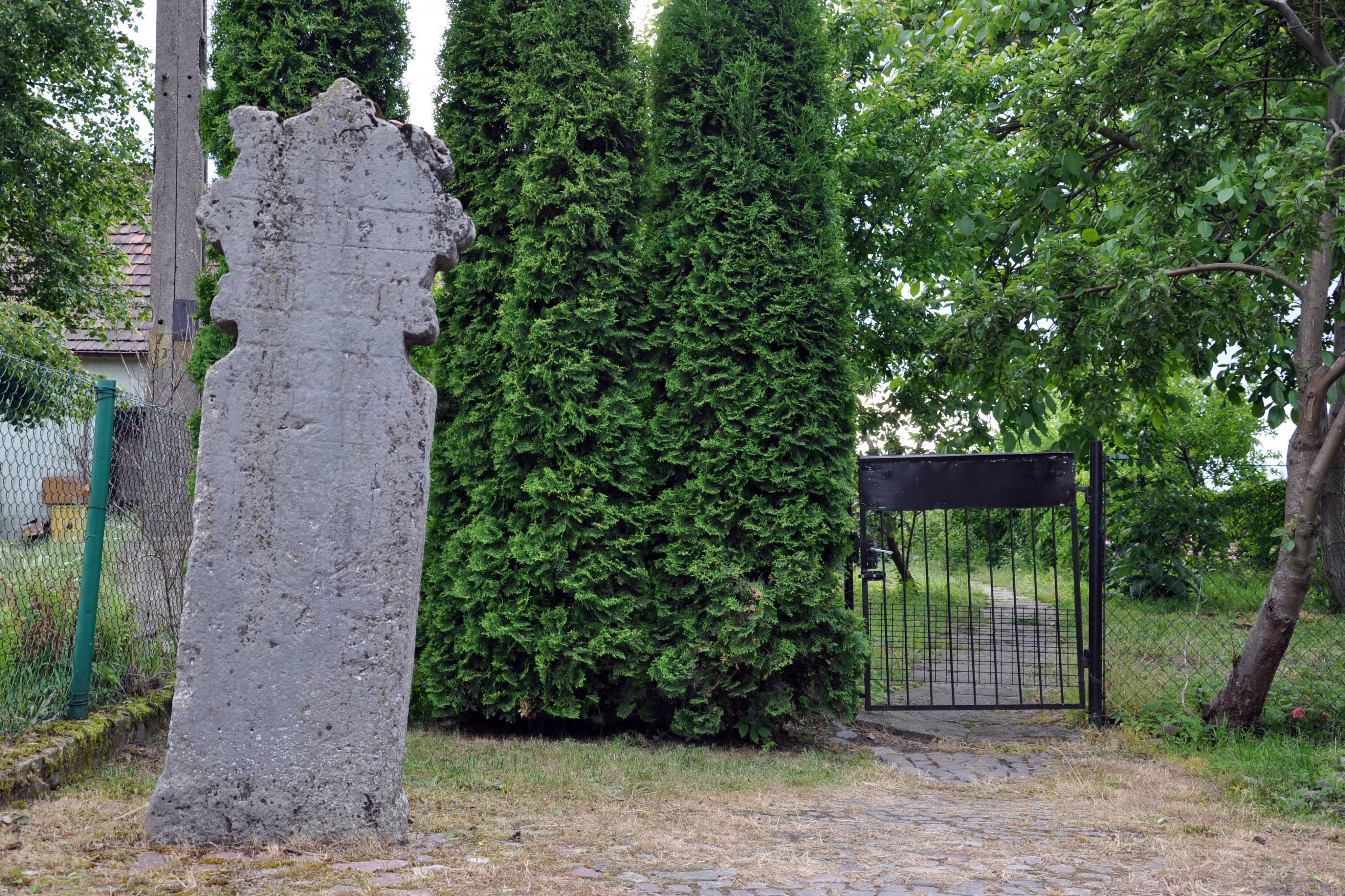
The Trzebiatów cross is one of two surviving examples in the West Pomeranian Voivodeship. It is not a typical penitential cross of the kind found, for example, in Lower Silesia. It takes the form of a stele and was made of reef limestone imported from Gotland. For these reasons, a more appropriate name would be “stone of murder.” Historians date its creation to the first half of the 16th century, when the custom of erecting penitential monuments was slowly fading—hence, presumably, its unusual form. On March 1, 1544, at the very spot where the stone now stands, he was killed by his servant, Jacob Wachholz. Adding to the drama is the claim that the murderer was paid by the abbot of the Białobłocki monastery, with whom the family was in conflict.
The nearly two-meter-tall stele is topped with a circle adorned with seven clover leaves. At the bottom of the circle, the inscription “Jacob Wacholt gnade dy got” (God’s mercy upon Jacob Wacholtz) is carved. Below it appears the Wachholz family coat of arms—a ram’s head. At the beginning of the 20th century, a sprig with three flowers or triple leaves was visible on the slab. Unfortunately, it has since become worn away.