Routes and trips
 Map
Map MPR - cyclist-friendly places
 POI
POI Plan your trip
 Bike counters
 Publications
 News
News Route concept
 Contact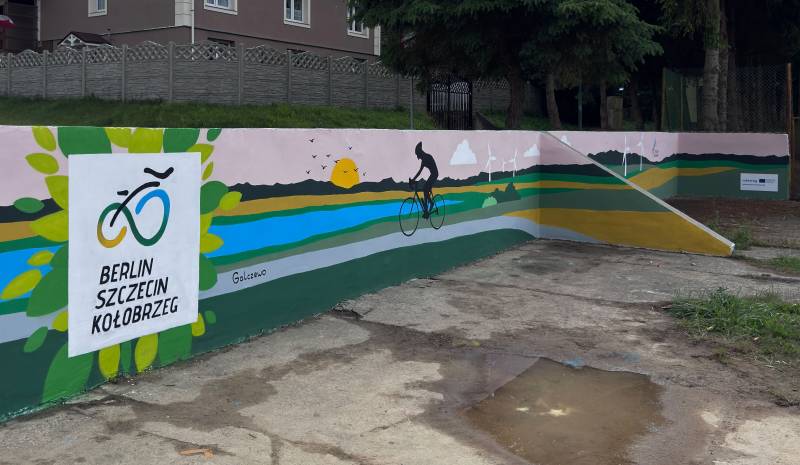
It is no coincidence that the first of the three murals planned for the route was created in Golczewo. Construction is currently underway here on a 5-kilometre section of cycle path leading to the village of Upadły, which will form part of a larger whole. Ultimately, a coherent Route 800 will be established across four districts – Goleniów, Gryfice, Kamień and Kołobrzeg – running from Stepnica, through Gryfice, all the way to Gościno, with the option to continue on the Blue Velo and Old Railway Trails. Filling this gap in the West Pomeranian cycle route network – which already spans hundreds of kilometres – will create an 800-kilometre loop linking Szczecin, Kołobrzeg and the German capital.
– Today, it is quite safe to cycle to Kołobrzeg from Berlin, but you have to do so via the bridge at Siekierki as part of the Lake District Route. We want it to be possible to do this from the north, discovering the wonderful areas of the Goleniowska Forest, the Golczewo region and the Gryfice region. It is certainly set to be a very charming route,” says Olgierd Geblewicz, the province’s marshal.
“This route will connect places previously inaccessible to cyclists, but it will also bring people together. It opens up new possibilities and creates a cohesive, modern, cycle-friendly Western Pomerania,” adds Wanda Nowotarska, the Provincial Marshal’s representative for cycling infrastructure.
They have left an artistic mark
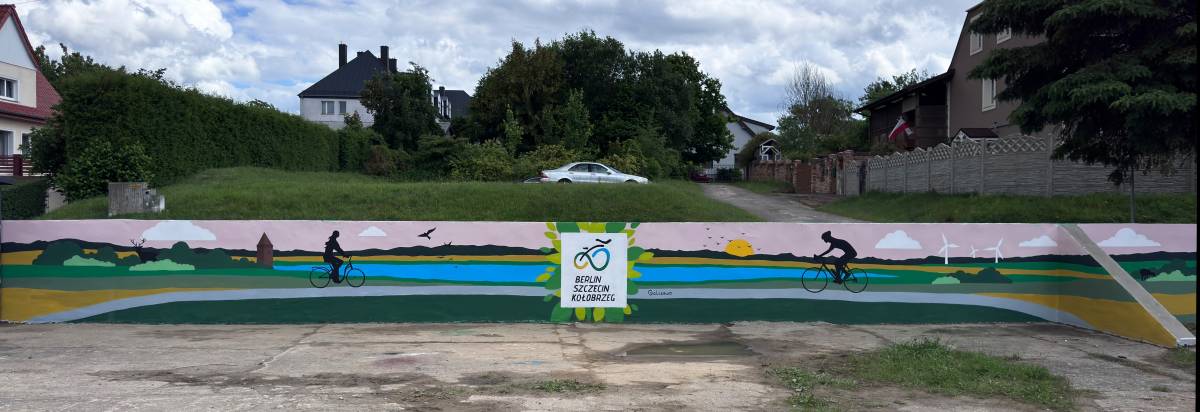
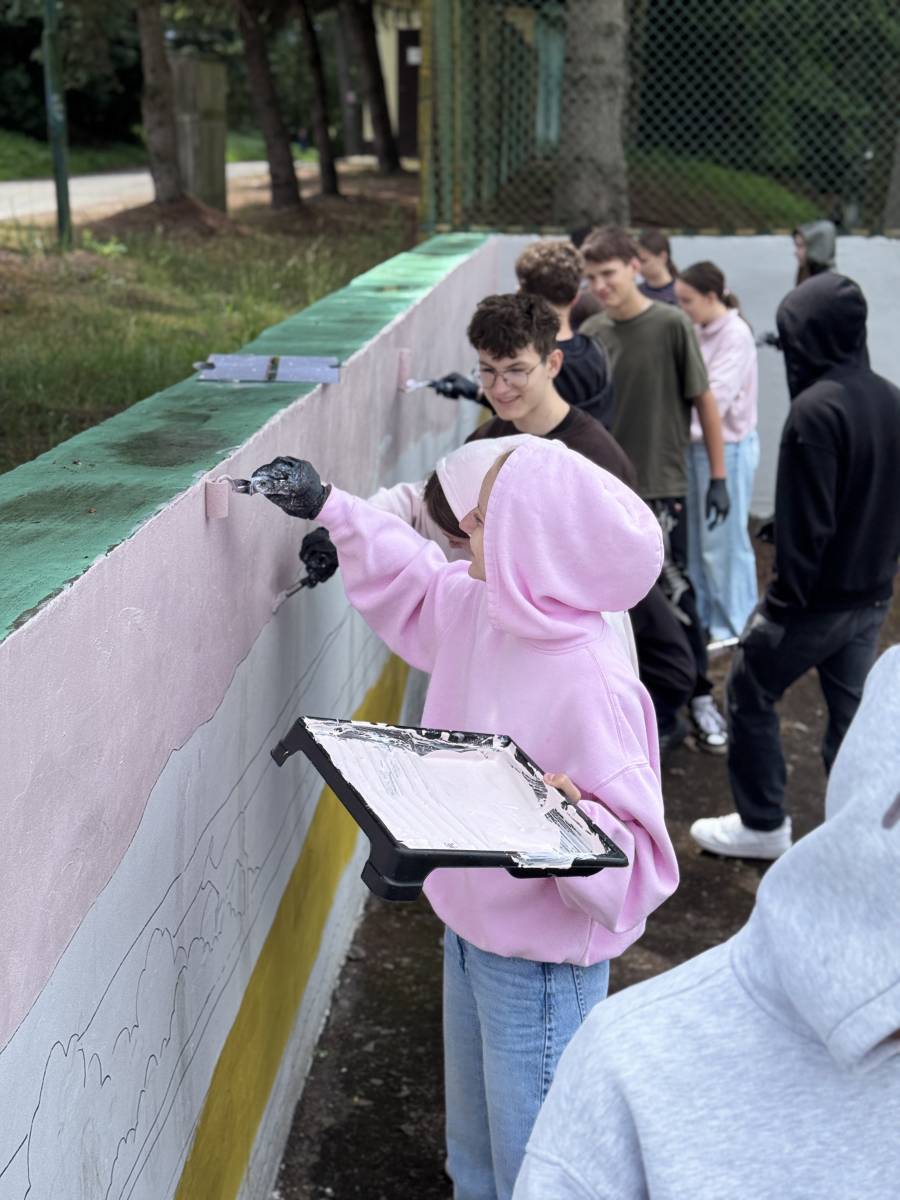
Work on the building site goes hand in hand with artistic activities, which also engage the local community. Pupils from the Public School Complex in Golczewo have created a mural that will be one of the attractions on the international trail. They worked under the watchful eye of Michał Szarka, a street artist.
Pupils from Year 8 were selected for the task. Why them in particular? “These are the pupils who will be leaving our school any day now. I wanted them to leave some kind of mark behind. Now I can see their work from my office window and I know it will stay with us for years to come.” Every future headteacher will also be able to look at it, and the pupils themselves will have a memento near their former school,” says Monika Kiełbasa, headteacher of the Public School Complex in Golczewo.
Before the young artists set to work on the wall prepared for the mural, Michał Szarko told them about the history of graffiti and street art culture, explaining the differences between the two genres. They also discussed ethics in the world of street art, as well as examples of well-known works and artists in Poland and around the world. The young people threw themselves into the work, which brought them a great deal of joy and satisfaction. Not even the falling rain dampened their spirits.
The pupils learnt, amongst other things, that such works can have a positive impact not only on the aesthetics of buildings and their surroundings, but even on air quality. Eco-murals that absorb toxins such as smog, bacteria and allergens are now also being created in Western Pomerania. Three more such projects are planned along the route between Berlin, Szczecin and Kołobrzeg: in Gościno, where the planned section of the trail will link up with the existing Old Railway Trail; on the viaduct along cycle route No. 20 by provincial road No. 125; and near Klępicz Station, a place already well known to any cyclist who has travelled the Western Lake District Route between Trzcińsko Zdrój and Siekierki. The murals are being created to make the route more attractive. They will not only serve as aesthetic touches that will enrich the tourists’ experience, but will also provide material for promoting the route on social media.
Coming soon
Work in Golczewo is already halfway through. The handover of the construction site took place in February this year, and the cycle path between Golczewo and Upadły is due to be completed by October. Tenders for further sections of Route 800 – Stepnica–Babigoszcz, Kłodzino–Golczewo and Upadły–Świeszewo – will be announced shortly. By 2029, a completely new section of the route, over 82 km long, will be built between Stepnica and Ryman.
Once the project is complete, it will be possible to cycle from the Golczewo municipality to: Szczecin and Wolin (west), Gryfice and Trzebiatów (north), and Kołobrzeg and Białogard (east).
As well as the creation of a cycle route that will enable cyclists from many countries to visit for several days and which will pass through areas of tourist interest – on both the Polish and German sides – residents of the various municipalities and districts will also gain their own local cycle paths for recreational use.
– We are all eagerly awaiting the first completed sections of the route. In Golczewo, we haven’t had any safe places so far where you can simply go out for a cycle. We’ll soon have such a space, and I’m convinced that many people will make use of it – adds Monika Kiełbasa.
This is, of course, not the only place on the map of Western Pomerania where work is currently underway on the construction of further sections of the trails. Information on all roadworks, disruptions and diversions can be found in the ‘Rowerzem Przez Pomorze Zachodnie’ app, which is updated regularly. Thanks to the app, you can plan your rides, find out what attractions (monuments, key tourist spots) await you along the route, and also avoid any potential obstacles associated with the ever-expanding network of cycle routes.
Work on the German side: a diversion from August
It is worth noting that our German partners are also contributing to the initial stages of the future tourism product. Since mid-June, renovation work has been underway on the cycle path between the border towns of Mescherin and Gartz. This is a very popular stretch among cyclists from Szczecin and the surrounding area. In the first phase of the project, new rest and recreation areas will be created: covered shelters with seating, charging points for electric bikes and so-called ‘smartbenches’. During this first phase of construction, there will be no restrictions on the Oder-Neisse cycle route. It is not until the beginning of August this year that a comprehensive renovation of the route section is scheduled; due to the necessary construction work, this section is likely to be completely closed until the first quarter of 2027. A signposted diversion route will be put in place at that time. It runs through Gartz (Oder), Hohenreinkendorf, Tantow, Geesow and Mescherin.
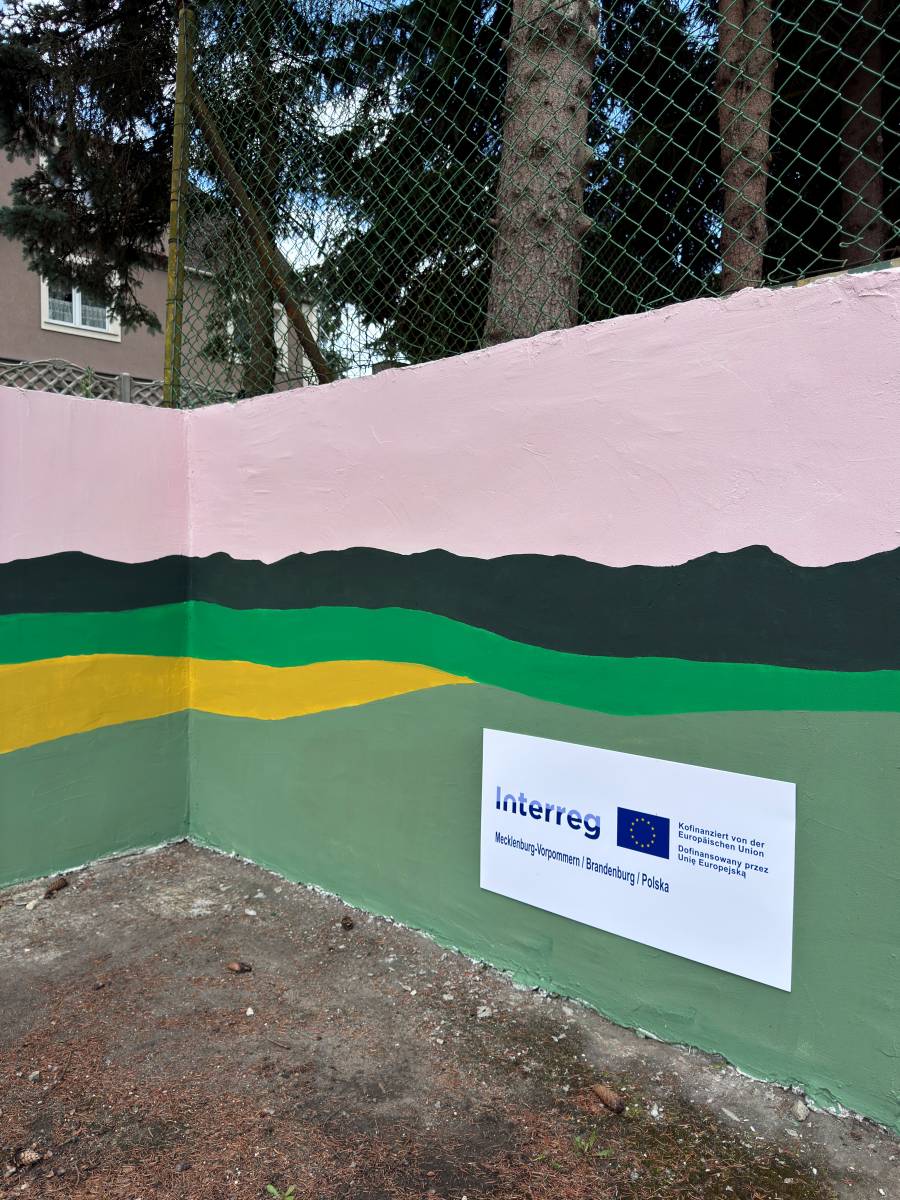
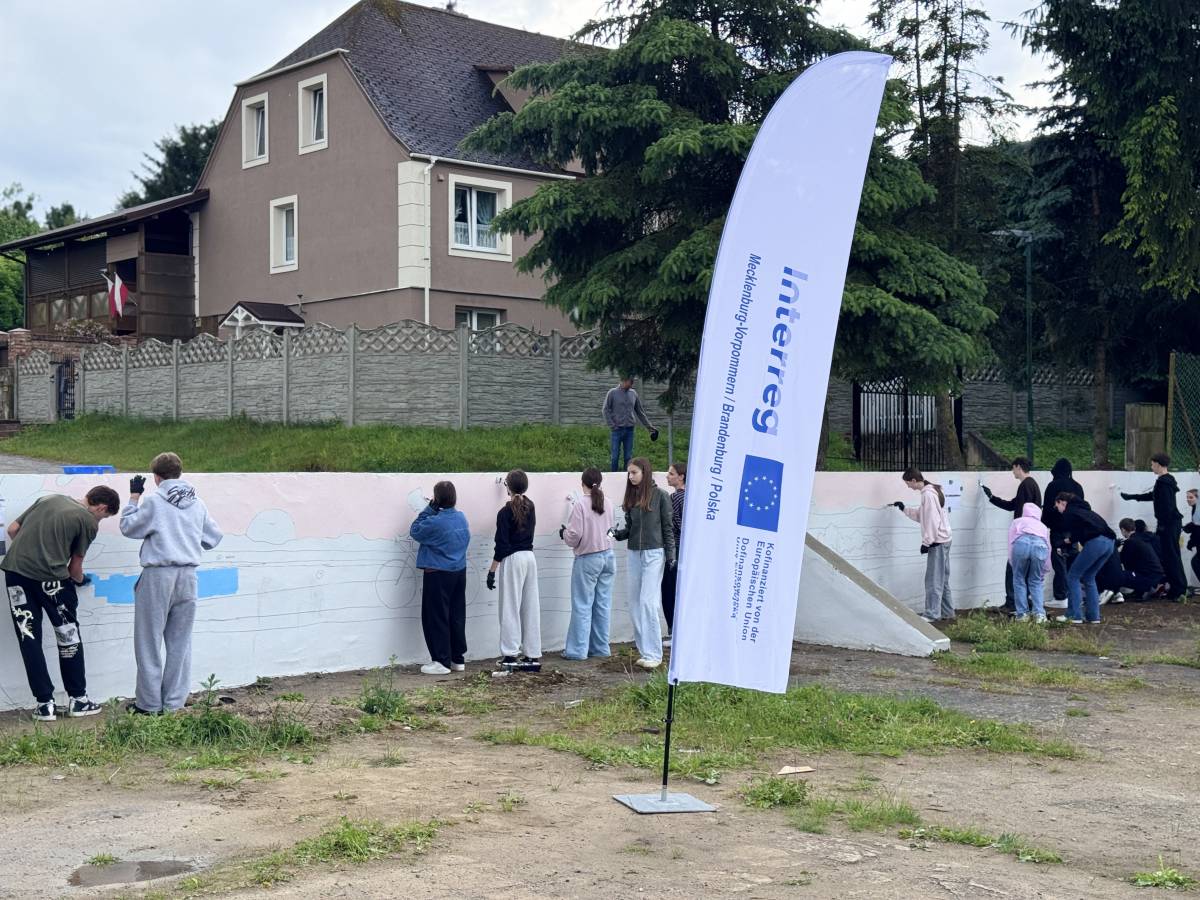
This initiative and article are co-financed by the European Union under the project entitled ‘Berlin–Szczecin–Kołobrzeg Cycle Route’, implemented as part of the Interreg VIA Mecklenburg-Vorpommern/Brandenburg/Poland Cooperation Programme 2021–2027.