Routes and trips
 Map
Map MPR - cyclist-friendly places
 POI
POI Plan your trip
 Bike counters
 Publications
 News
News Route concept
 Contact
 Water and Energy – Berlin's Industrial Heritage
 “Water and Power” Bicycle Route, developed by Berlin Center for Industrial Heritage. industriekultur.berlin
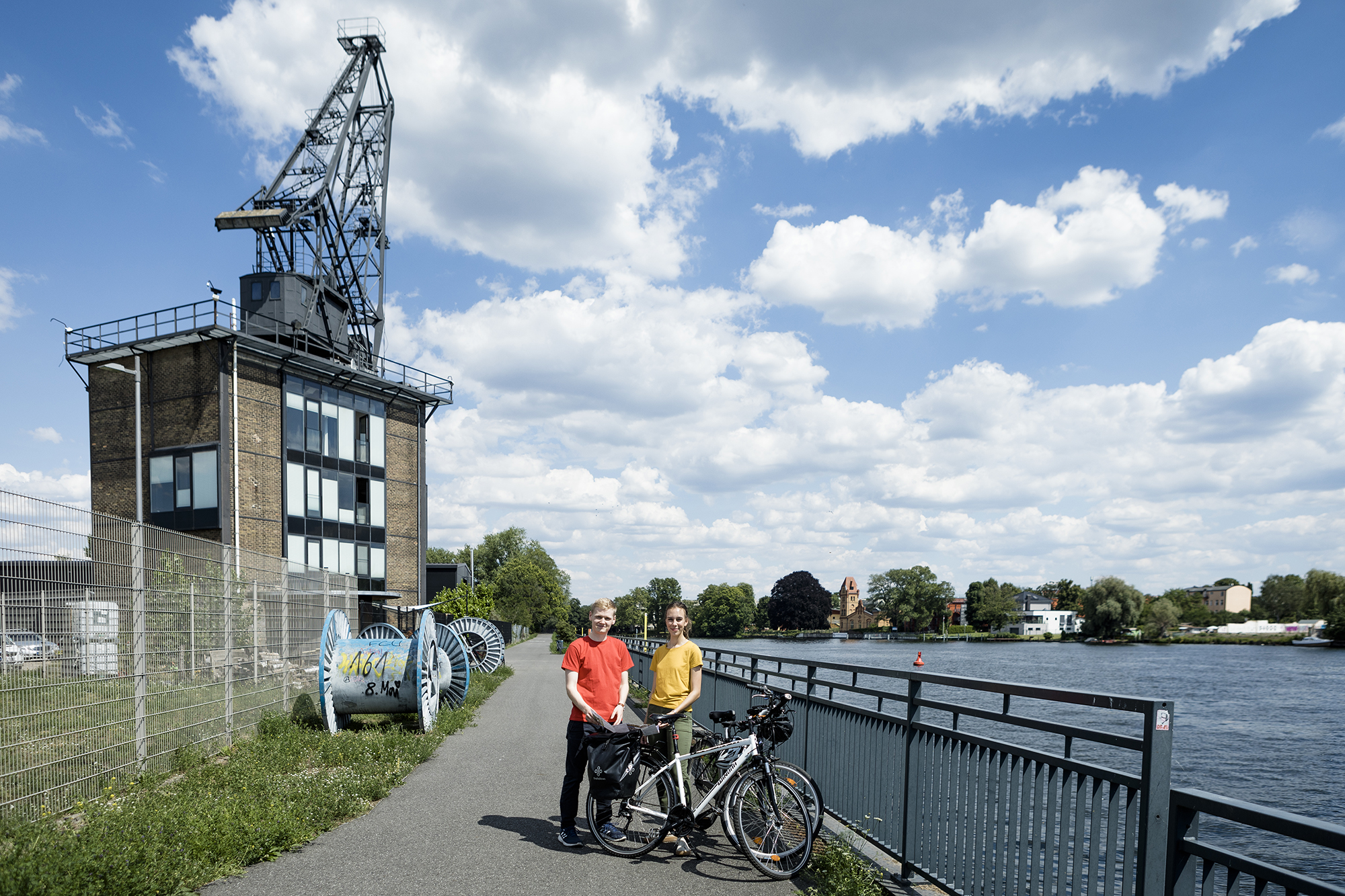
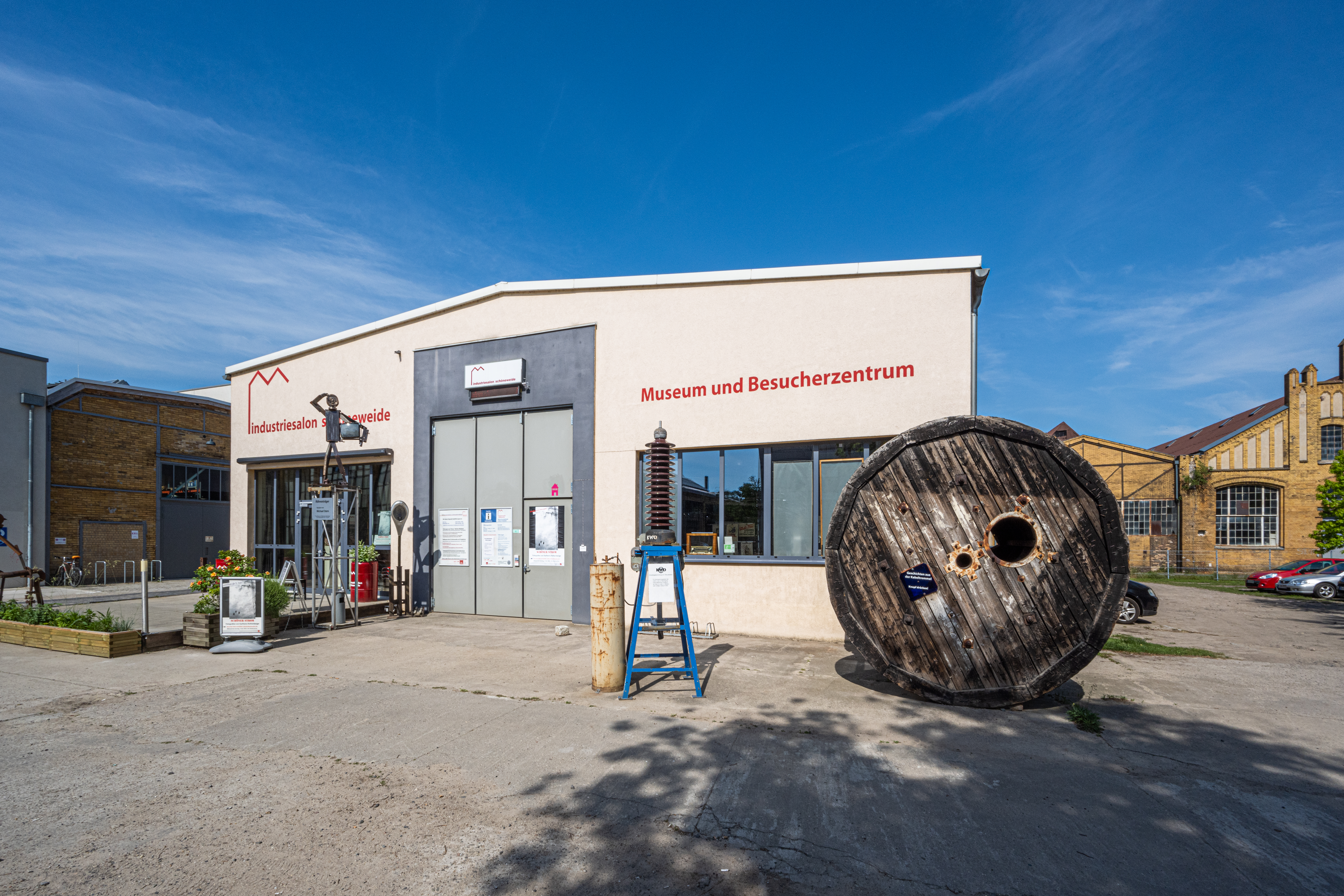
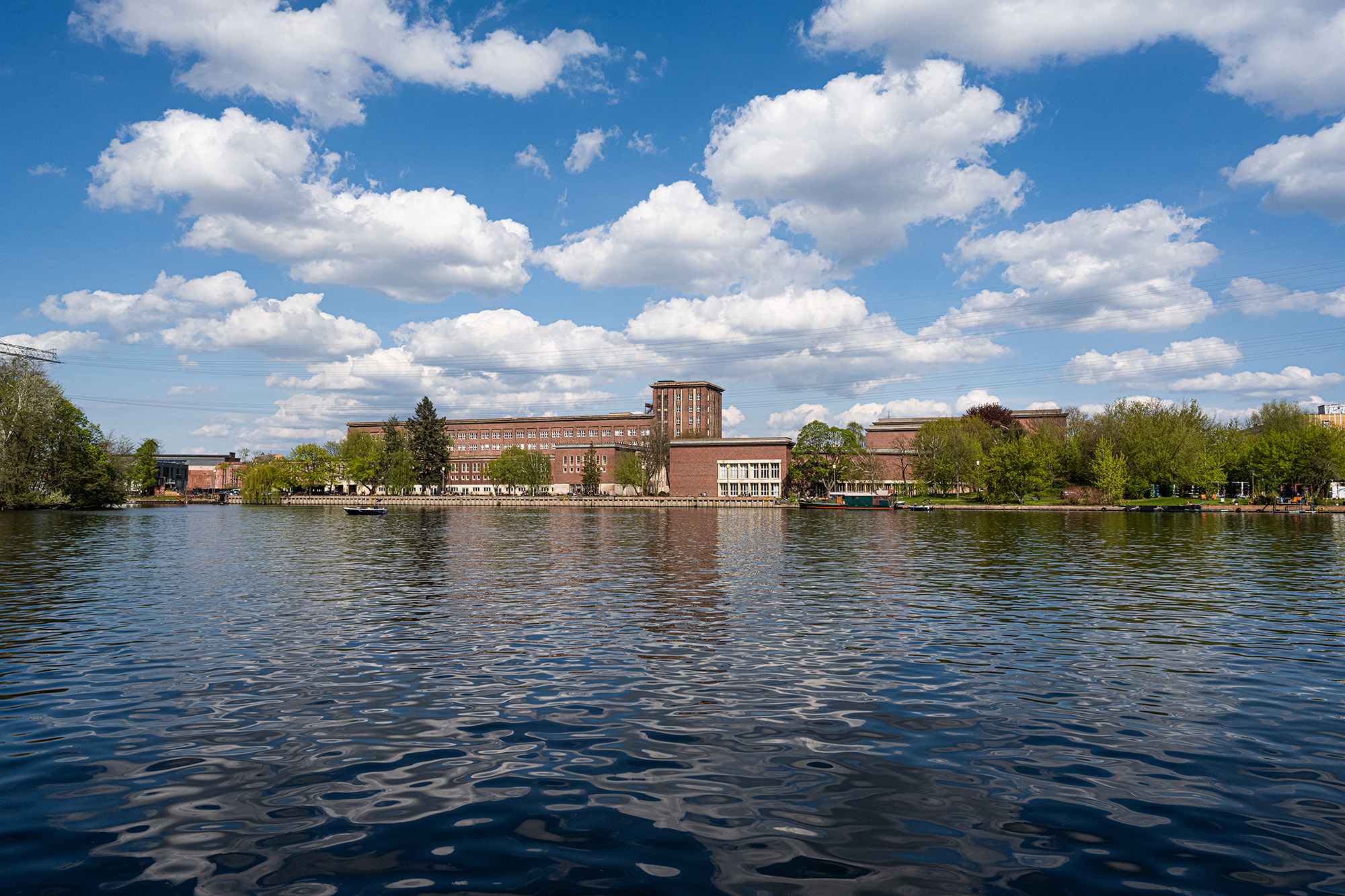
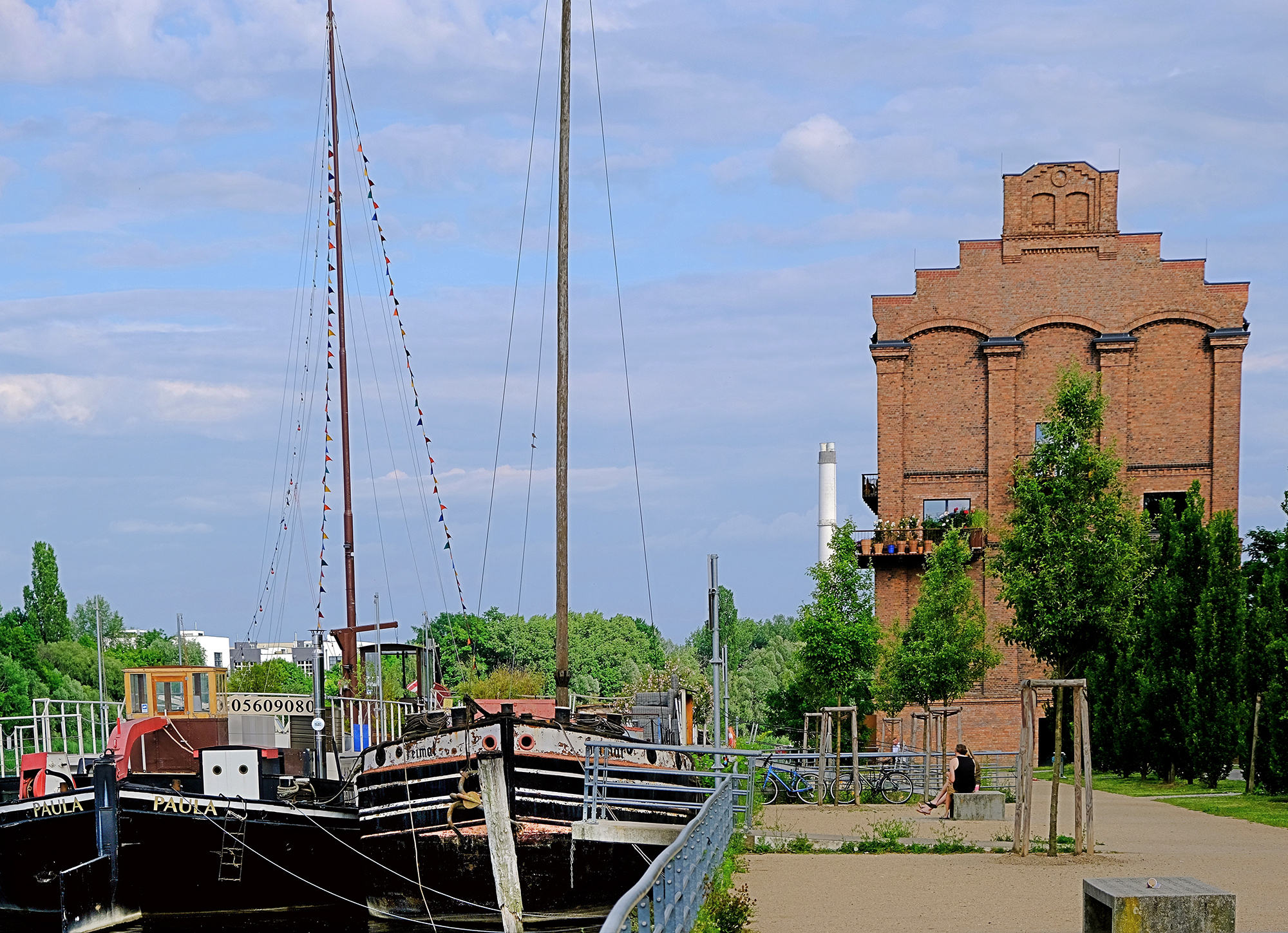
Industry was booming in late-19th-century Berlin. The down- town area became so cramped that companies expanded into the environs of the city. In 1895 AEG began building a three-phase electric power plant and an electric cable factory on what was then a “pleasant pasture,” or schöne Weyde. The site became a hub for new AEG enterprises and, as part of the Berlin “electropolis,” a driver of Europe’s electrification. Oberschöneweide developed into a model urban quarter with gigantic factories along the Spree, neighboring residential areas, and Wuhlheide Park. New rail and shipping lines transported raw materials and finished goods. The Bullenbahn, or “Bull Train,” hauled heavy loads. Barges lined the Spree.
AEG commissioned leading architects to build impressive industrial facilities here on the upper Spree, just as Siemens was doing on the lower Spree on the west side of town. A new architecture with its own distinctive style arose. Flexible floor plans allowed for changing production needs to be met. After WWII these companies were nationalized as “publicly owned enterprises” (Volkseigene Betriebe, or VEB for short) and bundled into collectives. Five massive concerns employed 25,000 workers, making Oberschöneweide the heart of the East German electrical industry. This strip of factories about 3 km long now features one of the largest groupings of historic monuments in Germany.