Routes and trips
 Map
Map MPR - cyclist-friendly places
 POI
POI Plan your trip
 Bike counters
 Publications
 News
News Route concept
 Contact
 The County Employment Office Building
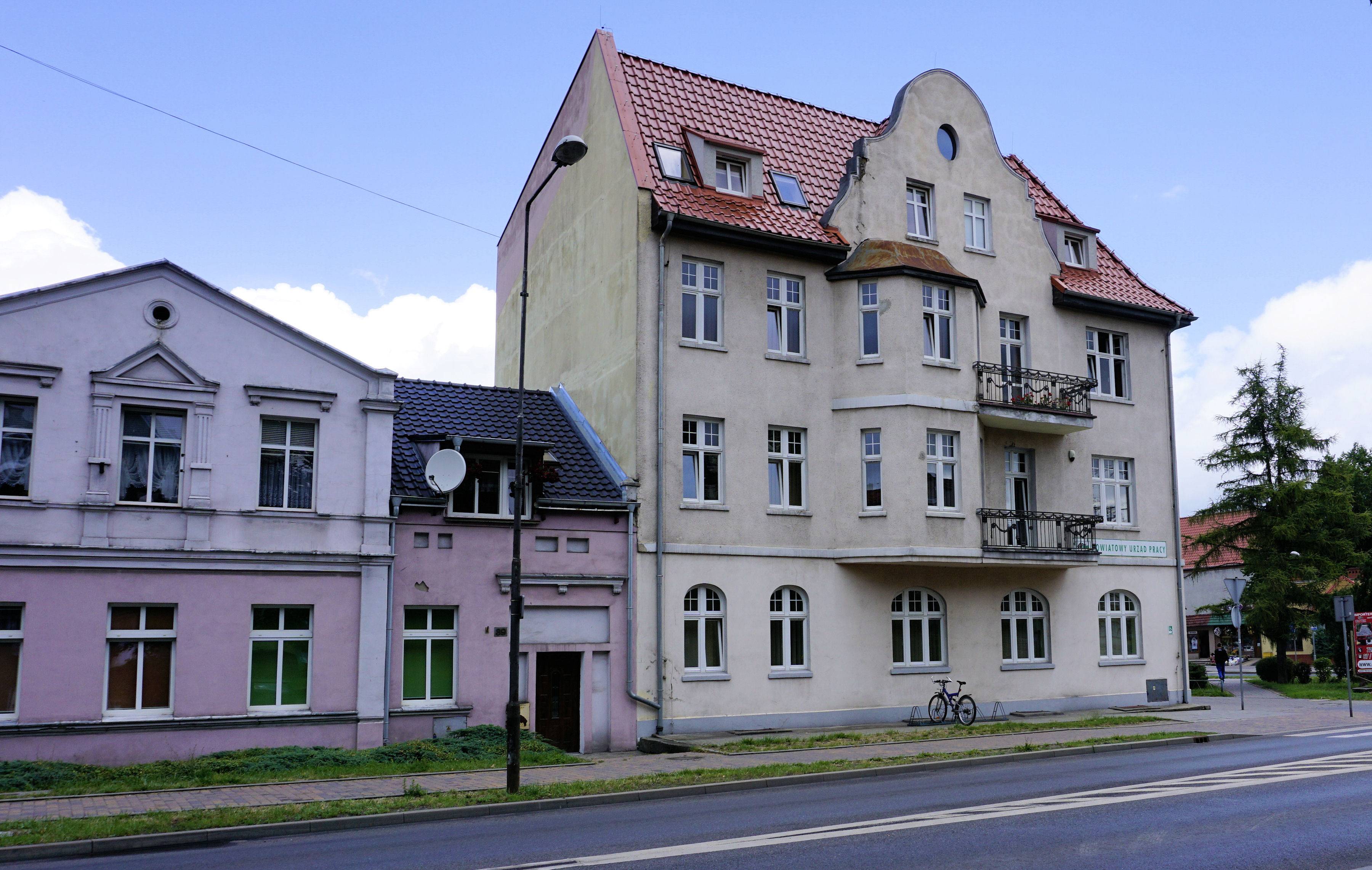
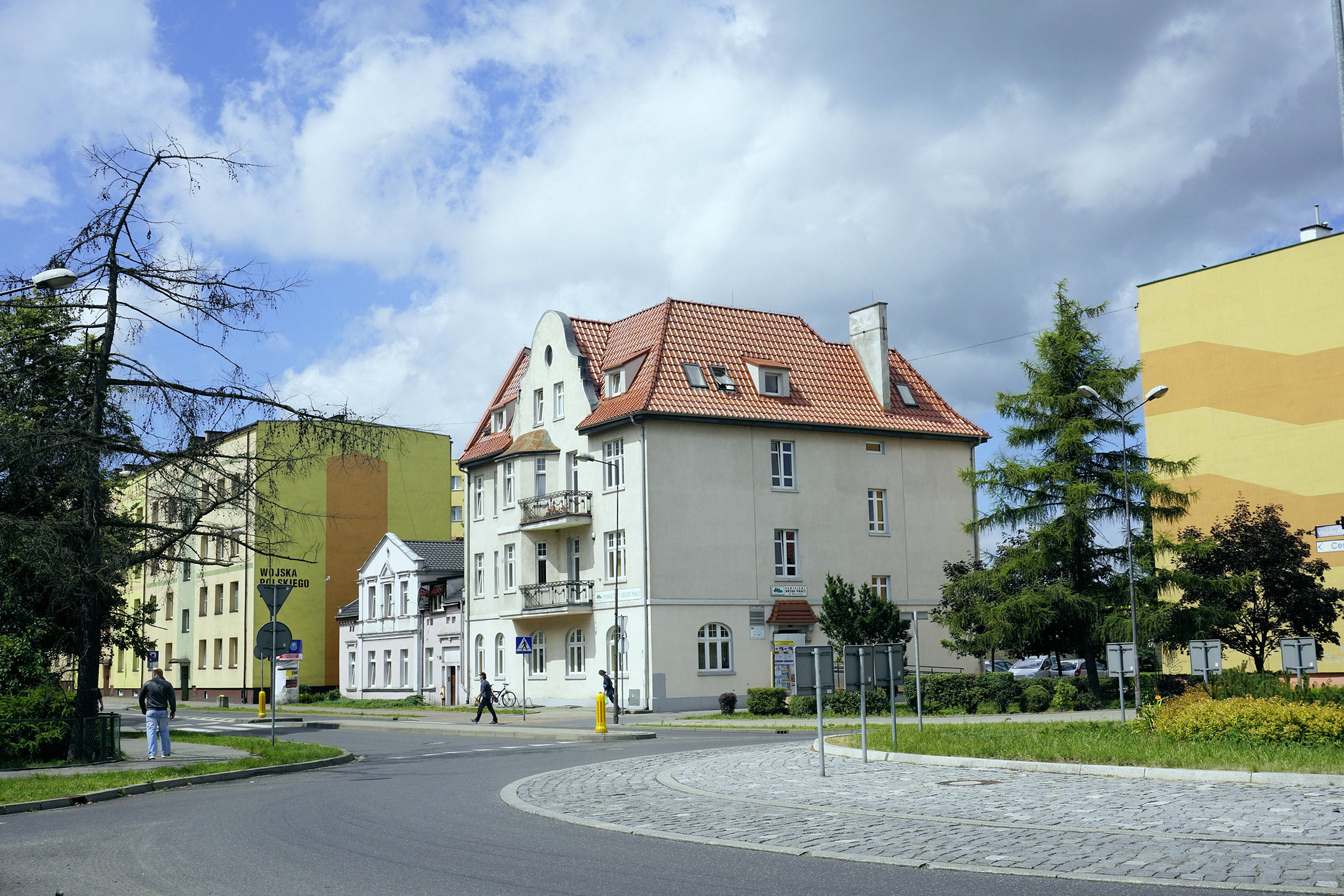
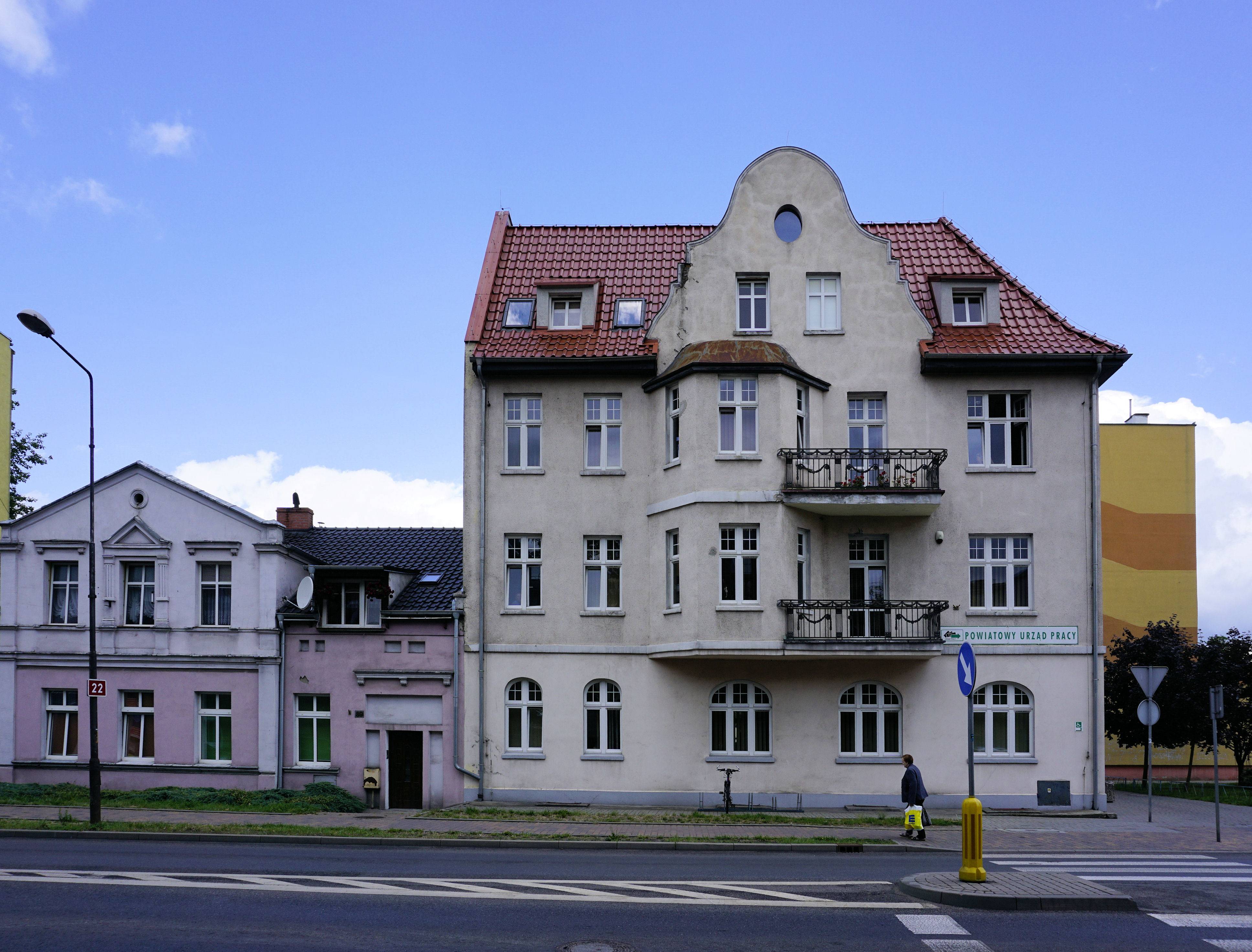
 The building was designed as a residential tenement and was constructed around 1910 by local masons and carpenters; it is a typical example of an early 20th-century tenement in Western Pomerania. The building remained completely undamaged during the war; after 1945, it first served as a residential building and, a few years later, was converted for administrative and office use. Among others, it housed the Regional Public Roads Authority, the Educational Institution, the Psychological and Pedagogical Counseling Center, the Pedagogical Library, and the Teachers’ Club. In 2004, the building was renovated and designated as the headquarters of the County Employment Office.
It is a three-story tenement building, with the stories varying in height. The building’s structure consists of two sections, which blend together to form a harmonious whole. The entrance to the building is located in the gable wall. The front facade has five axes, featuring a bay window covered by a corrugated roof; the entire structure is crowned by a pediment with a broken, neo-Baroque line and a centrally placed oculus. The building is covered by an asymmetrical gable roof. It is worth noting the original architectural form with interesting elements of modernist facade design: a bay window on the second story and balconies situated along the risalit, featuring balustrades adorned with metalwork in the form of floral motifs and garlands in the neoclassical style. Some of the windows (on the ground floor) have arched lintels. All these architectural elements blend together into a harmonious whole. Due to its current function, the interior of the building is not open to the public, but while admiring the building’s facade, it is worth mentioning the story associated with the oculus—the small round window in the upper part of the bay window. It is said that this window was used by a young woman in love to convey secret signals. Miss Martha, who lived in this building before the war, was to be married off—according to her parents’ wishes—to a wealthy butcher who was much older than she was. The love of her life, however, was someone else. Unable to officially contact her beloved, Martha would send signals using lit candles arranged in a multi-branched candlestick. One lit candle meant she was waiting for a signal from her beloved; two signaled that Martha would soon be able to go for a walk, so a meeting was possible. Three lights meant that a family member would be accompanying her on her walk, so there was no chance for a conversation; four meant there was no chance of going out. Five meant she was thinking of her beloved and missing him, but would stay home for the next few days. Six was good news—a note was to be waiting for her beloved at the agreed-upon spot in the park. It’s not known how long this light signal system lasted, but reportedly it ended with a small fire in the attic and a ban on entering there with candles. No one remembers, either, who Miss Martha actually married. The building was called “Martha’s House” by the town’s former residents, a fact few people in Wałcz know today.