Routes and trips
 Map
Map MPR - cyclist-friendly places
 POI
POI Plan your trip
 Bike counters
 Publications
 News
News Route concept
 Contact
 The High Gate
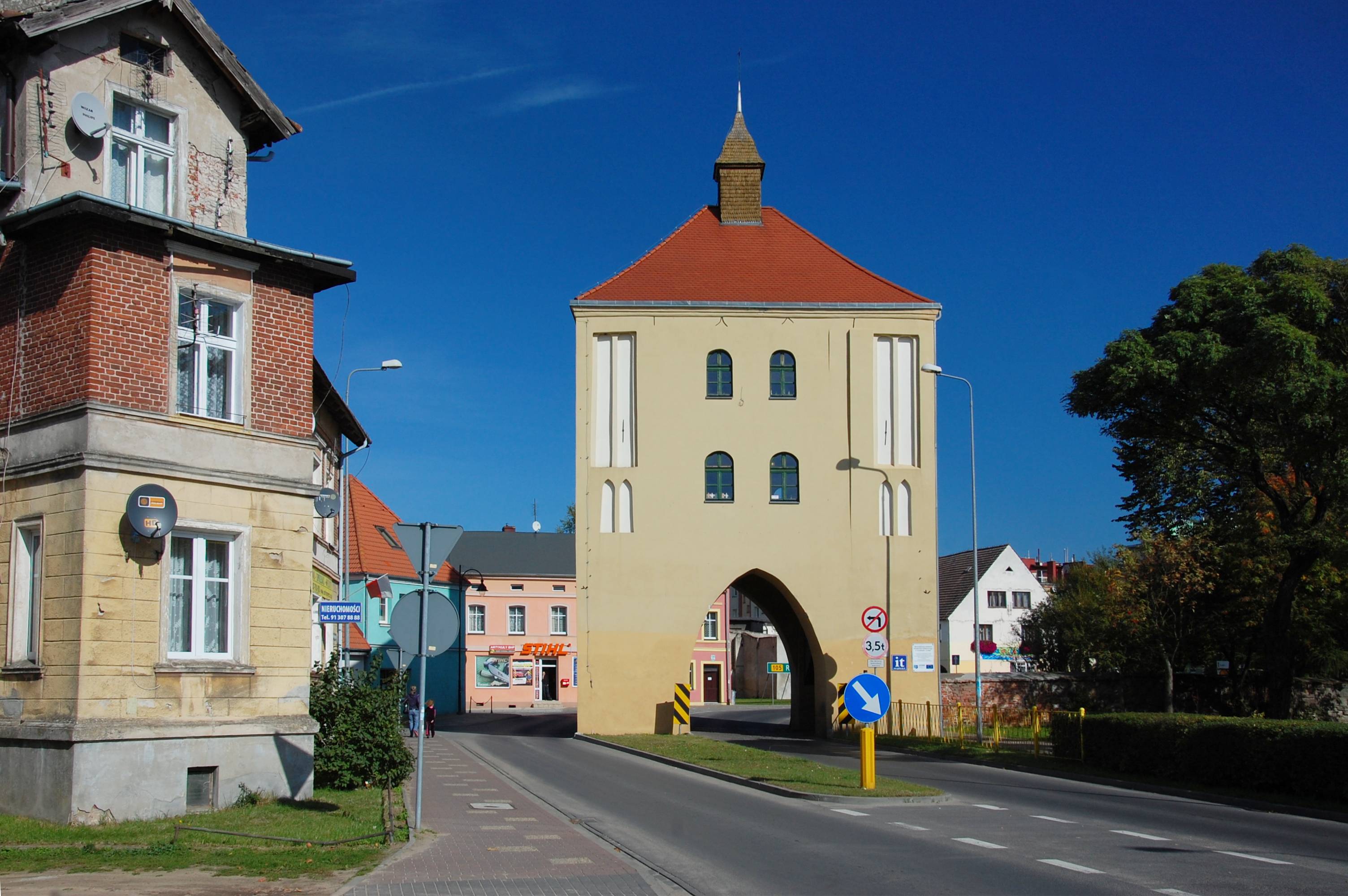
 The High Gate is a remnant of the defensive walls that once surrounded Gryfice. Due to its location, the gate was also known as the Kamień Gate, the Nowogard Gate, or the Szczecin Gate. The first structure serving the same purpose stood on the site of the current gate as early as 1300. Construction of the present gate began in the 15th century. The Wysoka Gate is one of three former entrances to Gryfice. It owes its name to its tall and slender silhouette. Until the 17th century, the gate was connected by a drawbridge to the barbican, located in the foreground.
The High Gate is a three-story structure built on a rectangular plan using bricks laid in the Venetian bond. As a result of a fire in 1658, the building was lowered to its current height. Despite this, the name has remained. The lowered structure is topped by a hipped roof with a bell turret. At a later date, the arrowslits that originally appeared on each story were replaced with wider windows. The pointed-arch gateway opening is covered by a wooden ceiling. The guide rail for the gate that blocked passage was unusually placed—inside the gatehouse itself. On the side facing the town, the brick frieze and blind windows catch the eye. Throughout its heyday, the gate served not only a defensive function but also as a customs collection point. At the turn of the 18th and 19th centuries, customs officers’ houses were even added to it, though these have not survived to the present day.
Currently, the gate houses the Tourist Information Center as well as the “Brama” Museum and Gallery. The exhibition features artifacts related to the history of Gryfice, including documents, everyday objects, souvenirs, geological collections, and military items.