Routes and trips
 Map
Map MPR - cyclist-friendly places
 POI
POI Plan your trip
 Bike counters
 Publications
 News
News Route concept
 Contact
 Pęzin Castle
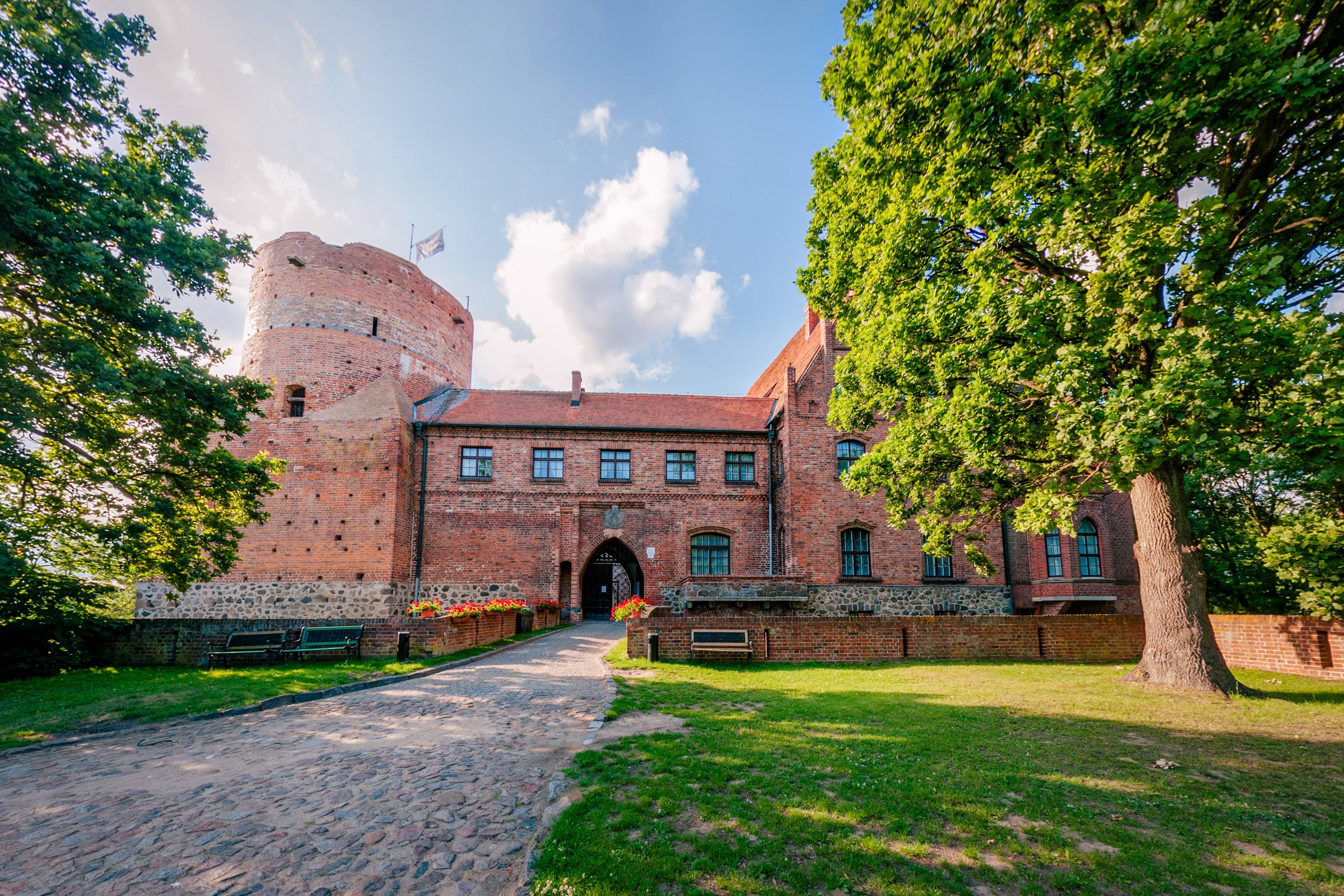
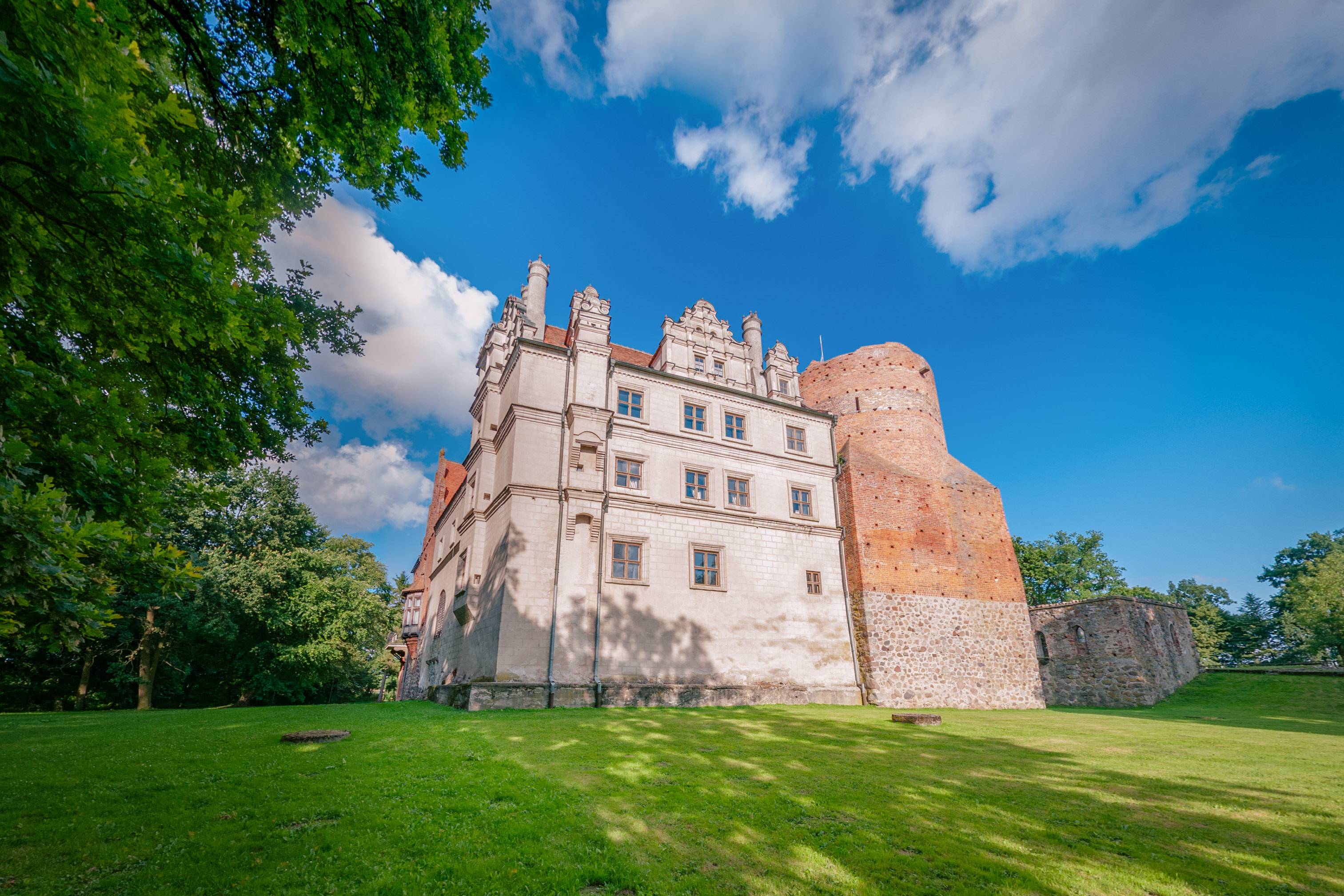
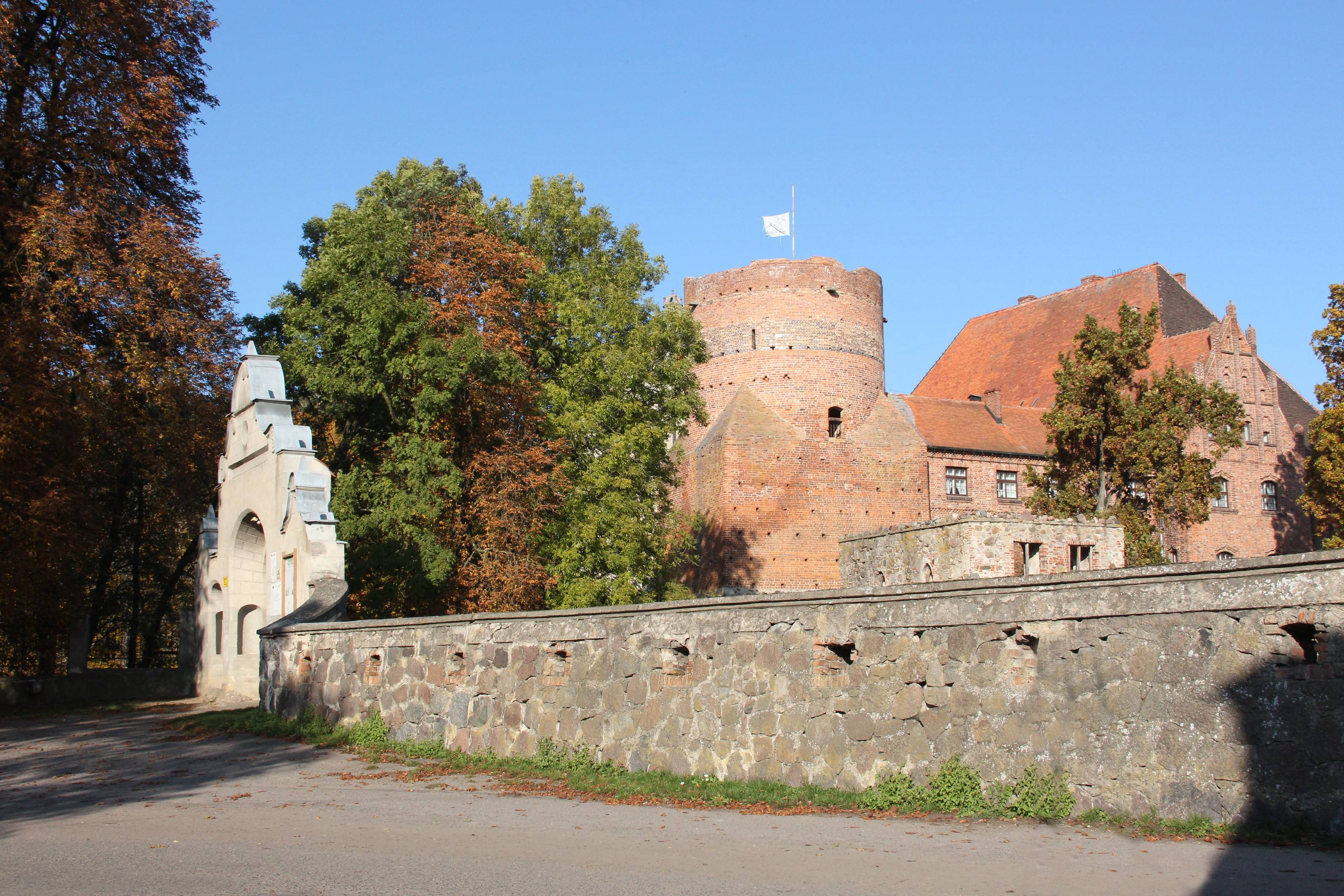
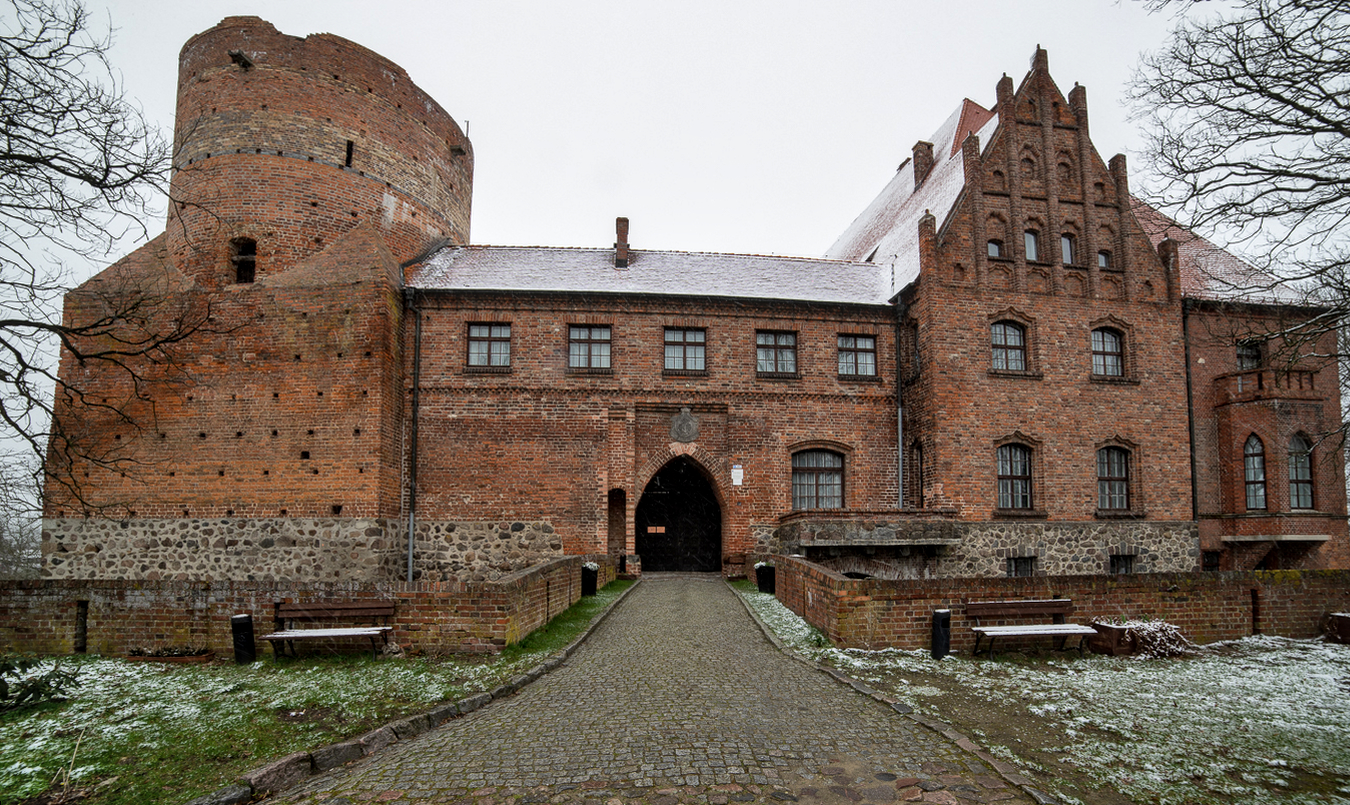
 About 10 km from Stargard, in the small village of Pęzino, stands one of the most beautiful monastic-knightly castles in all of Pomerania. Beautifully situated near the confluence of the small Pęzinka River and the slightly larger Krąpiela River, it is surrounded by a vast, beautifully landscaped park. The castle has a very rich history, which is reflected in its rich blend of styles: Gothic, Renaissance, and Neo-Gothic. Although the first mentions of the construction of a fortified castle in Pęzino date back to the 13th century—when the village’s owners, the Pansin family of knights, erected a wooden-and-earth stronghold on this site—the history of one of the most famous castles in this part of Pomerania began at the end of the 14th century. It was then that the surrounding lands were acquired by the Knights Hospitaller—knights of the Order of St. John of Jerusalem of Rhodes and Malta. They also began construction of a stone-and-brick castle modeled after similar structures already existing in Swobnica and Łagów. Like those strongholds, the castle was surrounded by deep moats, and the structure itself was built on a quadrilateral plan with a single residential wing and a tower in one of the corners. Toward the end of the 15th century, the Pęzin Castle even served as the seat of a monastic commandery. It is from this period that the oldest surviving parts of the castle date—the reconstructed cylindrical tower and sections of the southern Gothic wing, which adjoins the tower directly. The lower, square section of the two-part tower once housed a starvation dungeon. Among the oldest parts of the structure are also the ruins of a stone building—most likely a chapel—located right next to the main entrance to the castle. The main gate to the courtyard was located roughly where it stands today—about seven meters from the tower—and was accessed via a drawbridge spanning the moat. The defensive nature of the stronghold was emphasized by perimeter walls over 25 meters high and the absence of windows on the exterior. Unlike today, all window openings faced only toward the courtyard. In the 16th century, the “Black Knight” Henryk von Borck—a representative of one of Pomerania’s wealthiest and most renowned families—purchased the castle along with the entire village from the monks for 7,000 guilders. Thanks to Henryk Borck’s endowment in the mid-16th century, the residential wing was modernized, incorporating elements characteristic of the late Gothic style. A church was also built in the village at that time, which immediately became the burial place for members of the family. The most significant changes to the castle’s layout were made by Maciej Borko, who commissioned the stately west wing, crowned with a richly decorated gable in the Renaissance style. As a result of filling in the moat, a new entrance gate was constructed, along with numerous outbuildings in the forecourt. The part of the castle built at that time continues to impress with its grandeur to this day. It is the most beautiful section of the building open to visitors, subject to prior arrangement with the castle’s current owner. Wide staircases, spacious interiors, and interesting decorative elements can be seen in the castle’s west wing, which was rebuilt after being damaged during the war. Noteworthy are the fireplaces, as well as… the castle’s latrine on the second floor. The Bork family ruled the castle for over 200 years, passing it on through marriage alliances in the 17th century to the Puttkamers, who owned the castle until 1945. It was under their stewardship that the castle’s east wing was rebuilt, giving it a Neo-Gothic character with a wealth of decorative elements, including an impressive terrace overlooking the garden. All outbuildings were also demolished, thereby expanding the park all the way to the Pęzinka Riverbed. In addition, a romantic garden with a gazebo was laid out, visible on the east side of the castle’s main entrance. After World War II, the castle was converted into private residences, resulting in significant deterioration. Although it was later transferred to the State Agricultural Farm (PGR) and underwent some repairs, it did not undergo a true renovation until the late 1980s. It is currently privately owned, but by prior arrangement with the owner, it is open to visitors, including access to the tower, which is a major attraction of the castle. While in Pęzin, be sure to visit the 16th-century church, founded by Henryk Borek, where you can still see valuable epitaphs of members of the Borek family, tombstones of the Borek and Puttkamer families, as well as a richly decorated 17th-century organ gallery.
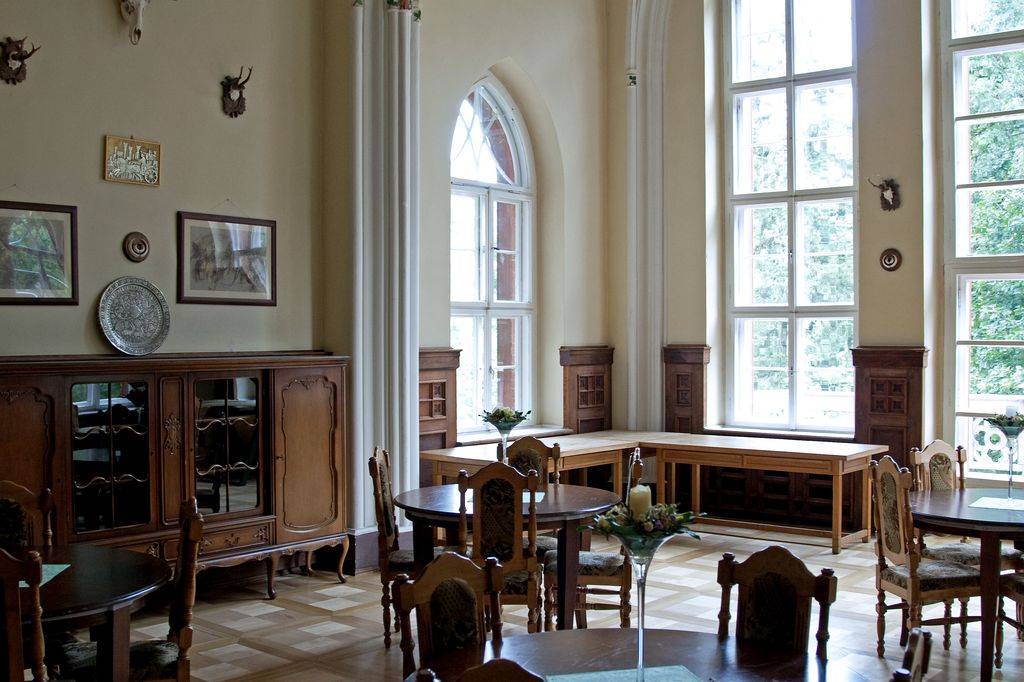
The castle in Pęzin can host conferences, symposia, training sessions, corporate events, and wedding receptions. Guests have access to three rooms and 50 beds. Outdoor events can be held in the park surrounding the castle and in the castle courtyard.