Routes and trips
 Map
Map MPR - cyclist-friendly places
 POI
POI Plan your trip
 Bike counters
 Publications
 News
News Route concept
 Contact
 Aviators and Larks - Berlin's Industrial Heritage
 The "Flyers and Skylarks" theme route from the Berlin Center for Industrial Culture!
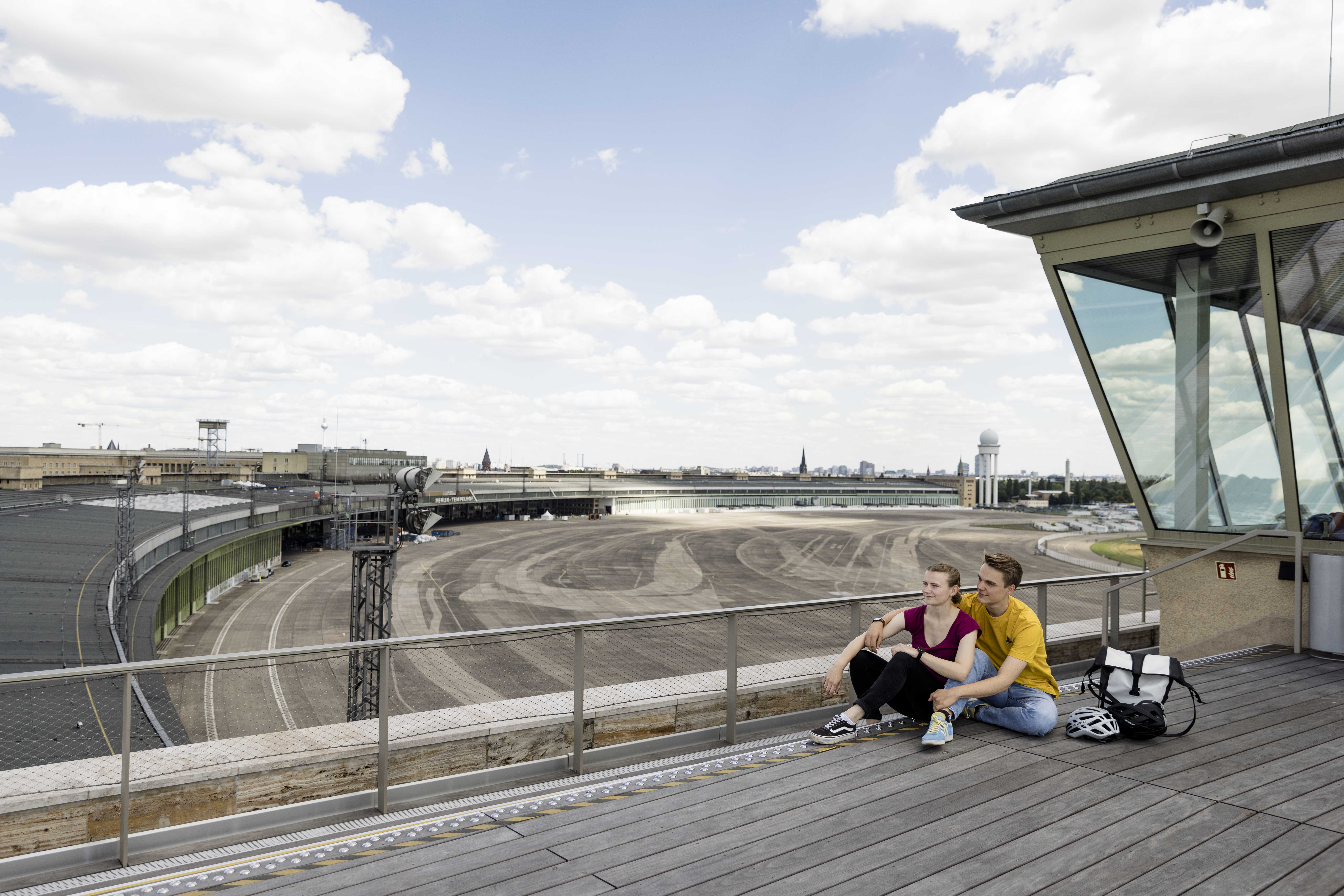
The Tempelhofer Feld has been a military parade and training area since the end of the 18th century. Since the end of the 19th century, it has also been the scene of flight tests. Gas balloons, Count von Zeppelin's airship and the Wright brothers' motor aircraft float over the field and delight the urban population that flocks to the area. At weekends, they use the field as a destination for excursions.
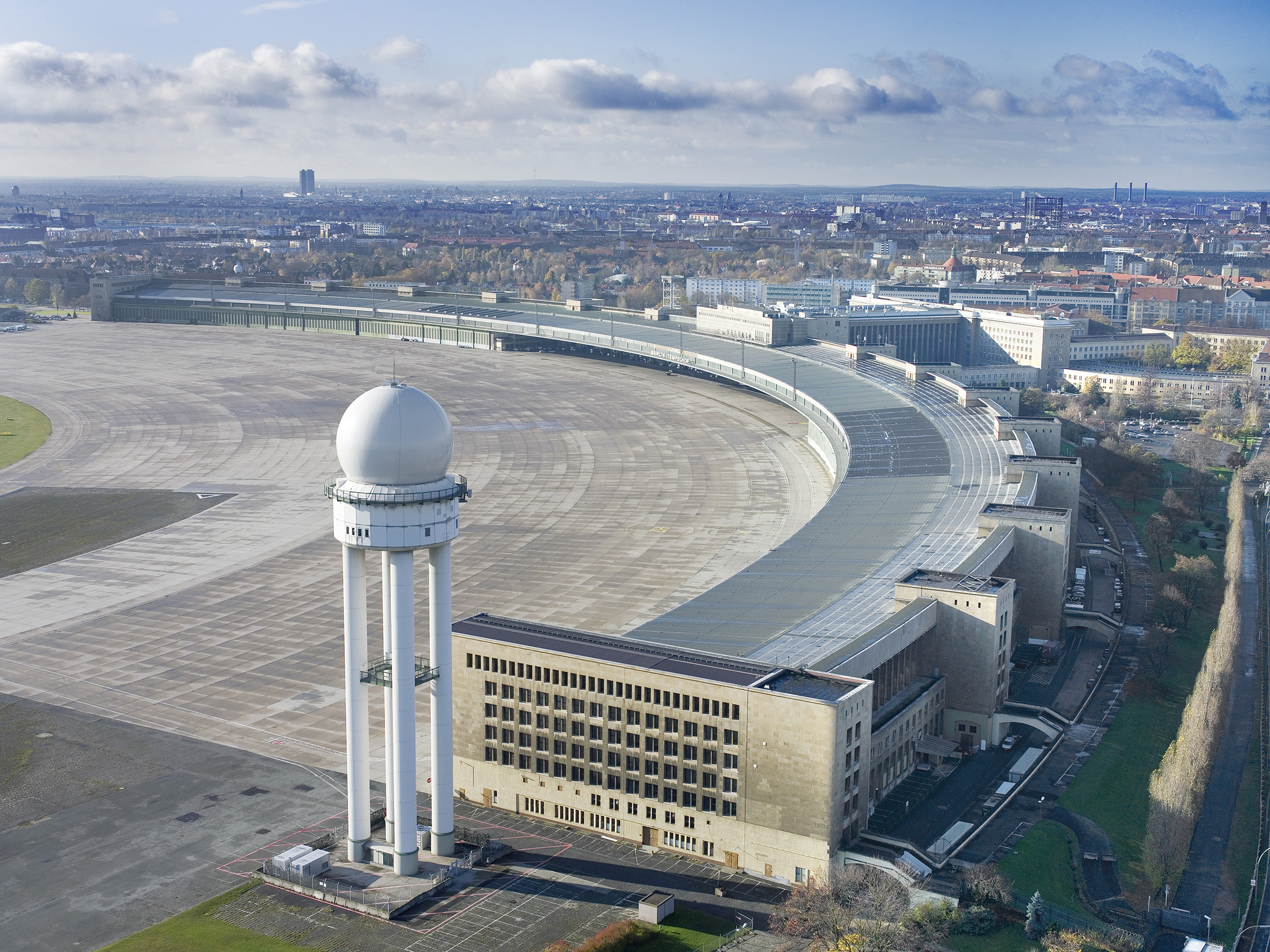
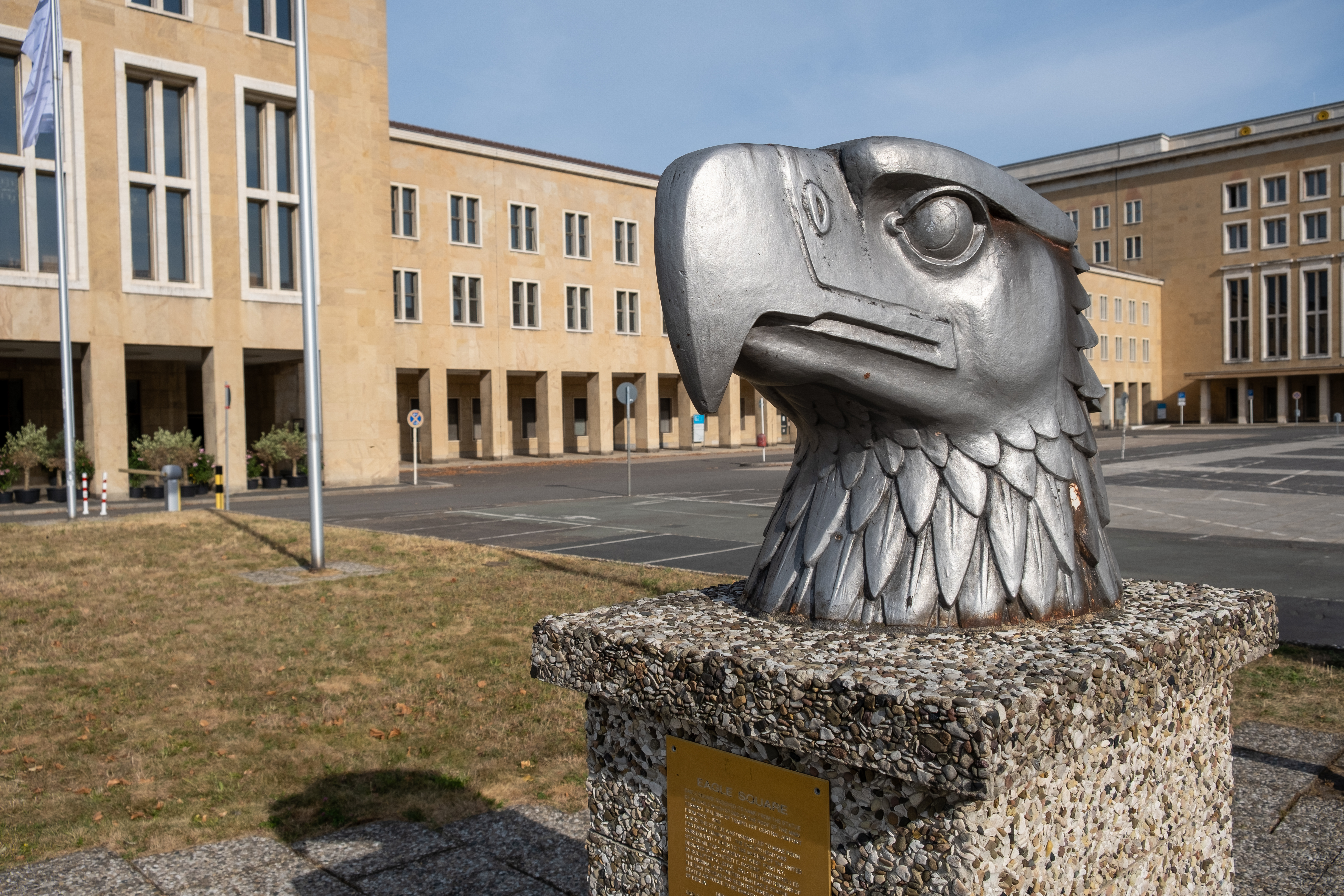
The first airport for civil air traffic opened in 1923. It quickly became too small and had to be expanded further and further because passenger numbers increased dramatically. Construction of today's Tempelhof Airport began under the Nazi regime. Ernst Sagebiel designed the world airport as part of the transformation of Berlin into the world capital Germania. The location of the airport is oriented along an axis of symmetry that refers to the national monument on the Kreuzberg.
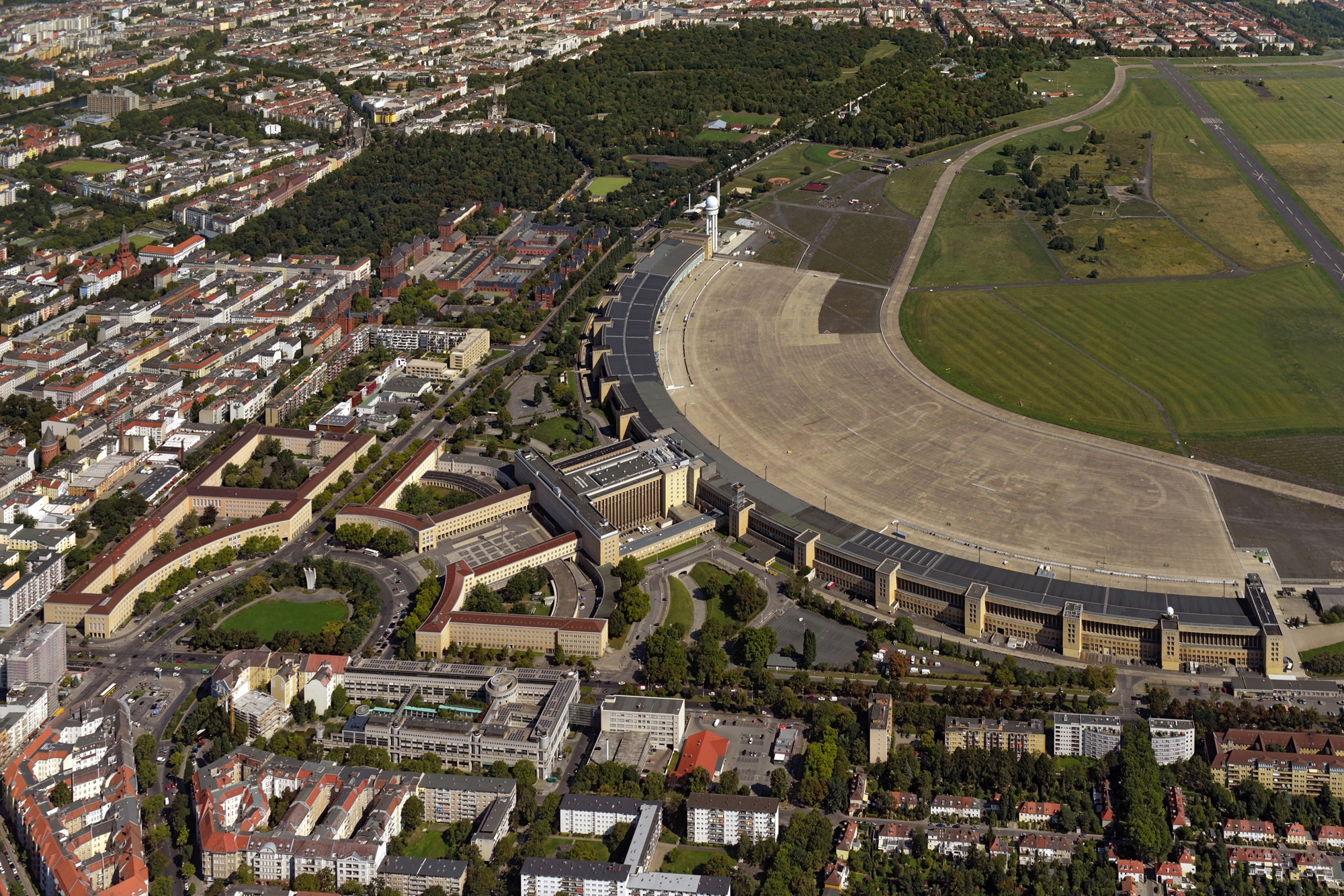
The complex consists of the ellipse of the airfield and the enormous building complex. This consists of a sequence of symmetrically arranged components: a courtyard flanked by office wings, the reception building with the departure hall behind it. The buildings are completed by the 1,230-meter-long arch of the hangars, divided by stair towers, with the covered pier in the middle. With around 7,300 rooms, the building has the dimensions of a small town.
During the Second World War, construction activities largely ceased. Armaments companies used the building from 1939 to 1945 to build fighter planes. The building remained unfinished. Air traffic continued to take place via the first airport from 1923.
It was only under the US Allies, who used Tempelhof as an airbase, that air traffic began in the now largely completed airport building. During the Cold War, the Berlin Airlift made the airport world famous as a gateway to the free world. Little by little, it was opened to civil aviation.
From the 1950s onwards, stars flying in brought long-missed glamour back to West Berlin. The entire airport has been a listed building since 1995. In 2008, air traffic was finally stopped. Today, Tempelhof is a symbolic landmark that is closely linked to the highs and lows of Berlin's history.
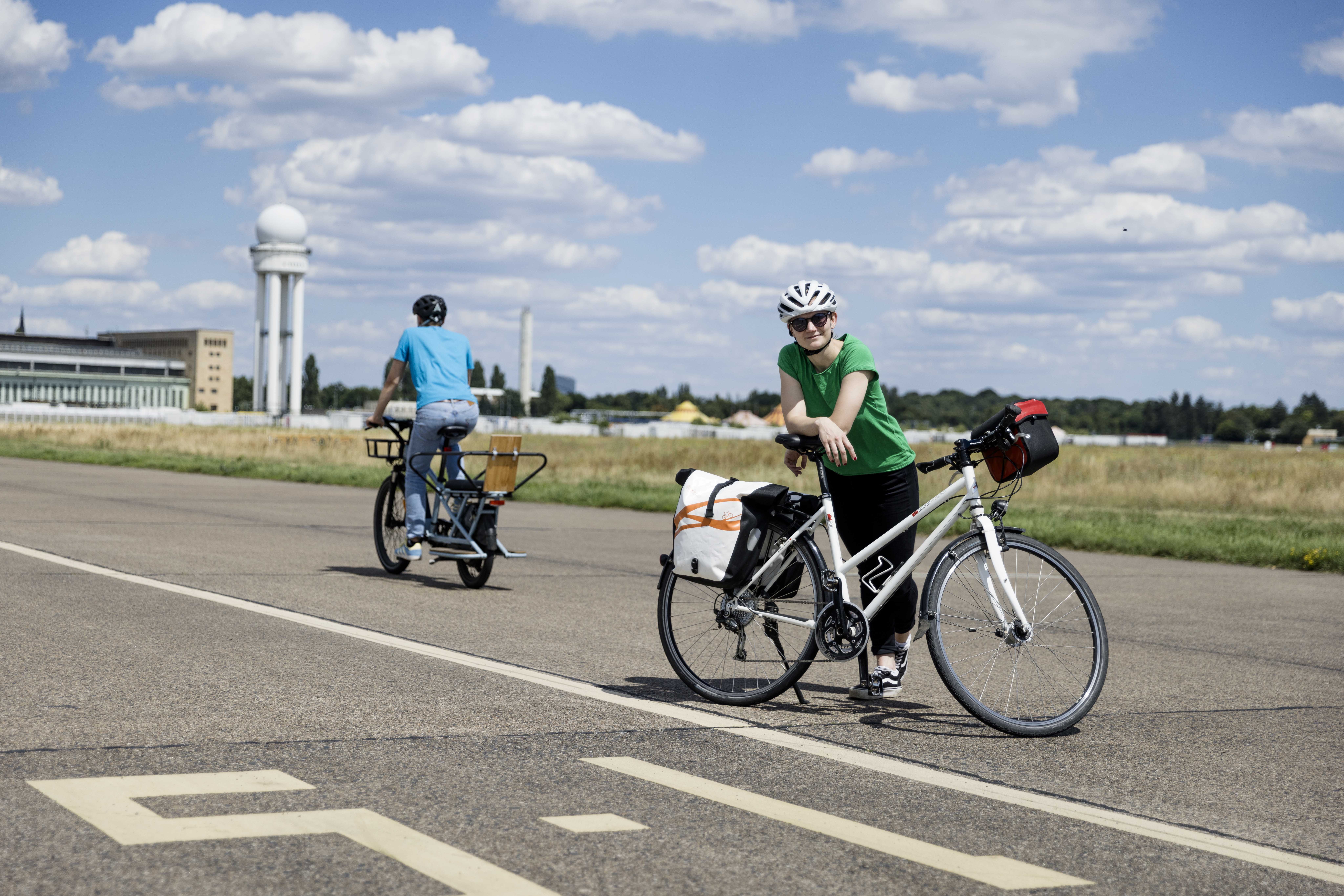
The Tempelhofer Feld has been open to the public since 2010. The expanse of the field with plenty of space to relax and let off steam delights the people of Berlin and international guests. As before, it is once again a popular tourist destination. At the same time, the Tempelhofer Feld in the middle of the metropolis of Berlin offers a habitat for plants and rare animals. The skylark builds its nests on the meadows between the runways.
In 2014, Berliners rejected development in a referendum. The uniqueness of the Tempelhofer Feld inspires a lot of civic engagement. The current uses and future plans are developed in cooperative processes