Routes and trips
 Map
Map MPR - cyclist-friendly places
 POI
POI Plan your trip
 Bike counters
 Publications
 News
News Route concept
 Contact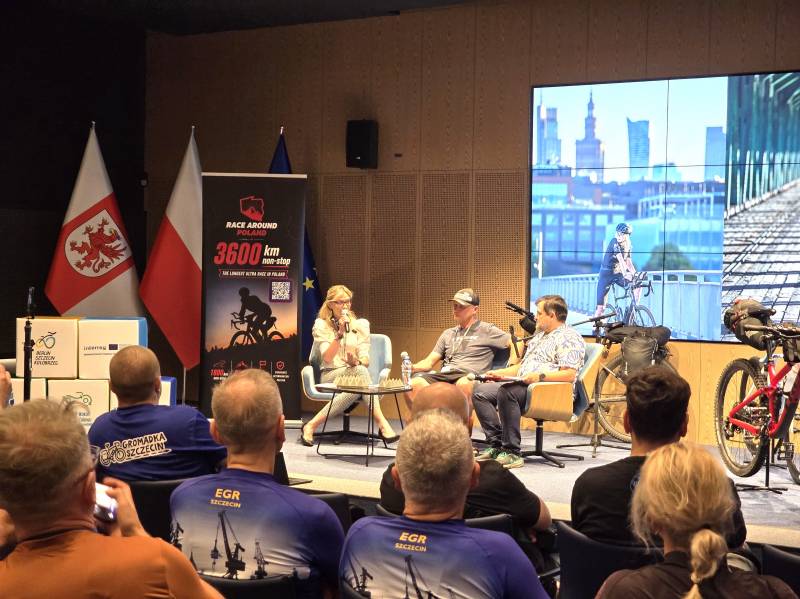
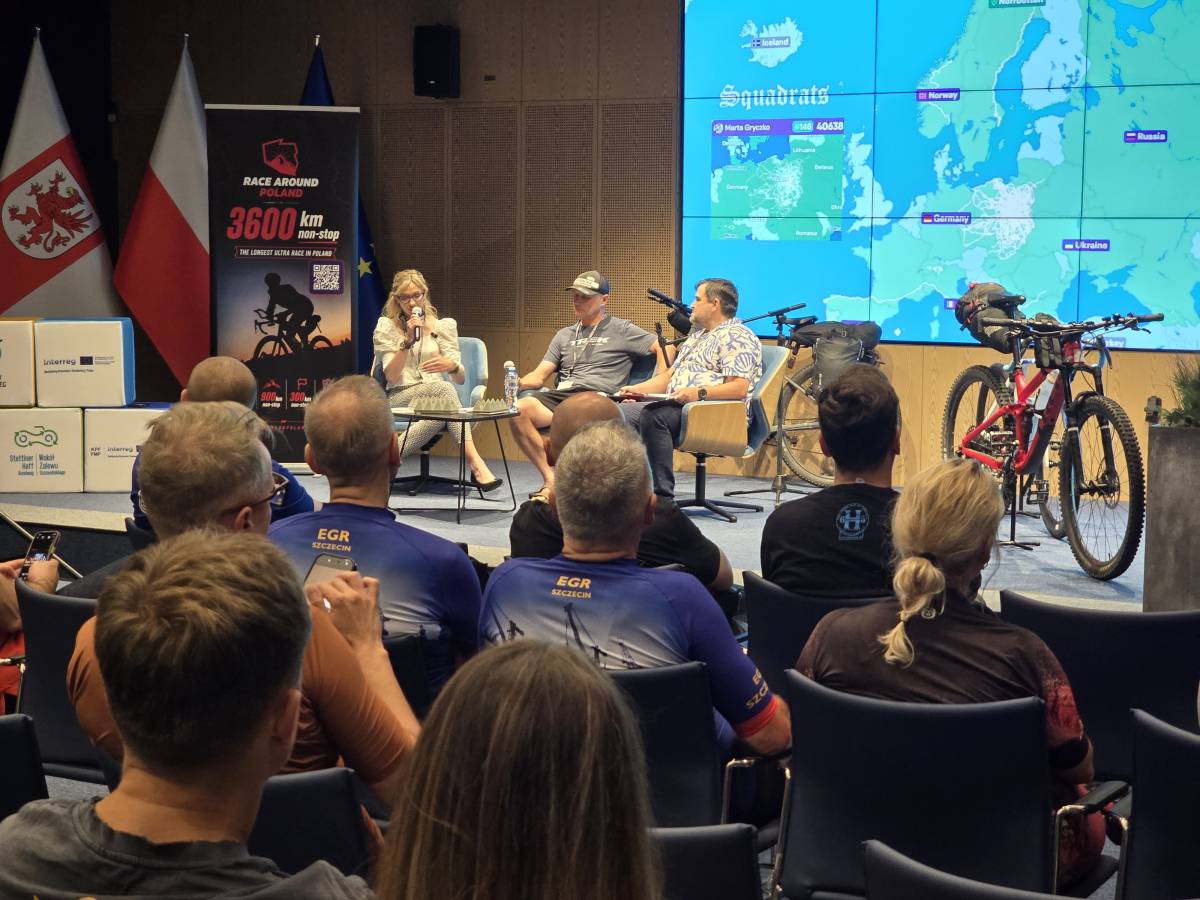
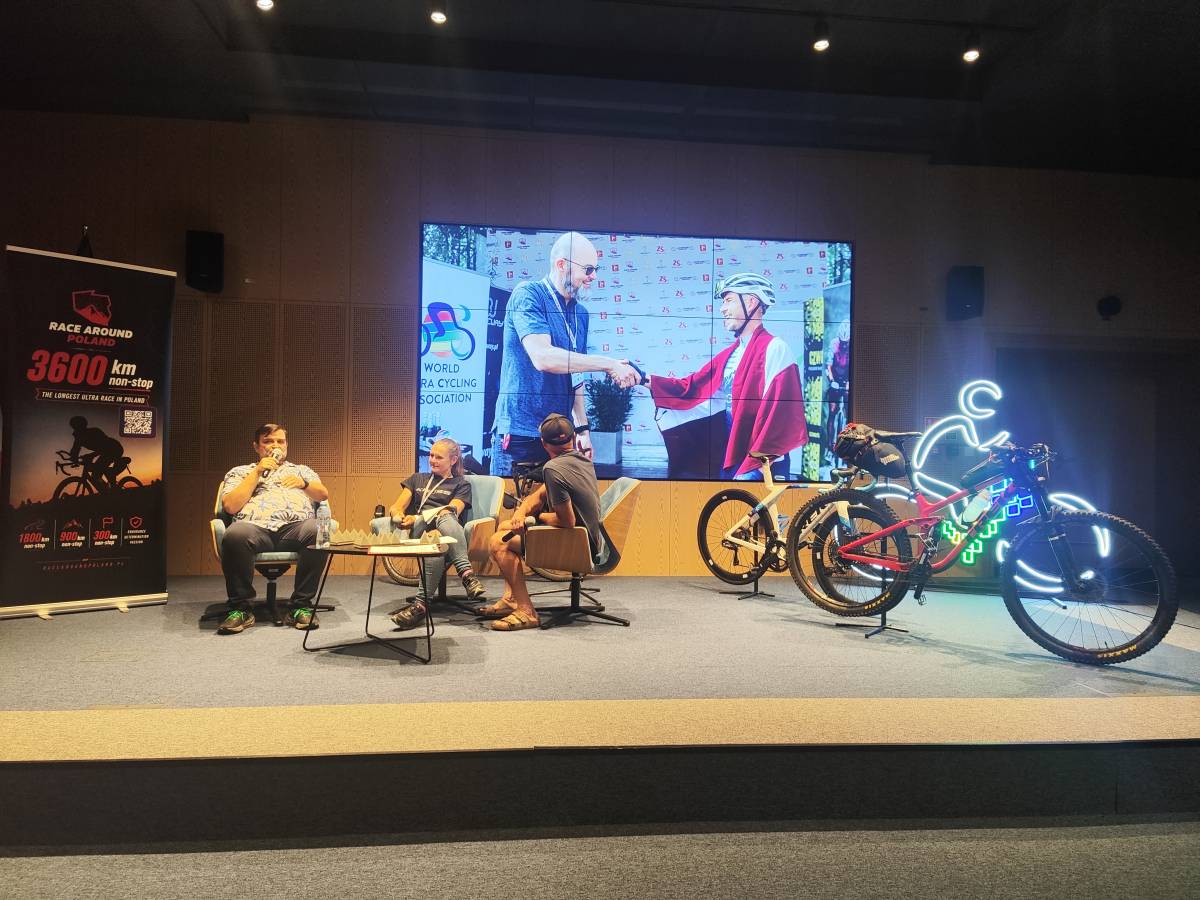
The occasion was the ‘Bikepacking and Ultra-cycling’ workshop held on 22 August at the Marshal’s Office building in Szczecin. Western Pomerania is a leader in the development of long-distance cycle routes in Poland. For a decade now, a network of trails has been taking shape here, allowing visitors to discover the region’s rich range of tourist attractions. Routes along the Baltic coast, around the Szczecin Lagoon, or crossing the numerous lake districts are already proving very popular. Another project currently in the pipeline is the Berlin–Szczecin–Kołobrzeg route. It is already quite safe to cycle from Berlin to Kołobrzeg, but you have to do so via the bridge at Siekierki as part of the Western Lake District Route. From the north, a new section will be built, allowing cyclists to explore the magnificent areas of the Goleniowska Forest, the Golczewo region and the Gryfice region. “This route will connect places previously inaccessible to cyclists, but it will also bring people together. It opens up new possibilities and creates a cohesive, modern, cycle-friendly Western Pomerania,” says Wanda Nowotarska, the Provincial Marshal’s representative for cycling infrastructure.
As well as their typical use for tourism, the trails of Western Pomerania can also serve as training routes for those taking part in, amongst other things, ultra-cycling expeditions, covering thousands of kilometres over a few or a dozen or so days. And it is for those interested in this type of travel that Saturday’s meeting has been organised.
Is ultra-cycling for everyone? Yes and no. The examples of some cyclists show that you can take up this sport at any age. Marek Rupiński, now a world and European champion, started training at the age of 40 and completed his first ultra-marathon two years later. Marta Gryczko, on the other hand, learnt to ride a bike at the age of 27. Today, she can cover 500 km in a single weekend, and a morning training session covering 50 km is part of her daily routine. Her odometer clocked up around 40,000 kilometres last year. Marta recently went on a bikepacking tour of Scandinavia – a type of trip where you carry minimal luggage, allowing you to travel even over more challenging terrain such as gravel, mountain tracks or forest paths. “You have to plan a trip like this carefully. I usually stick to routes I’ve mapped out in advance. If I’m riding a road bike, I try to avoid gravel sections, although now I have slightly thicker tyres, so I’ll allow myself short detours off the tarmac to see something interesting,” says Marta. She adds that it’s always important to take the weather into account; this determines how many clothes she takes, but she prioritises technical kit over clothing. “I can always buy clothes in a shop; it’s harder to get cycling gear. Besides, it usually takes up less space,” she adds. She also advises that if you’re transporting a bike – for example, by plane – her trick is to wrap the cardboard box containing the folded bike in cling film so that it is stable and well protected against damage. She actually keeps her bike ready for these long trips at all times; it’s already fitted with panniers. For cycling around town or going shopping, she uses a different bike.
A ride covering many kilometres requires more than just good physical and equipment preparation. During ultramarathons such as the Race Across America (4,800 km), the Transcontinental Race (from 3,600 to 4,800 km depending on the edition) or the Race Around Poland (3,600 km), mental preparation is also very important. – You need to have the route mapped out in your head somehow, with well-planned stops, sleep and meals. Generally speaking, I really enjoy what I do. When I finish one race, I start thinking about which one I could tackle next. It’s obviously a major logistical and financial challenge, which is why I also have to be a marketer. But it’s worth it, because if I can later say that I’ve made ten trips to different parts of the world in the space of a year, I’ll be envious of myself. The worst part of any race like this is always the start – the first two or three days. After that, it gets easier,” says Marek Rupiński, an ultra-cyclist from Szczecin, who this year, whilst competing in the Race Around Poland, also became the World Ultra-Cycling Association world champion in the men’s 50+ category. His time for the 3,599 km distance was 218 hours, 38 minutes and 25 seconds.
– Of course, there are tough moments during a race like this. But do I have the right mindset? I don’t know if it’s something you can develop, or if I’ve always had it. Consistency certainly helps. Training is part of everyday life, but then the race itself – taking part in it – is the reward in itself, he says.
Remigiusz Siudziński spoke about the behind-the-scenes organisation of Race Around Poland. He was inspired by taking part in similar events around the world: Race Around Austria and Race Across America. – We have various distances, ranging from 3,600 to 1,800, 900 and 300 km. Anyone who wants to give it a go can tackle the 300 km. The time limit is 24 hours. There are no qualifying requirements for the main distance; instead, there are checkpoints that must be reached on time. These are what test the competitors. Virtually anyone can take part, but you shouldn’t bite off more than you can chew. “If someone is interested but has little experience, I think they can prepare themselves over the course of a year to take part in a shorter distance,” explains Remigiusz. This year’s edition of RAP was very demanding for participants, partly due to the weather. There were sweltering days when the temperature reached as high as 40 degrees, but in the mountains it could drop to 12. “That’s why we always remind cyclists that their safety is paramount,” he adds.
Siudziński also noted that working on such an event has made him realise Poland’s great potential as a tourist destination. “Many participants from abroad are pleasantly surprised by our country. Tourism organisations should capitalise on this to showcase Poland as a safe destination with well-developed infrastructure,” he says.
Western Pomerania, in preparing the international Berlin–Szczecin–Kołobrzeg route, is currently implementing just such an ambitious plan. It is not merely a matter of building an 860 km cycle route, but of creating a comprehensive tourism product that will allow visitors to discover the region’s fascinating historical monuments, landscape parks, and charming towns and villages. The German partners share this same aim. Many of the sections are based on existing stretches on both sides of the Oder, but further sections are already in the pipeline to link these towns and cities. They are sure to appeal to those training for cycling ultramarathons or practising bikepacking.
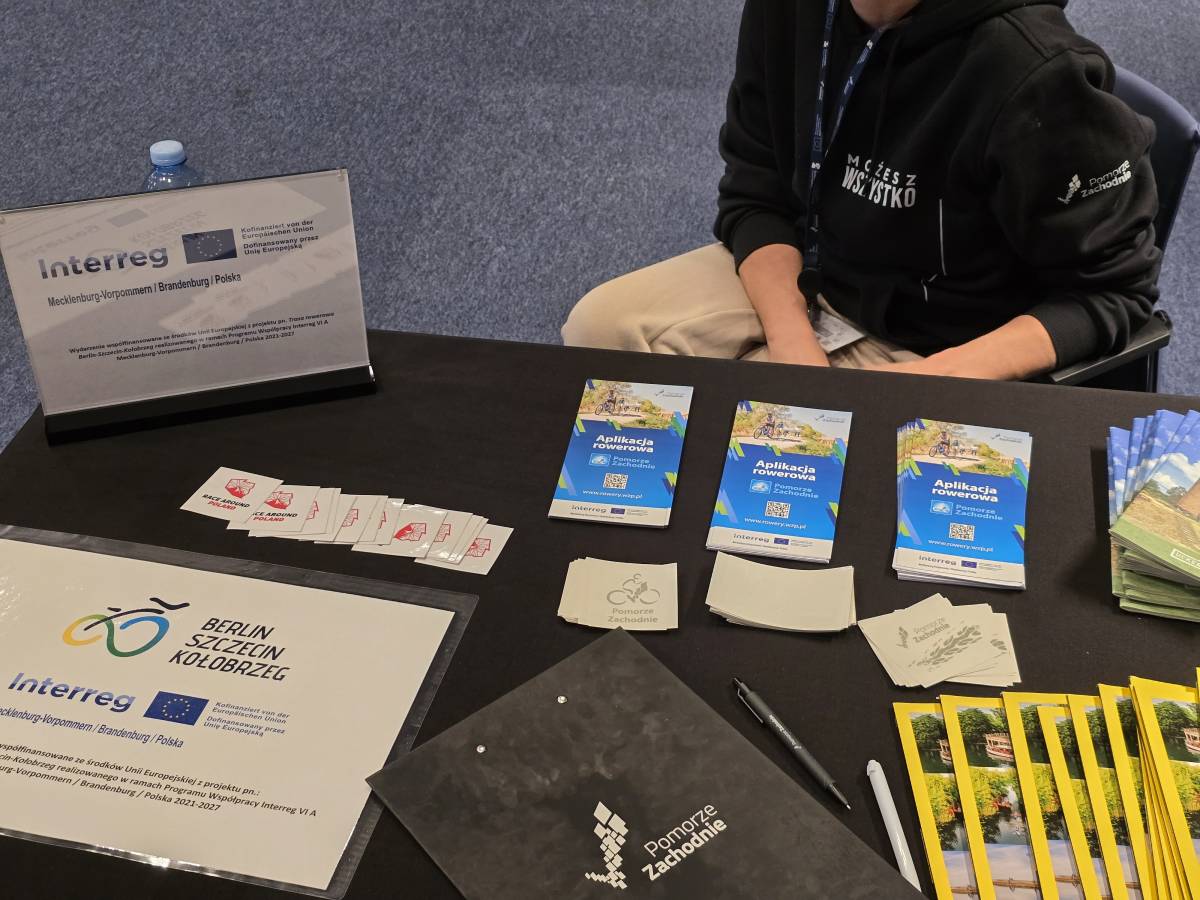
This article is co-funded by the European Union under the project entitled ‘Berlin–Szczecin–Kołobrzeg Cycle Route’, implemented as part of the Interreg VI A Mecklenburg-Vorpommern/Brandenburg/Poland Cooperation Programme 2021–2027.