Routes and trips
 Map
Map MPR - cyclist-friendly places
 POI
POI Plan your trip
 Bike counters
 Publications
 News
News Route concept
 Contact
 Blue Velo - Stage II [Wolin - Goleniów]
 Stage II: Wolin – Modrzewie (Goleniów) [47 km]
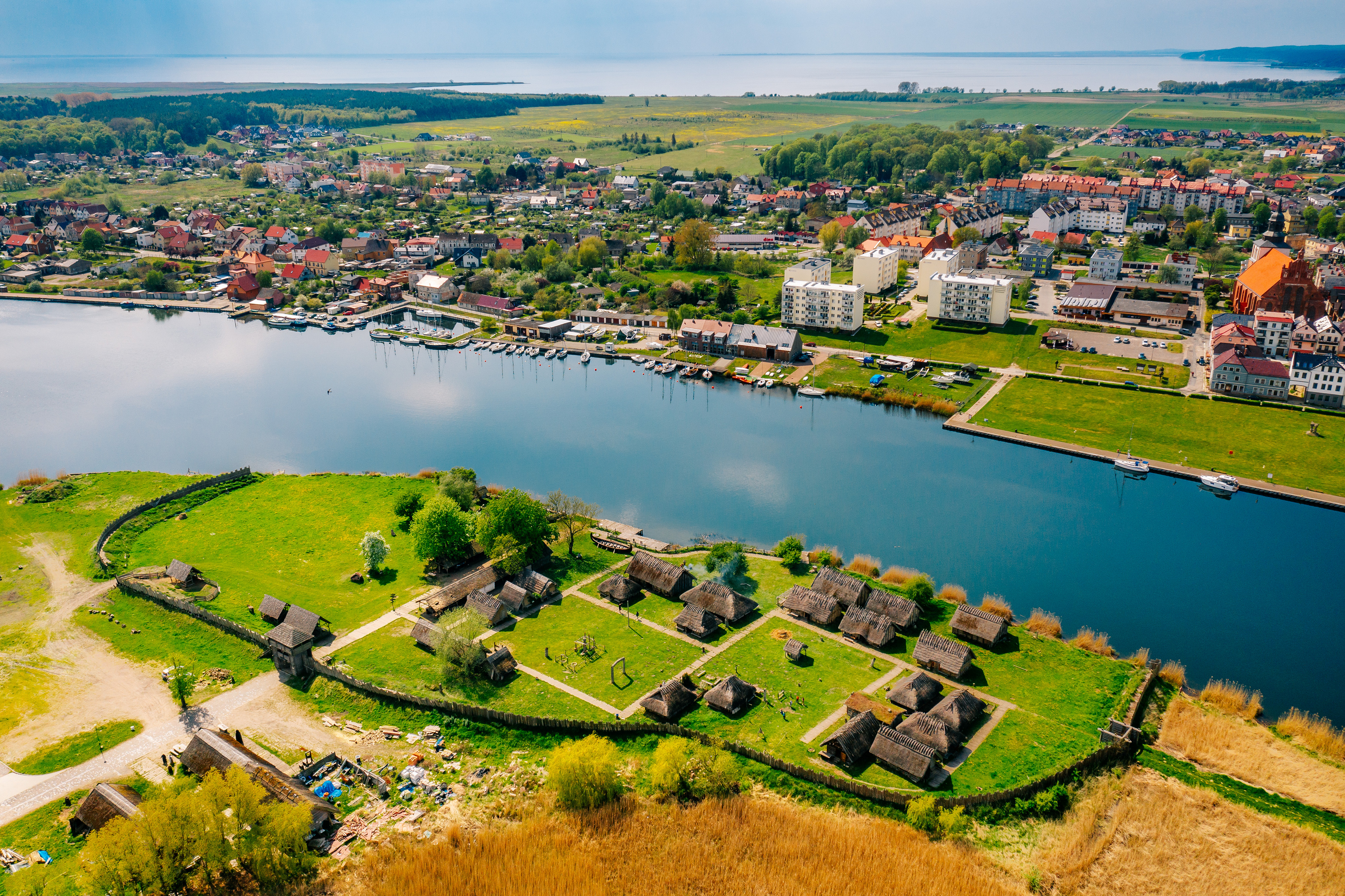
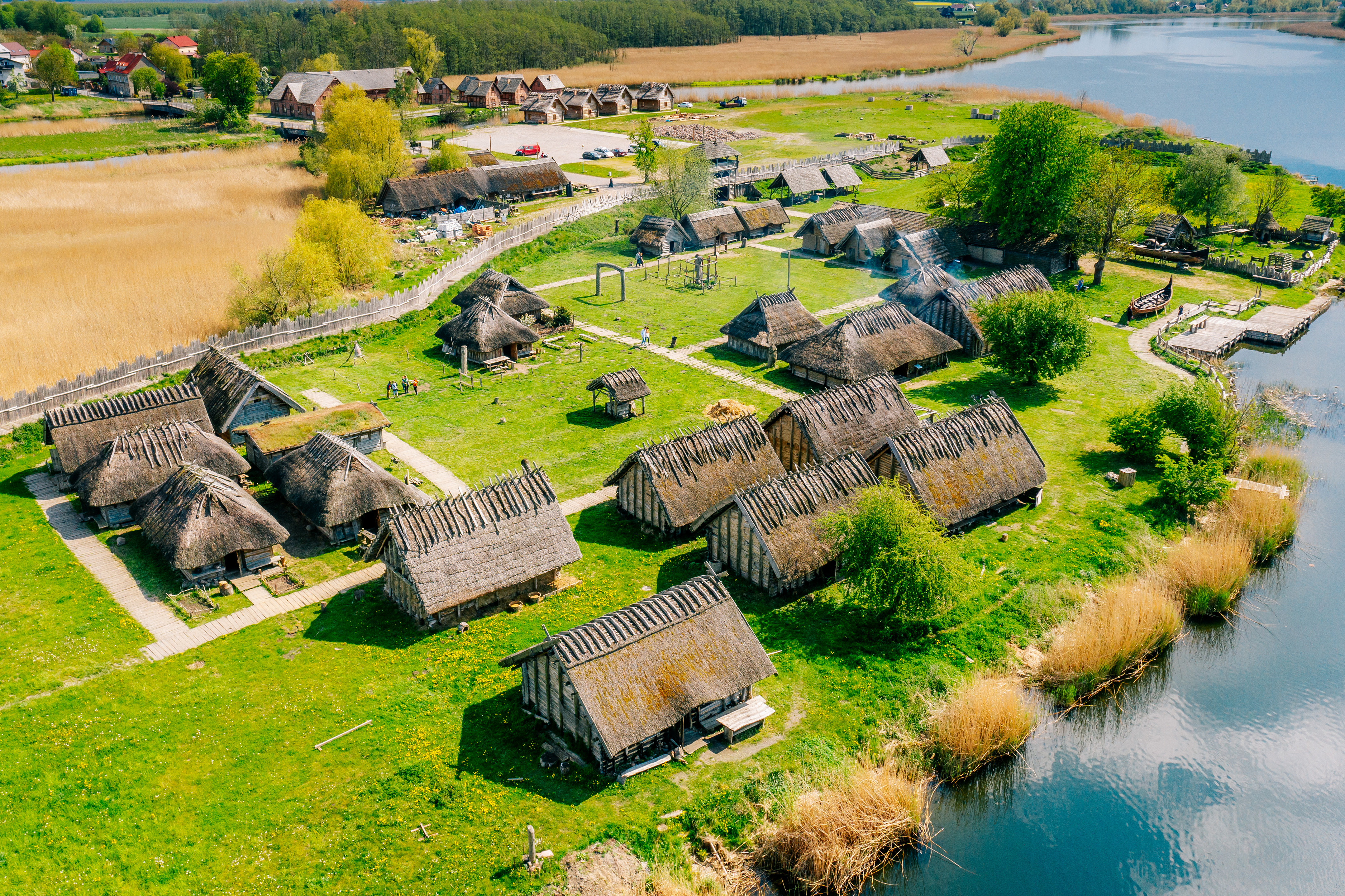
Today, Wolin is known primarily for the Jomsborg – Vineta Wolin Slavic and Viking Center on the island of Wolińska Kępa. It is an archaeological open-air museum reminiscent of the times when it was one of the most powerful strongholds in Europe, inhabited by Slavs and newcomers from Scandinavia. After long battles with Mieszko I, it was annexed to the Polans in 967, becoming the first Polish port on the Baltic Sea. Every summer, one of the largest historical reenactments in Europe takes place here - the Slavs and Vikings Festival, with thousands of participants and tens of thousands of tourists. The biggest attractions of the festival are Viking boat regattas and a battle reenactment involving hundreds of warriors. The open-air museum also hosts other events related to the Slavic calendar.
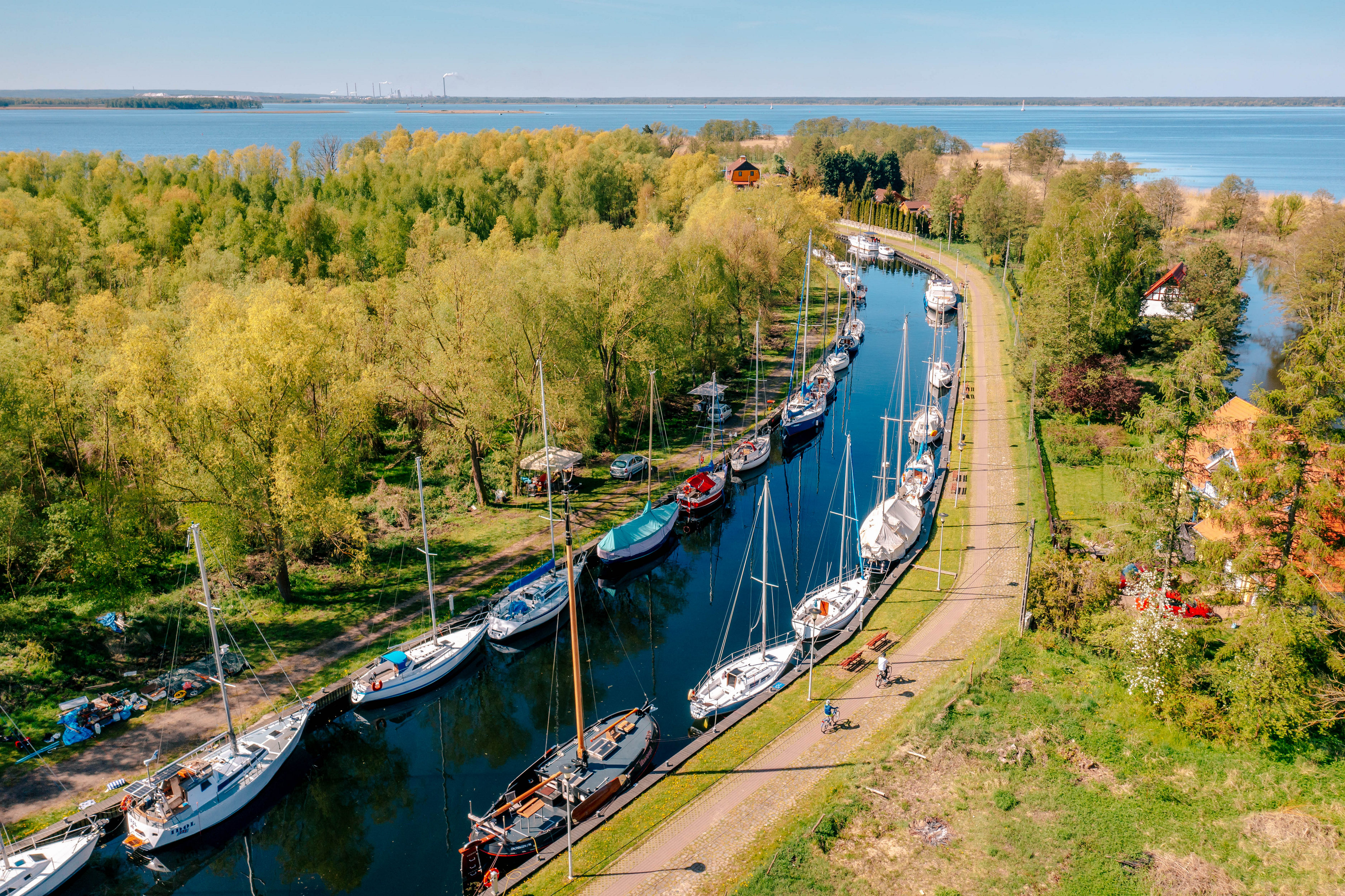
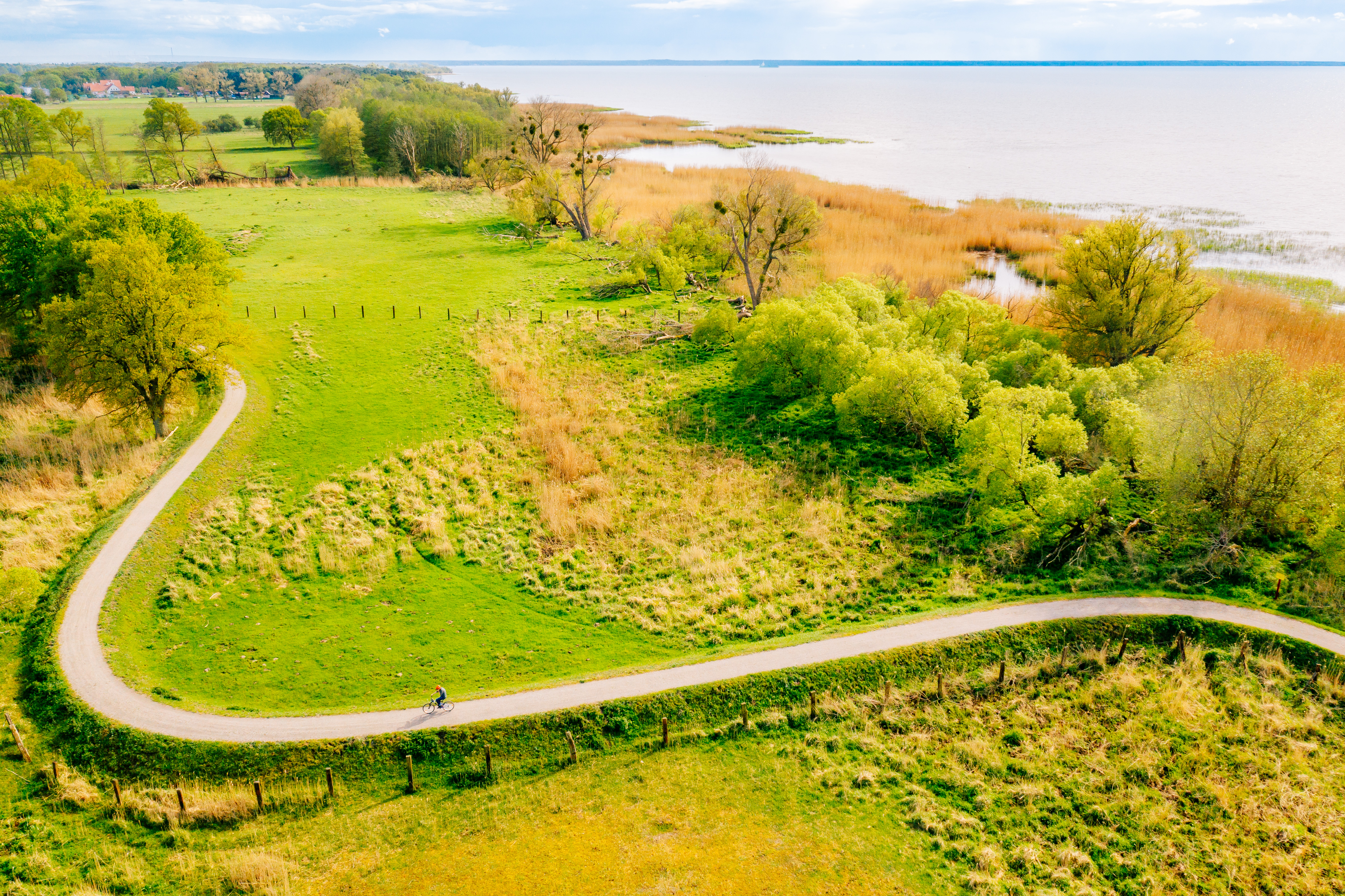
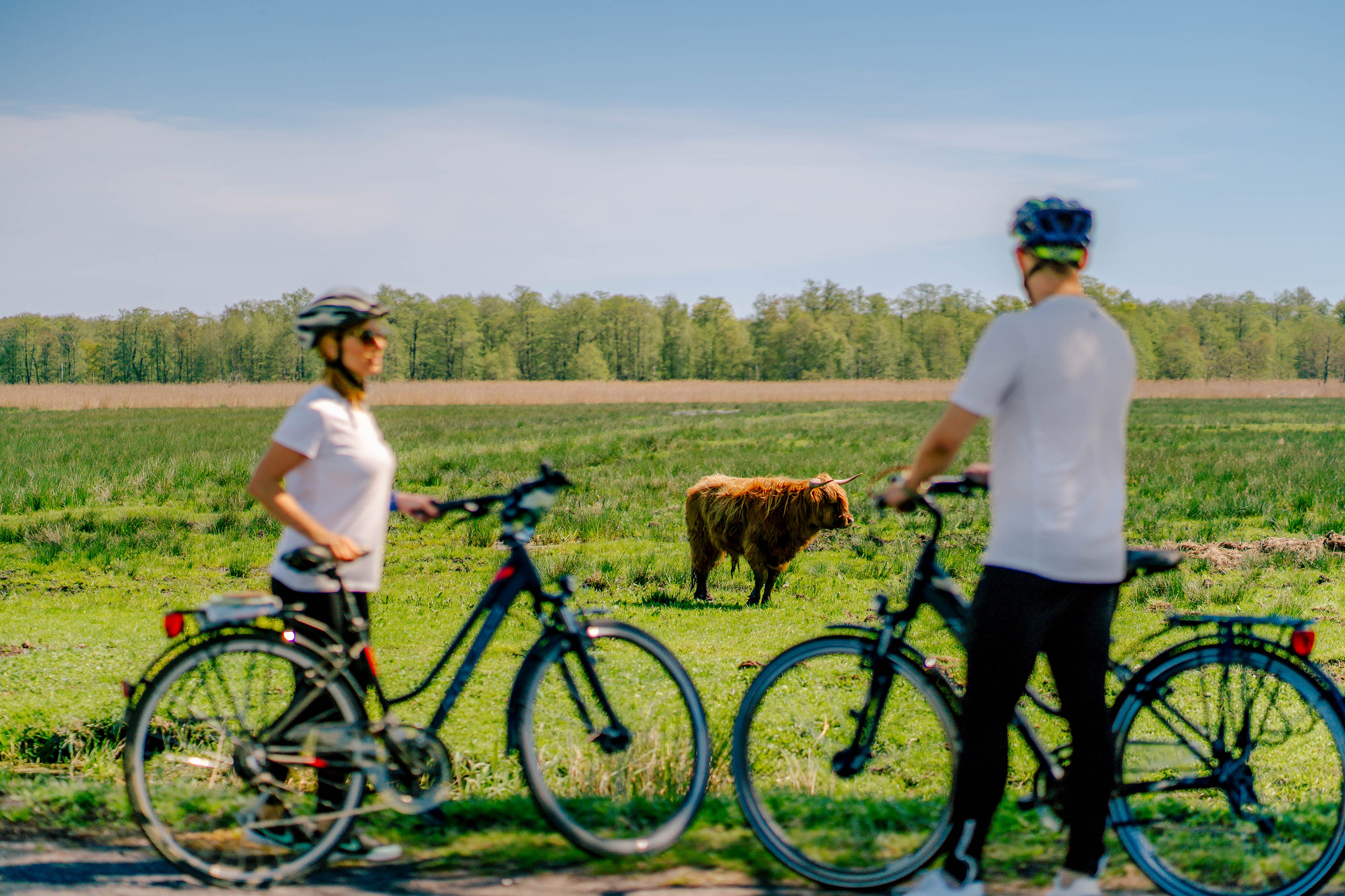
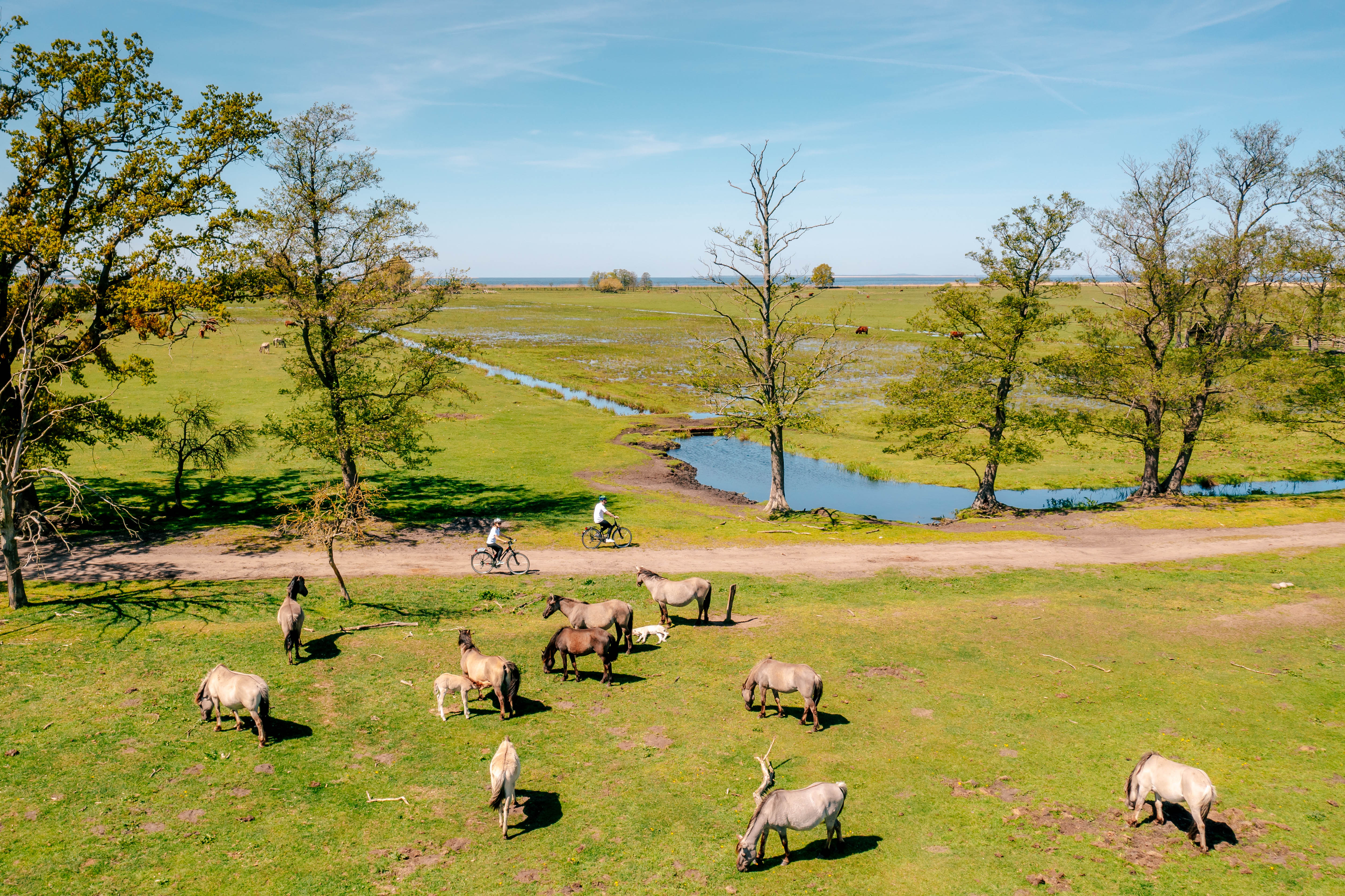
From Wolin, we head south along a local road, a bicycle path, and then a gravel path along the lagoon. This is one of the most beautiful sections, leading along the flood embankments right next to the lagoon. As if that were not enough, we ride along the Szczecin Lagoon Nature Park. It is Poland's first model area for the practical implementation of the principles of the European Natura 2000 Ecological Network, established in 2005. Its main objective is to combine effective land management with good agricultural practices, nature education, and recreational use. Here you can see wild Polish horses and Scottish Highland cattle. Sometimes a wild boar will cross the road, and you can hear the constant singing of birds all around.
Two of Poland's newest islands, Brysna and Śmięcka, were recently created in the vicinity of our route. Brysna has immediately become a bird sanctuary. Seagulls, terns, sandpipers, and even the endangered oystercatcher have already been spotted there. The island of Śmięcka will be supplemented with spoil from the dredging of the fairway over the next 30 years. The islands are not open to the public.
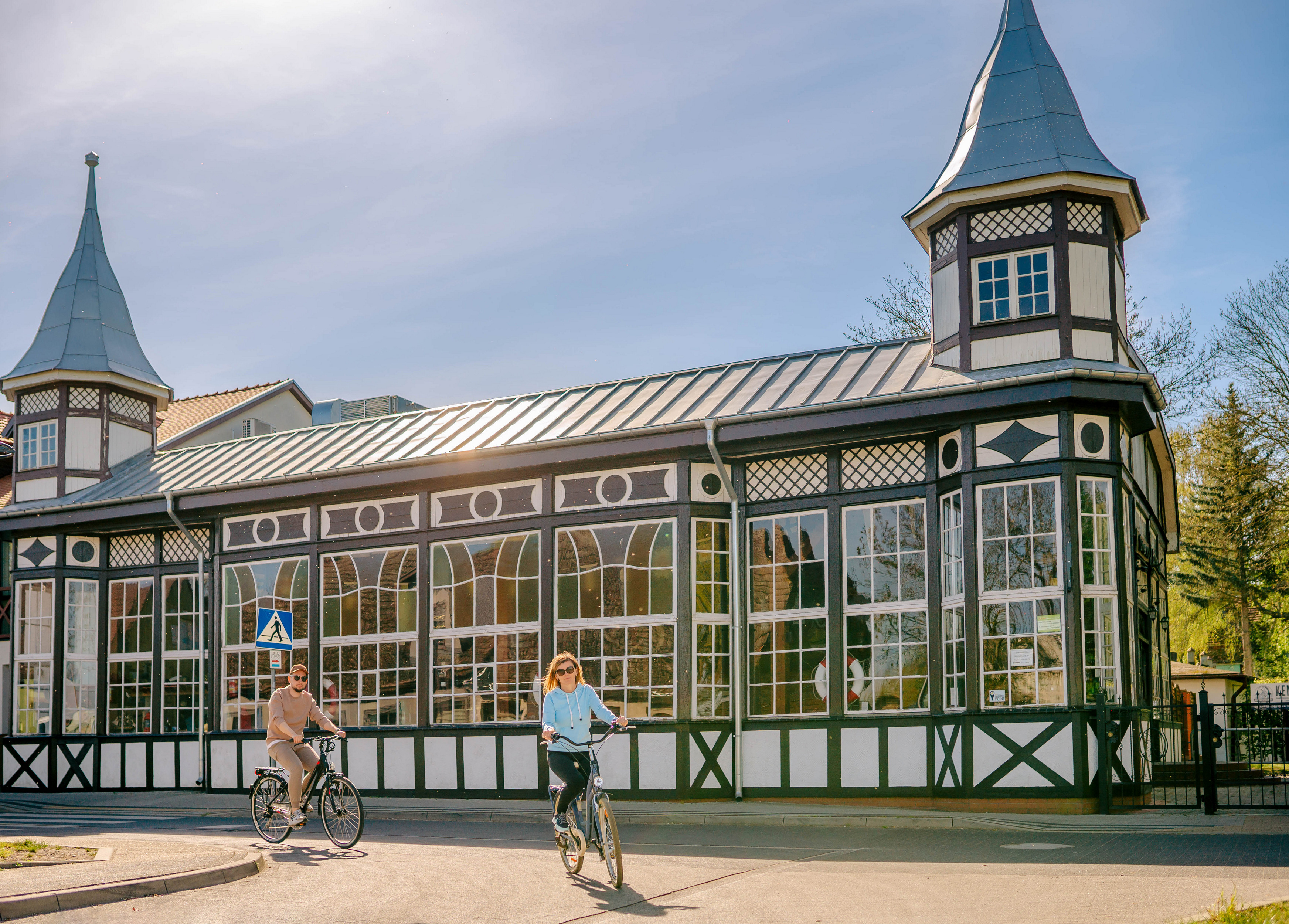
After Czarnocin, we turn onto a local asphalt road with little traffic, which takes us to Stepnica, known for its sandy beach and the Panorama tavern. The renovated building from 1840 serves as a restaurant, hotel, and decoration of the region.
2.5 km south of the town is one of the most valuable natural areas in the country. The Olszanka Nature Reserve has the highest density of white-tailed eagle nests in Europe, as well as one of the largest populations of great snipes in Poland. Olszanka is a huge, but heavily man-made raised bog. The Szczecin Lagoon is an ideal environment for white-tailed eagles, and if we show the right amount of determination and patience, seeing one of these majestic birds should not be a problem.
Transport: PKP railway stations are located in Wolin and Goleniów ( on the Szczecin-Świnoujście line). Connections are operated by POLREGIO and Intercity. The timetable can be found at https://portalpasazera.pl
Surface: asphalt 58%, aggregate 39%, concrete slabs 3%.
Type of traffic: bicycle paths 48%, general traffic 43%, forest/field roads 9%.