Routes and trips
 Map
Map MPR - cyclist-friendly places
 POI
POI Plan your trip
 Bike counters
 Publications
 News
News Route concept
 Contact
 Blue Velo - Stage III [Goleniów - Szczecin]
 Stage III: Modrzewie (Goleniów) – Szczecin [43 km]
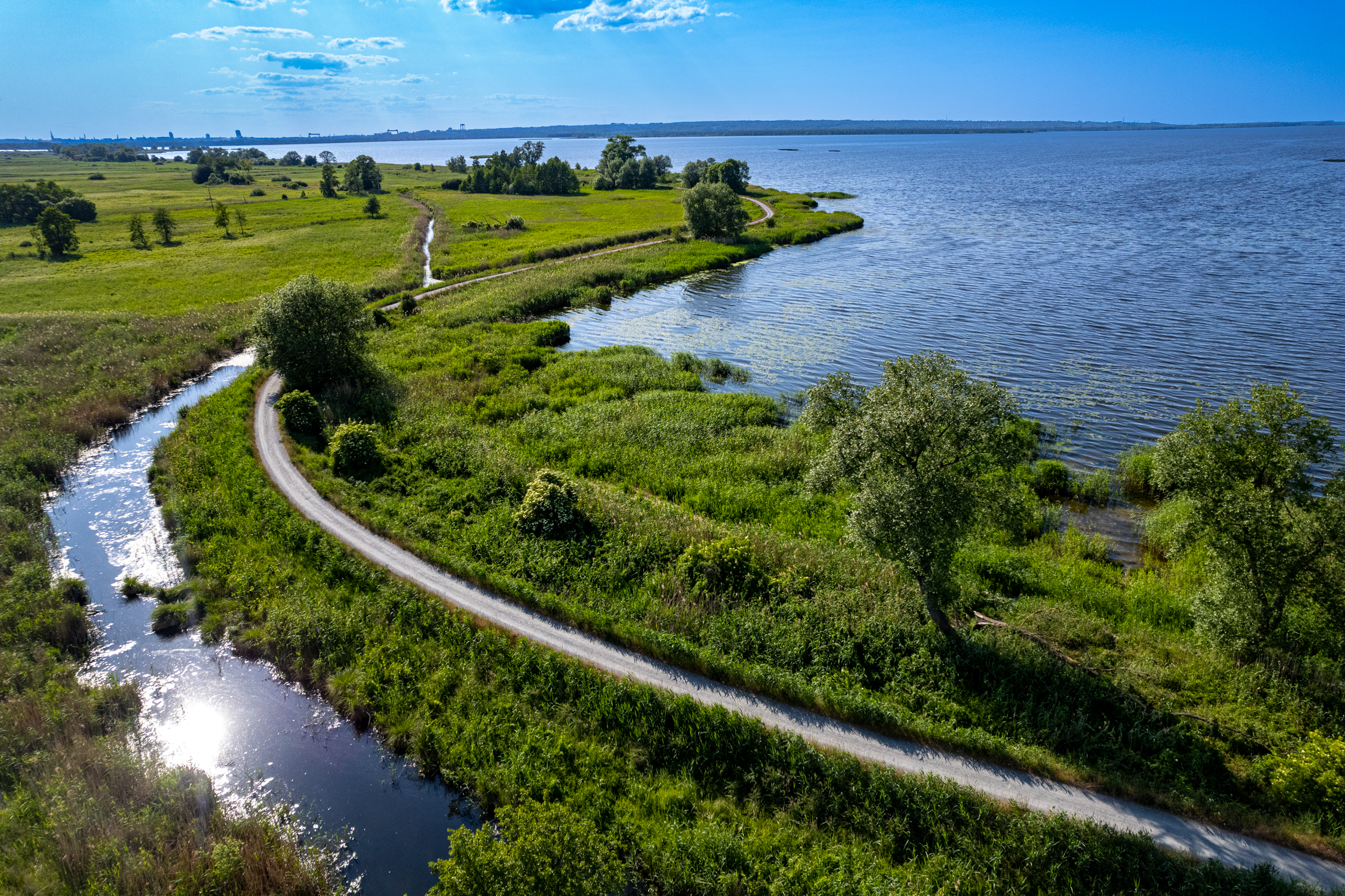
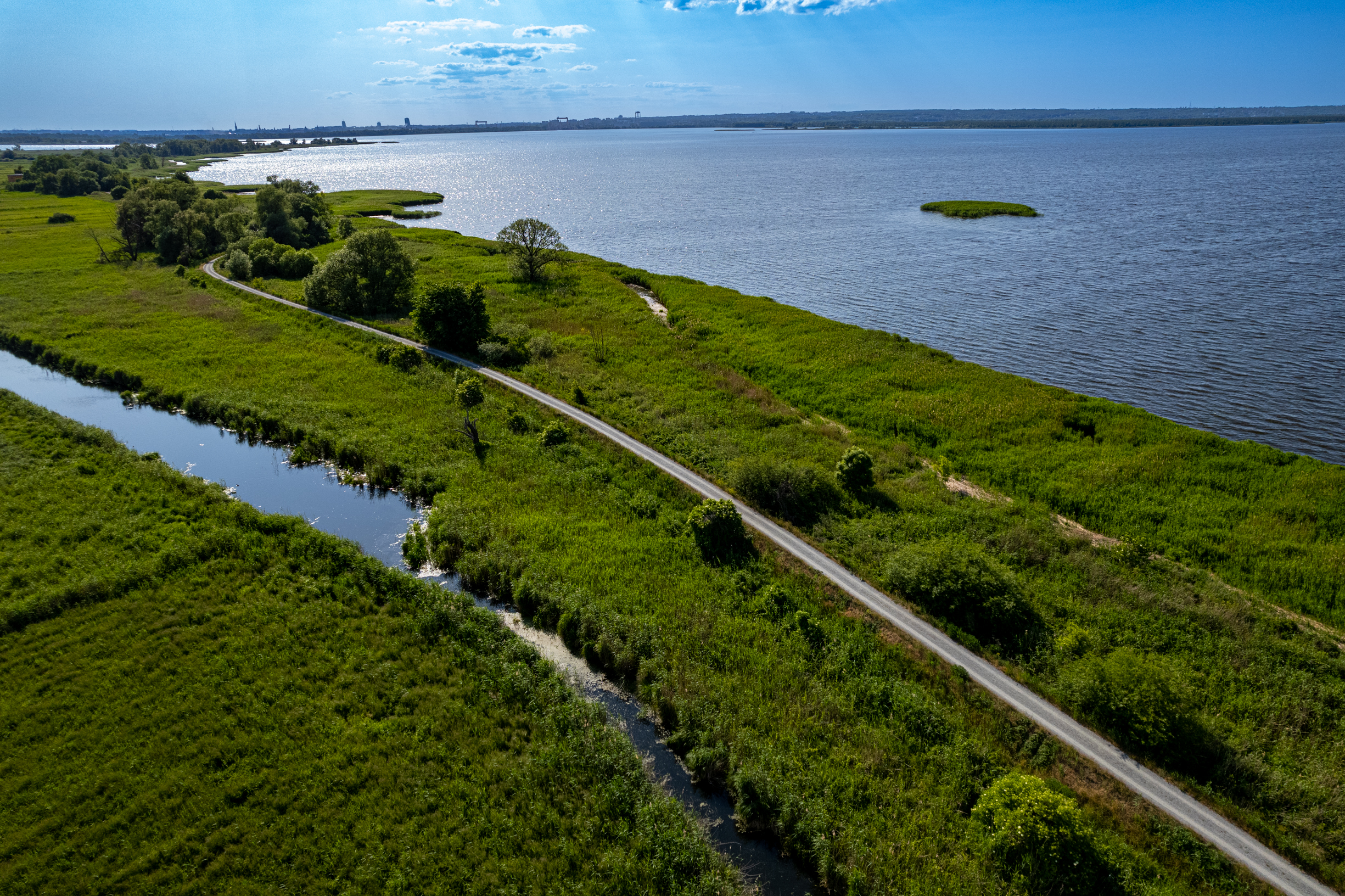
The new bicycle route between Modrzewie, Lubczyna, Czarna Łąka, and Szczecin Dąbie runs along flood embankments.
The attraction of this section is a concrete ship – a wreck stranded near Inoujście. The commonly accepted name is not misleading – the hull of the ship is made of concrete. It is one of the reinforced concrete ships built by the Germans, bombed in Szczecin in 1945. After the war, it was towed to Inoujście and sunk. Concerts are sometimes organized on it, during which the audience is on boats around the wreck. The access road from Modrzewie is marked and ready for use. The unfinished, sometimes sandy and overgrown route continues along the embankment along the coast to Lubczyna.
The beach and port in Lubczyna are a good place for a snack and a rest. In the reeds behind Lubczyna, a small boat has moored for eternal rest, and curious tourists have trodden a path through the reeds to reach it.
Lake Dąbie is the fourth largest body of water in Poland, located within the administrative boundaries of Szczecin, although this may seem surprising given the rather wild surroundings. Recently, new resting places by the water have been created, called "corners," such as Cape of Four Skeletons, located on Skeleton Bay. Fortunately, there are no skeletons there – the name was given jokingly by Szczecin water sports enthusiasts. The last section from the Załom II pumping station to Dąbie is beautiful and wild.
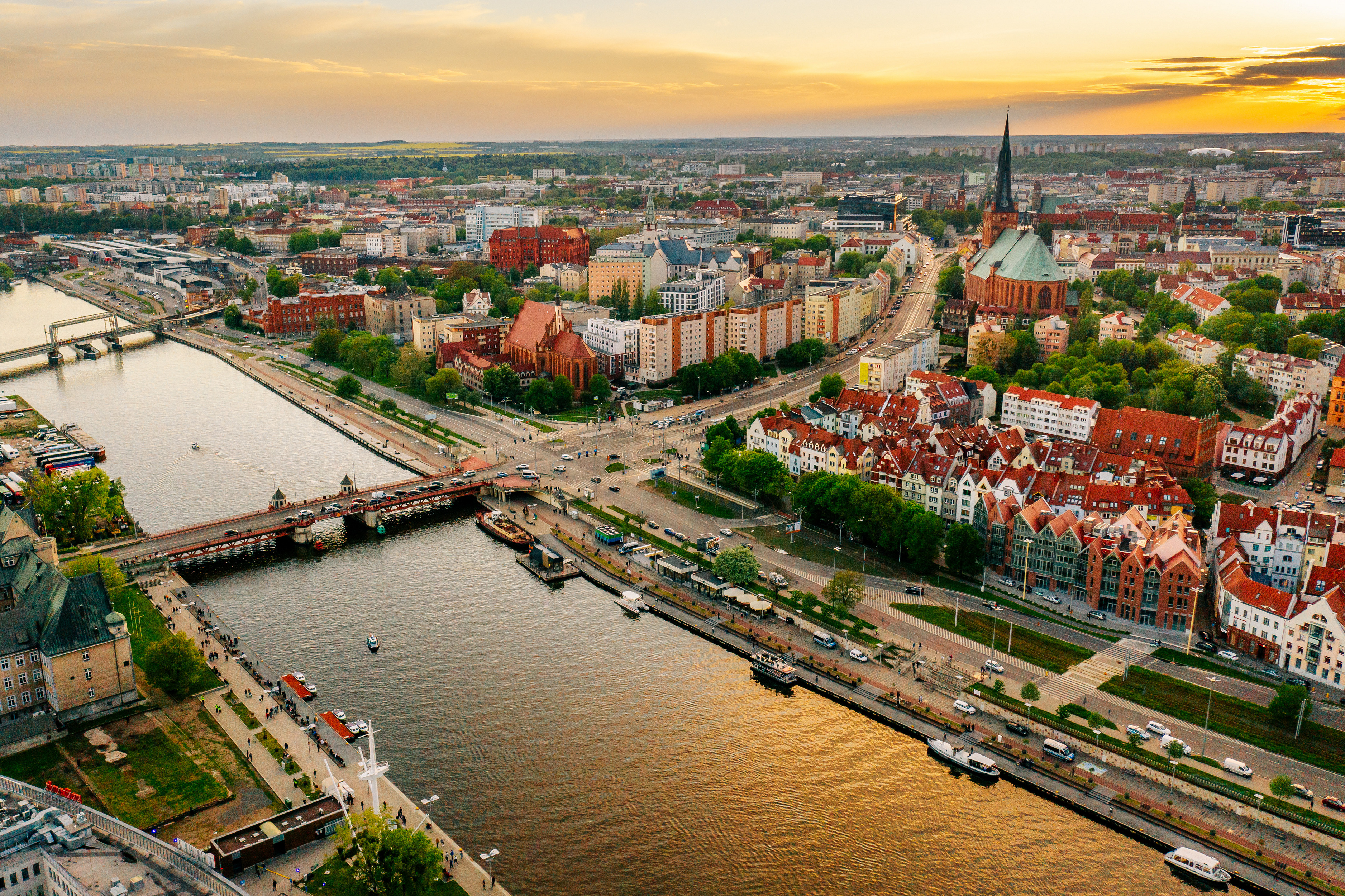
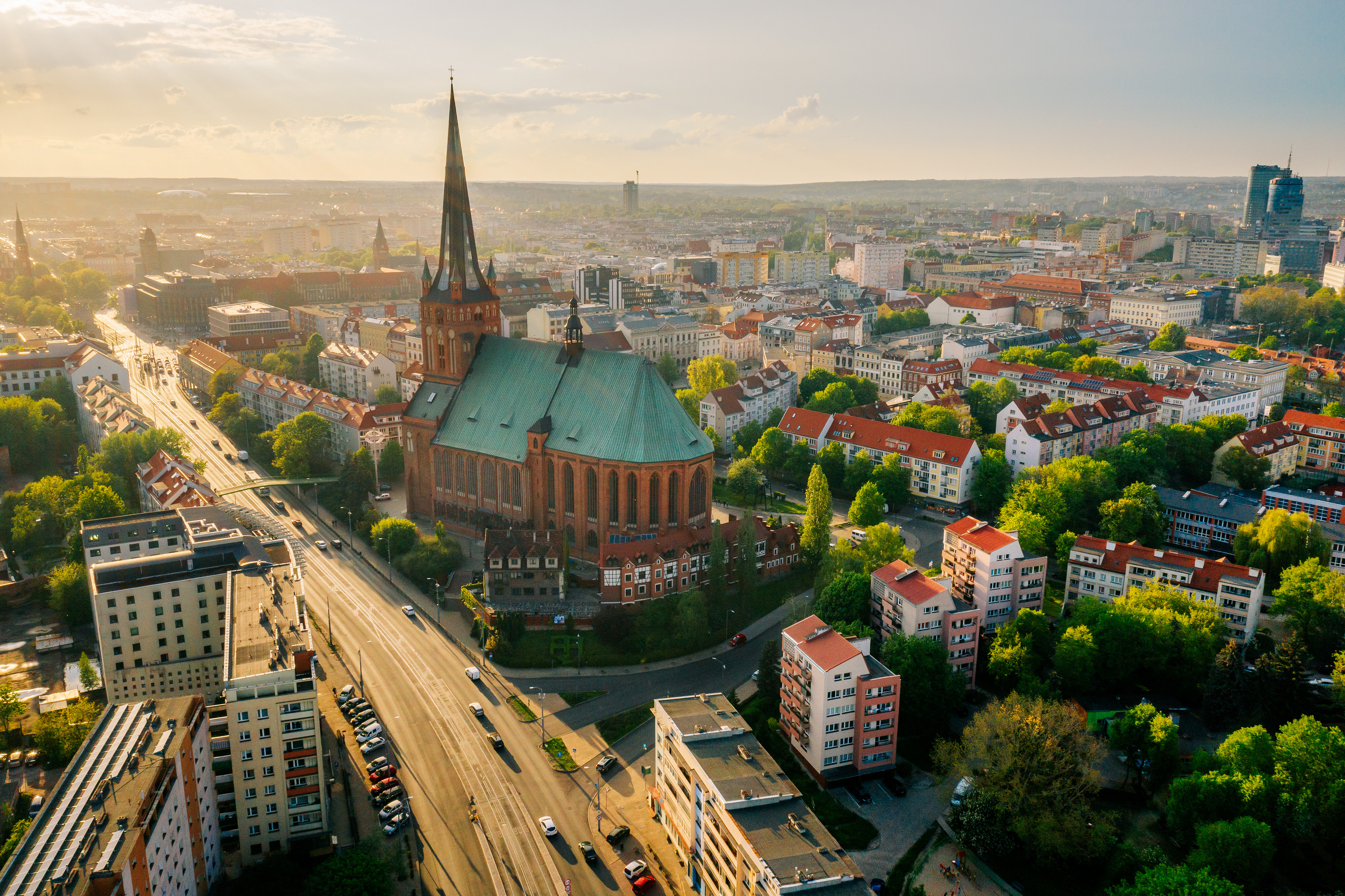
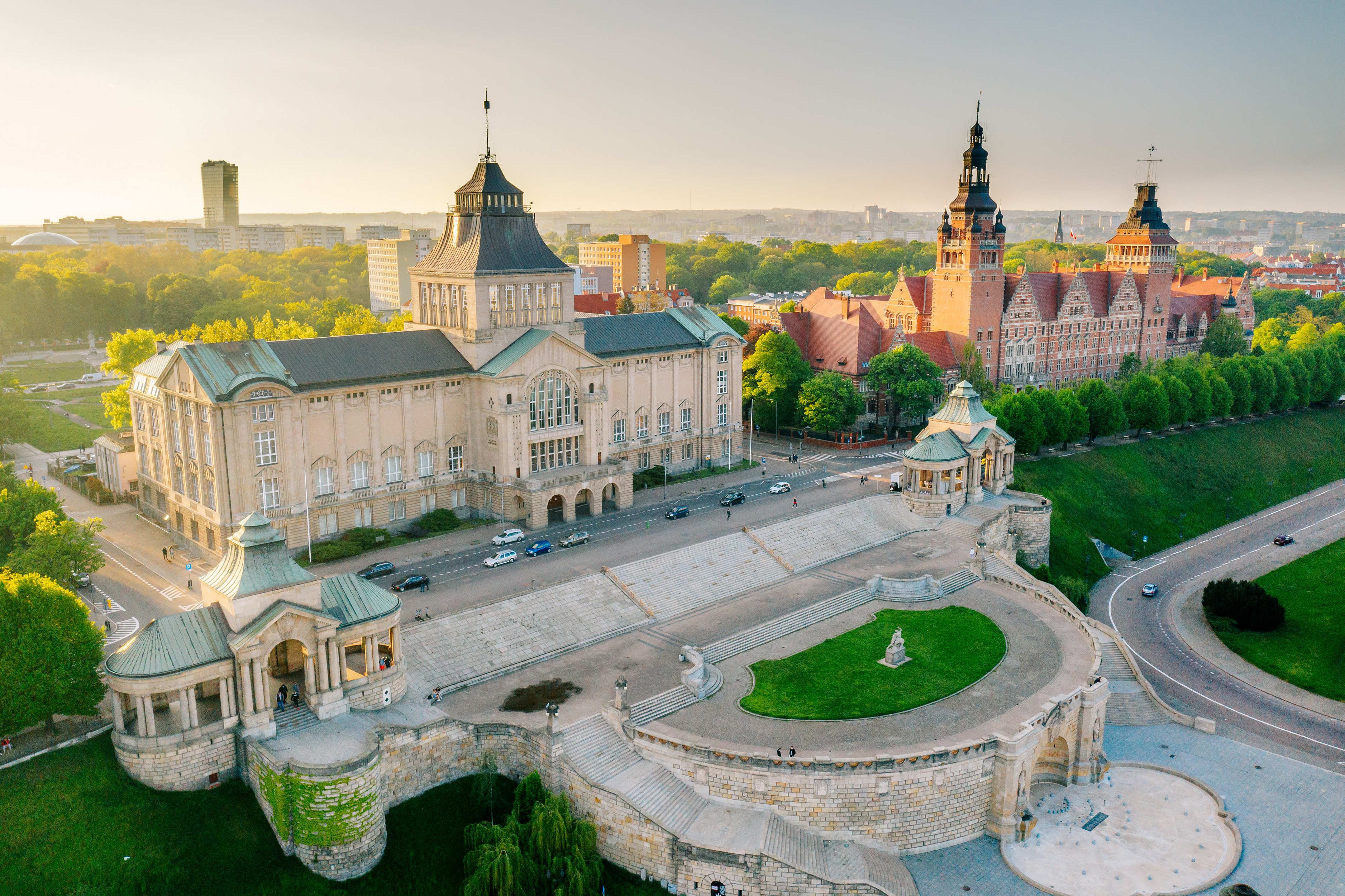
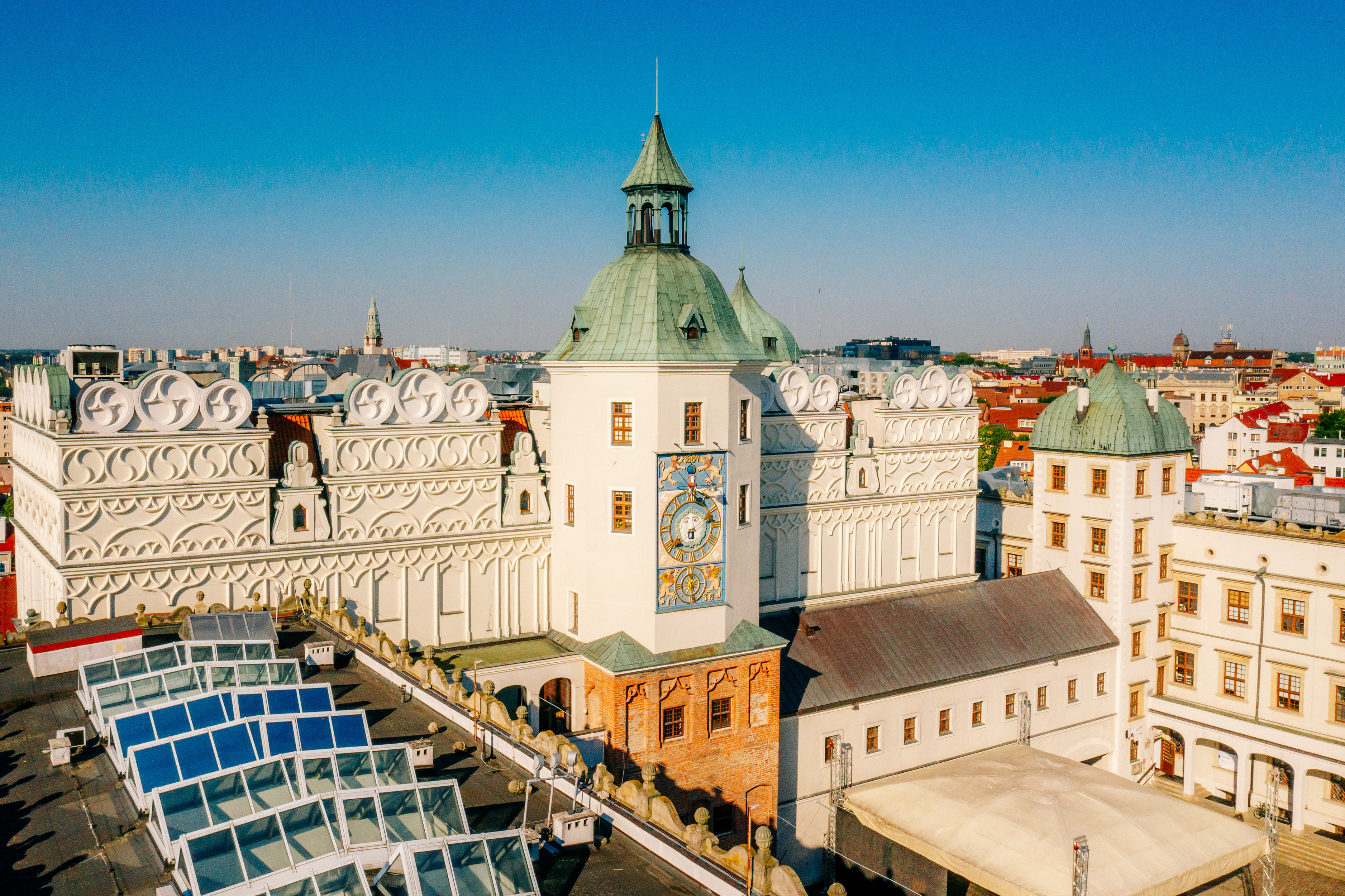
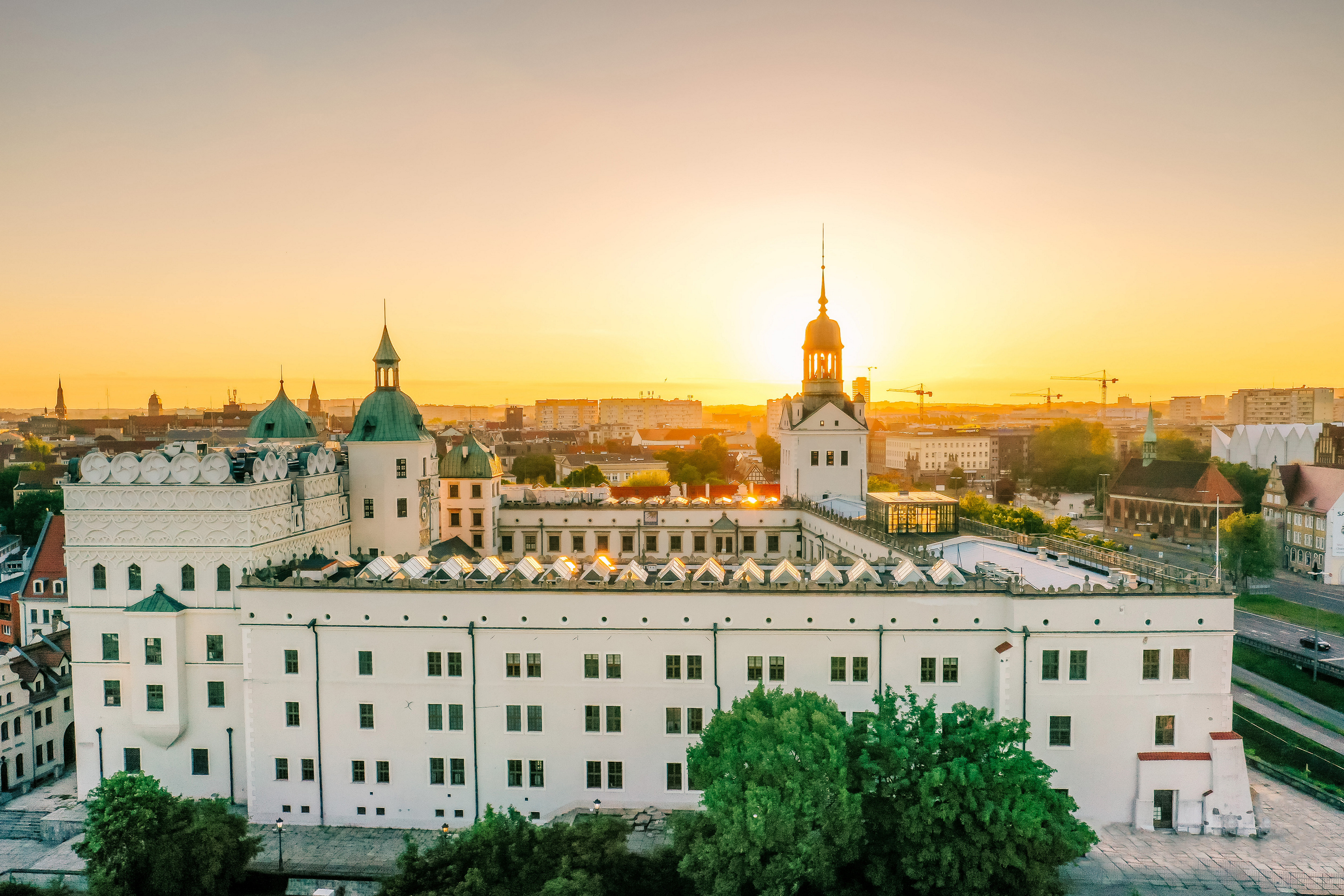
In Dąbie, we enter a bicycle path that will take us to the center of Szczecin at Trasa Zamkowa. The monuments and attractions of Szczecin deserve a separate article, and to get to know them, you would have to stay in the capital of Western Pomerania for longer. However, it is worth mentioning Łasztownia, visible from our route, an island that is slowly becoming the new heart of the city. The new Boulevards offer the most impressive view of the historic buildings of the city and the Pomeranian Dukes' Castle. Right next to it, the Maritime Science Center has been built, and at night, the Dźwigozaury, or impressively illuminated port cranes, make a great impression. You can also find a monument to Krzysztof Jarzyna here, the boss of all bosses, known to everyone who grew up in the 1990s. However, if you don't know who he is, we refer you to the film "Poranek kojota" (Coyote's Morning).
If you haven't managed to see a white-tailed eagle yet, you have another chance in Szczecin – you should turn off the trail at the Central Port and drive along Pucka Island along the banks of the Western Oder. Bieliki are particularly fond of the Academic Island, located opposite the flood embankment, where they like to perch on one of the dead trees.
This is a place where you can feel how special Szczecin is. We have barely left the port and industrial buildings, and we are already entering wild areas with a nature reserve. The islands on Lake Dąbie, north of our trail, are a veritable jungle, sometimes vividly referred to as the "Szczecin Amazon." Life here follows its natural rhythm, essentially without human interference.
Transport: the major railway junctions are Szczecin Główny and Szczecin Dąbie, where regional and long-distance trains stop. Another major station is Goleniów, which serves connections from Szczecin, Kołobrzeg, Koszalin, Kamień Pomorski, and Świnoujście. The connections are operated by POLREGIO and Intercity. The timetable can be found at https://portalpasazera.pl In Szczecin, bicycles can be transported free of charge on public transport. This allows you to travel from the city center to the districts of Dąbie or Zdroje, for example. The most convenient way to transport a bicycle is by tram. There is an airport near Goleniów.
Surface: asphalt 32%, aggregate 66%, cobblestones 1%, concrete slabs 1%.