Routes and trips
 Map
Map MPR - cyclist-friendly places
 POI
POI Plan your trip
 Bike counters
 Publications
 News
News Route concept
 Contact
 Velo Baltica - Stage II [Dziwnówek - Kołobrzeg]
 Stage II: Dziwnówek – Kołobrzeg [60 km]
The route is fully marked and runs mainly along separate bicycle paths, gravel forest roads, and occasionally along local roads.
Dziwnówek does not seem particularly strange, nor does the Dziwna Strait, which makes Wolin an island.
After Łukęcin, riding along a forest road, we pass the largest hotel in Poland on the left. The gigantic building cannot be seen from behind the trees, but it is clearly visible from many points along the coast. Right next to it, however, there is another, informal attraction - the summer house of Hitler's concubine, Eva Braun. The wooden house was built in the 1930s. It is known that Hermann Göring, among others, used to visit here when he was visiting the seaplane base in Dziwnów. Currently, the building is abandoned and devastated, but this does not bother enthusiasts of unusual places.
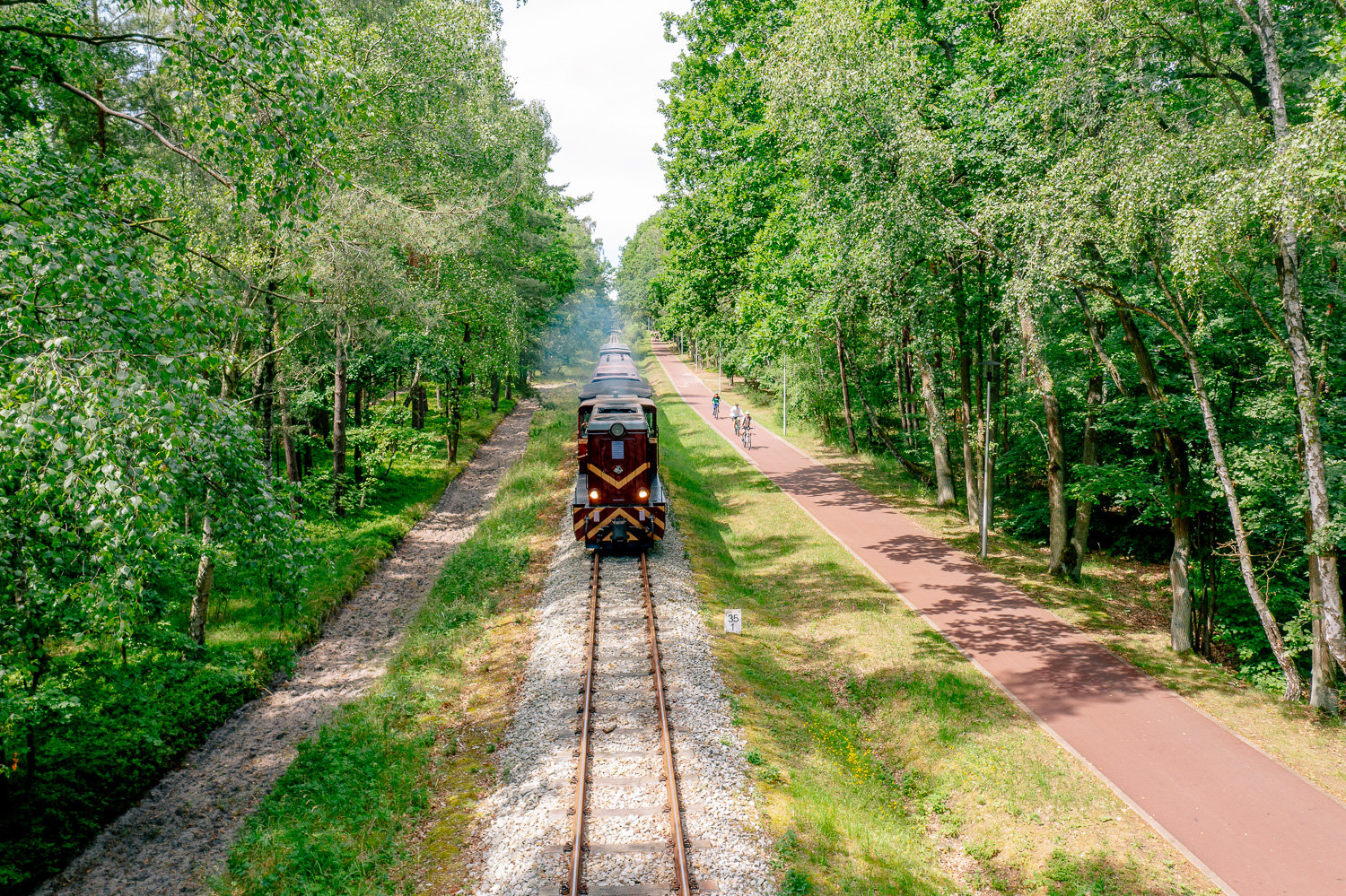
Known for its ruins on a cliff Trzęsacz is one of the most distinctive places on the Baltic Sea. When the temple was built at the turn of the 14th and 15th centuries, it was located 2 km from the sea shore. Today, only one wall remains. If it weren't for the protection of the cliff, we wouldn't even be able to see that. Train enthusiasts will appreciate a unique attraction – the Seaside Narrow-Gauge Railway, which departs daily (from May 1 to the end of September) at 8:40 a.m. from Gryfice, then stops in Trzęsacz, from where it runs back and forth to Pogorzelica (every 1.5 hours). Best of all, you can take your bikes with you. Thanks to this trick, we will save less than 10 km of cycling, although we will miss the miniature lighthouse park in Niechorze. Life is the art of making decisions, sometimes dramatically difficult ones. Fortunately, there is a way around this – you can take a break at one of the stations and continue your journey on the next train.
From the train windows, you can see, among other things, a magical maze in a cornfield (open during the season). If you wanted to get there by bike, you would have to detour more than a kilometer.
Mrzeżyno is a pleasant town with beautiful beaches, but from a cyclist's perspective, it is worth stopping here for another reason. A few kilometers before the town, at the Model Rest Area for Cyclists, we can travel into the future. We are already used to seeing MORs on Polish trails, but so far it is rare to find USB chargers or, even more so, sockets for charging e-bikes. Everything is powered by photovoltaic panels on the roof. Maybe that's why the electricity only works from May to September? The Wi-Fi network will be useful for foreigners, for whom the Polish stage of Eurovelo 10 or 13 is only a few days' episode. It is worth remembering that EV13, or the Iron Curtain Trail, runs through as many as 20 countries and is 9,950 km long, connecting the Barents Sea with the Black Sea. What is more, in Mrzeżyno there are also bicycle boxes that can accommodate a bike with panniers, allowing its owner to go to the beach without any worries.
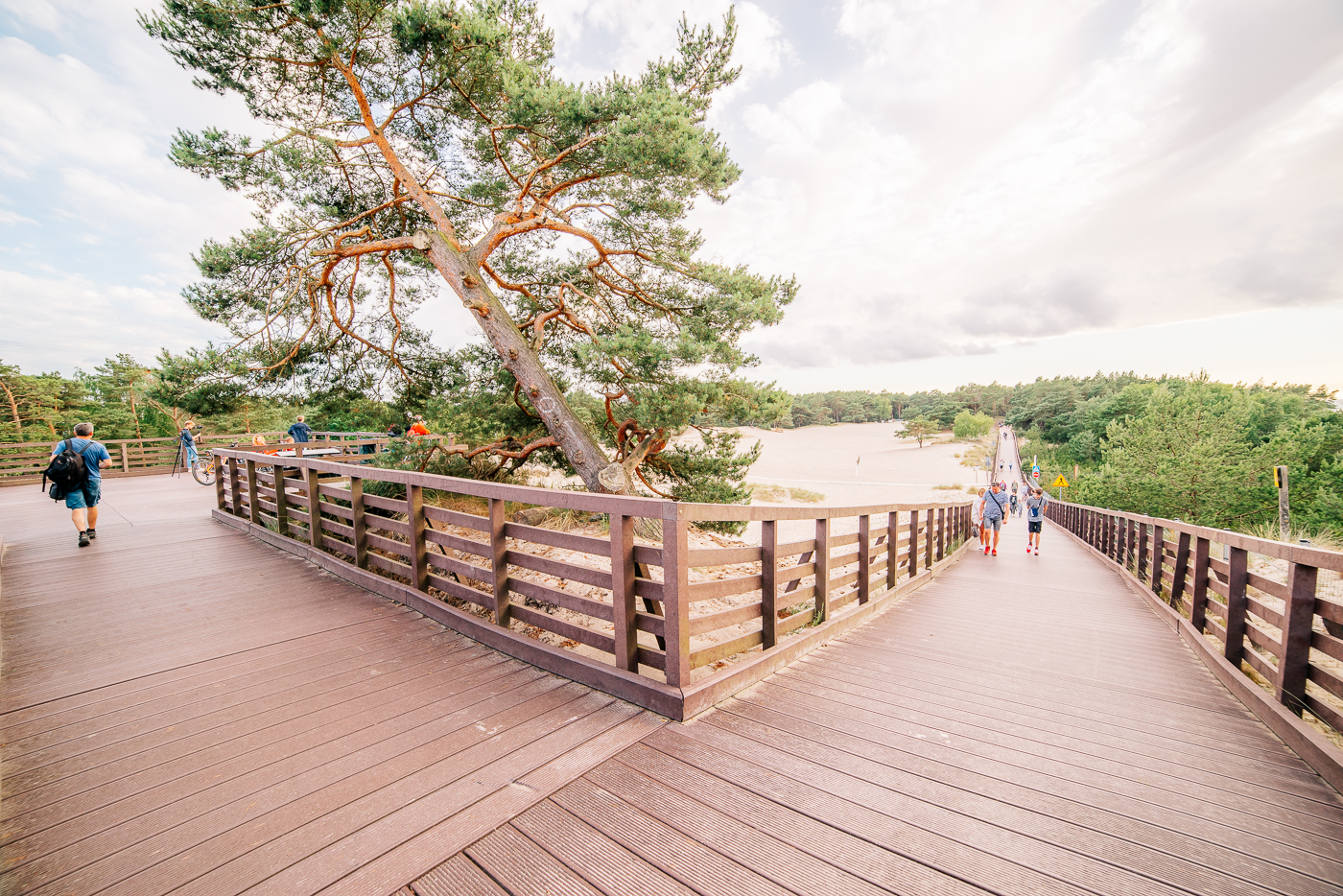
From here, you can reach Kołobrzeg via a paved bicycle path running along the road and through the forest, with a nice section of a several-hundred-meter footbridge over the dunes in Dźwirzyno.
Transport: the PKP railway station is located in Kołobrzeg (accessible from Szczecin, Koszalin, and Szczecinek) and along the route in Glowaczewo and Stary Borek (on the Kołobrzeg-Szczecin line). For those traveling to the Kołobrzeg station with unusual bicycles (e.g., cargo bikes, tandems, trailers with children) or heavy bicycles with panniers, we recommend getting off the train at the Kołobrzeg Stadion station to ensure a smooth departure from the station. Connections are operated by POLREGIO and Intercity. The timetable is available at https://portalpasazera.pl. In addition, it is possible to travel on the Seaside Narrow-Gauge Railway, which stops in Rewal and Pogorzelica, among other places. The trains are equipped with a carriage for transporting bicycles and start their journeys every morning from Gryfice, which can be reached by POLREGIO trains from Szczecin and Kołobrzeg.
Surface: asphalt 54%, aggregate 21%, cobblestones 22%, concrete slabs 3%.
Type of traffic: bicycle paths 64%, general traffic 16%, forest/field roads 20%.